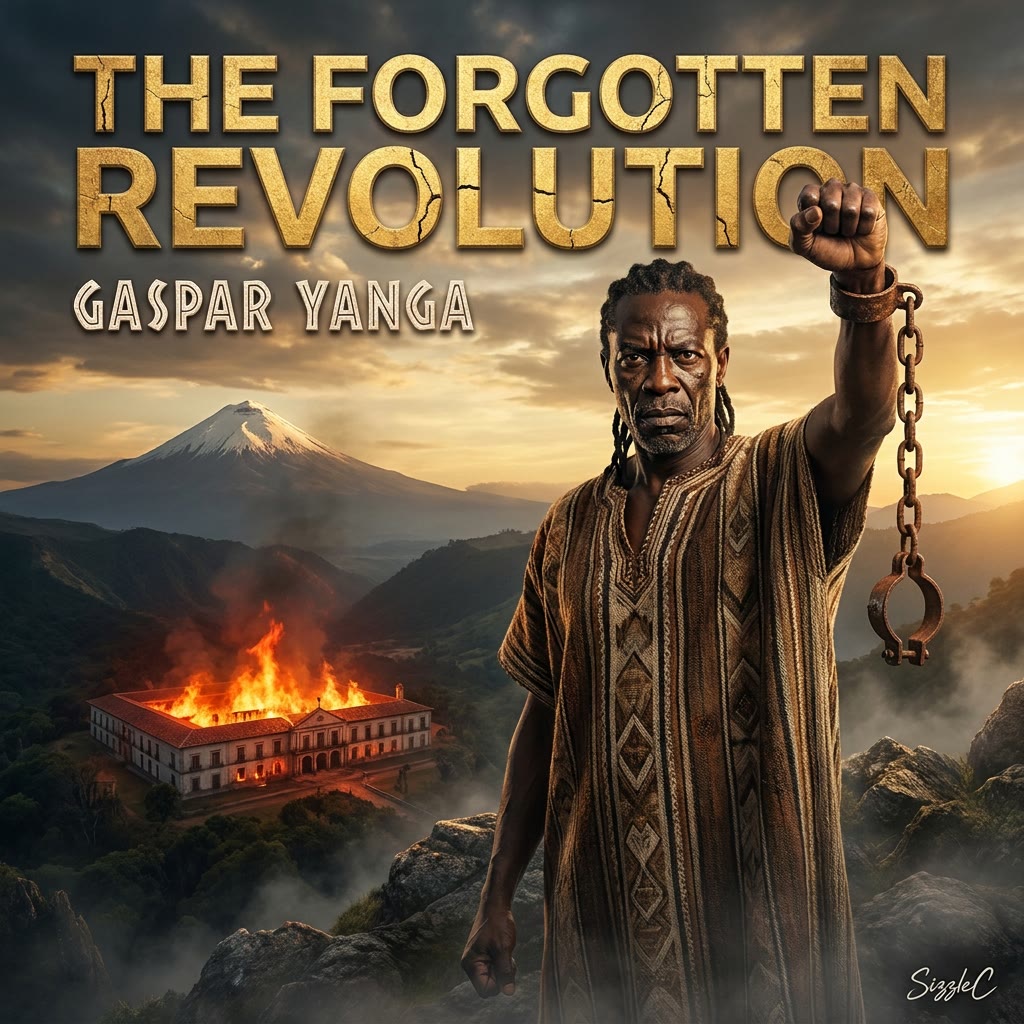
The story behind The Forgotten Revolution
Who was Gaspar Yanga?
An African man enslaved in New Spain who, around 1570, led a group of escaped slaves into the mountains of Veracruz, held out against Spain for nearly forty years, and forced the colonial government to recognize a free African town. It still carries his name.
Timeline · tap a year
Where La Bamba comes in
Son jarocho
La Bamba is a son jarocho, the folk music of Veracruz that grew from Spanish, Indigenous and African roots: requinto guitars, harp, and dancers stomping out rhythm on a wooden platform called a tarima. The verse "yo no soy marinero, soy capitán" is part of the traditional song, centuries older than Ritchie Valens' 1958 hit.
The Bamba name
One theory links the name to the Mbamba region of the old Kingdom of Kongo, the homeland of many Africans enslaved in Veracruz. Historians debate it, but it is why this album ties Yanga's story to the song's rhythm.
Quick quiz
The album
The Forgotten Revolution: Gaspar Yanga (Vol 1) by SizzleC tells this story in five songs. Each one starts in a sound of the era, like West African drums, son jarocho or Spanish guitar, and drops into a modern one halfway through. The songs are fiction built on history: dates and details are compressed and dramatized, and the lyrics take sides the way songs do. The facts on this page are the history, and some of them, like his exact origins, are still debated.
Listen to The Forgotten Revolution →