
BEATRIFULThe storySizzleC

WRITE IT DOWN

SizzleC · 12 songs · in production

John D. Rockefeller (1839–1937) went to work at sixteen as a bookkeeper on $16 a month, built Standard Oil until it refined over 90% of America's oil, was called the country's first billionaire, and gave away about $530 million. Why it still matters: the 1911 case that split his company into 34 pieces (Exxon, Mobil and Chevron among them) still shapes the monopoly law used against today's tech giants, and his foundations set the model for modern philanthropy. Twelve songs, each told by someone who stood close to him: his con-man father, his wife Cettie, a refiner's wife in 1872, a mill girl reading by cheap kerosene, the lawyer who drew the trust, Ida Tarbell, a clerk on the day of the breakup, a mother in the Ludlow tents, the preacher who told him to give it away, and a caddie holding one of his dimes. Every song opens in the sound of its year and drops into a modern floor at the minute mark.

parlor hymn → minimal techno · medicine-show brass → bass tech house · funeral brass → Detroit industrial techno · lullaby → deep house · string quartet → acid techno · ragtime typewriter → NYC garage · ticker tape → peak-time tech house · miners' folk → dark techno · Baptist choir → Chicago house · porch ukulele → tropical tech house · hymn → ambient techno

all takes and alternates →

Devil Bill cover

[Intro]

Step right up. I've got a bottle for whatever ails you.

And I've got a boy back home who writes down everything I say.

That's my doing. Remember that. That's my doing.

[Verse 1]

Richford in the hills, a cabin and a wife who prayed,

I came and went like weather, I came home when I was paid.

A lumberman some seasons, a doctor by my own degree,

The town called me Devil Bill, and Devil Bill suited me.

[Verse 2]

I sold a tonic for the blood and a tonic for the nerves,

A bottle for the cancer, and a smile for what it's worth.

I'd roll in with the wagon and I'd roll out with the dawn,

And the boy would count the money and he'd wonder where I'd gone.

[Verse 3]

He came to me for money when the produce house was his,

I lent him out a thousand like a stranger would, at ten.

He wrote the interest in a book and paid me to the cent,

And he never asked again.

[Chorus]

They say I made him sharp.

They say I made him sharp.

They say I cheated him at cards to teach him how the table lies,

And sharp is what he cut me with.

[Drop]

Step right up. Step right up.

A bottle for the blood and a bottle for the nerves.

Step right up. Step right up.

[Verse 4]

They say I kept another house under another name,

A doctor in another town, a wife who never came.

And when the oil made him a king the papers came to see,

And he said not a word about the wagon, or the tonic, or me.

[Chorus]

They say I made him sharp.

They say I made him sharp.

They say I cheated him at cards to teach him how the table lies,

And sharp is what he cut me with.

[Bridge]

You want to know who made the richest man that ever lived?

A man with a bottle and a smile. Step right up.

[Outro]

They say I made him sharp.

[Fade Out]

[End]

01 · Devil Bill

medicine-show banjo and a barker's brass band, slow first minute then a hard beat drop → bass-heavy tech house at 124 bpm, gravelly male lead, swagger, story-driven

🎶 The Sizzle: medicine-show banjo and a barker's brass band, slow first minute then a hard beat drop into bass-heavy tech house at 124 bpm, gravelly male lead, swagger, story-driven

🎬 The Story: 1840s Richford: a medicine-show barker sells brown tonic and loans his own son money at interest, bragging he sharpened the boy; the boy, at the edge of the crowd, writes the loan down in a small book.
Write It Down cover

[Intro]

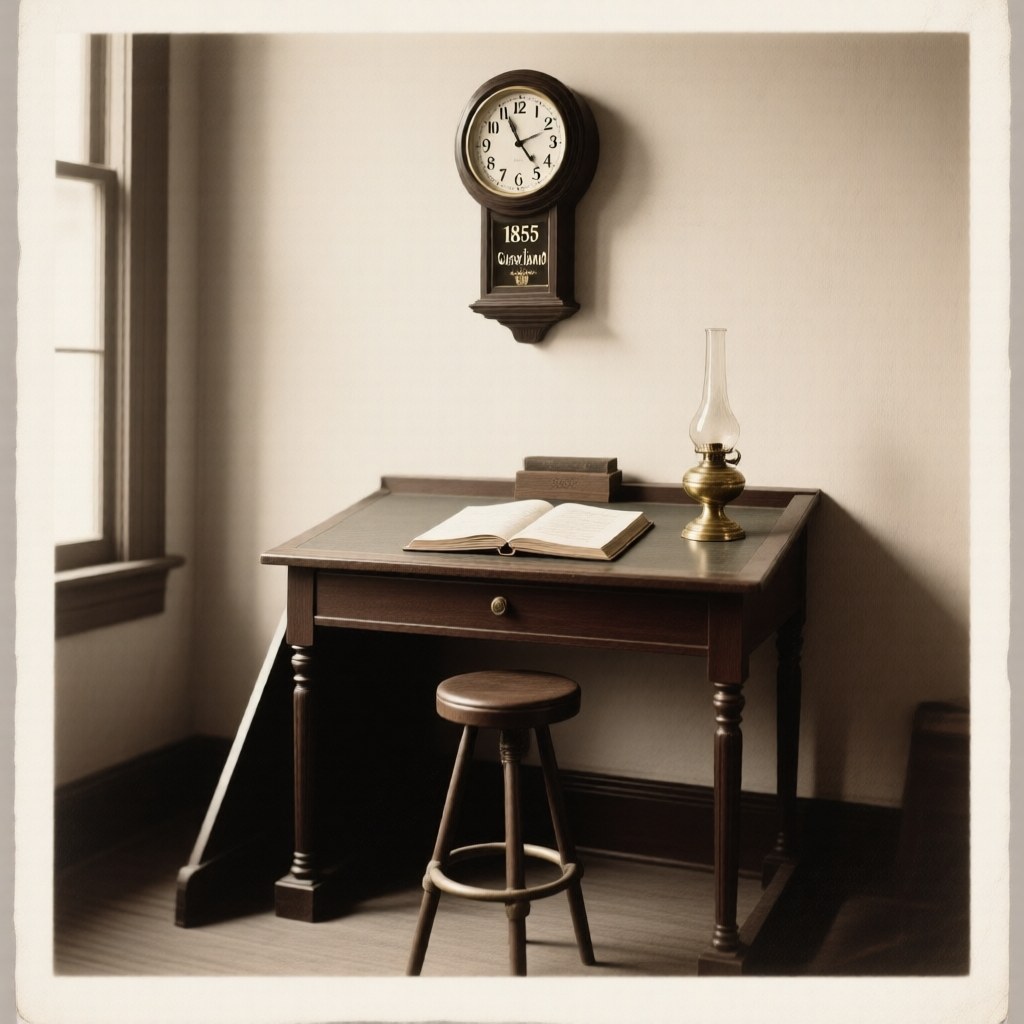
Cleveland. The first cold week of fall.

A desk by the window. A pen that scratches. A clock that does not care.

I am sixteen, and I open a book nobody told me to open.

[Verse 1]

They gave me a stool and a column of other men's money,

A season of figures for a fifty-dollar page.

Butter and grain and the freight that moves it,

I add it till it closes, and the closing is my wage.

[Verse 2]

At night I keep a smaller book that no one ever sees,

Every cent I earn and every cent I give away.

A dime at the church door, a nickel for the poor,

The left side is the Lord's, and the right side has to pay.

[Chorus]

Write it down, everything I owe.

Write it down, everything I'm owed.

The page doesn't pray and the page doesn't lie,

And the page is the only one that stayed.

[Verse 3]

My father came through town with cures in a leather case,

He lent me a thousand dollars and he charged me for the loan.

Ten percent, like a stranger, and he smiled while he wrote it,

So I wrote him down a stranger, and I paid him on my own.

[Drop]

Ink. Column. Close.

Ink. Column. Close.

Every barrel has a number, every number has a home.

Ink. Column. Close.

[Verse 4]

The Flats smelled of oil the year the war went quiet,

We built a refinery where the river turns black.

When my partners wanted out I bid them at the auction,

The hammer came down on the day that decided me, and I never once looked back.

[Chorus]

Write it down, everything I owe.

Write it down, everything I'm owed.

The page doesn't pray and the page doesn't lie,

And the page is the only one that kept me.

[Bridge]

They say the price was high.

I say it was the day that decided me.

A man who keeps the page keeps the morning.

[Outro]

Write it down. Write it down.

The page is the only one that stayed.

[Fade Out]

[End]

02 · Write It Down

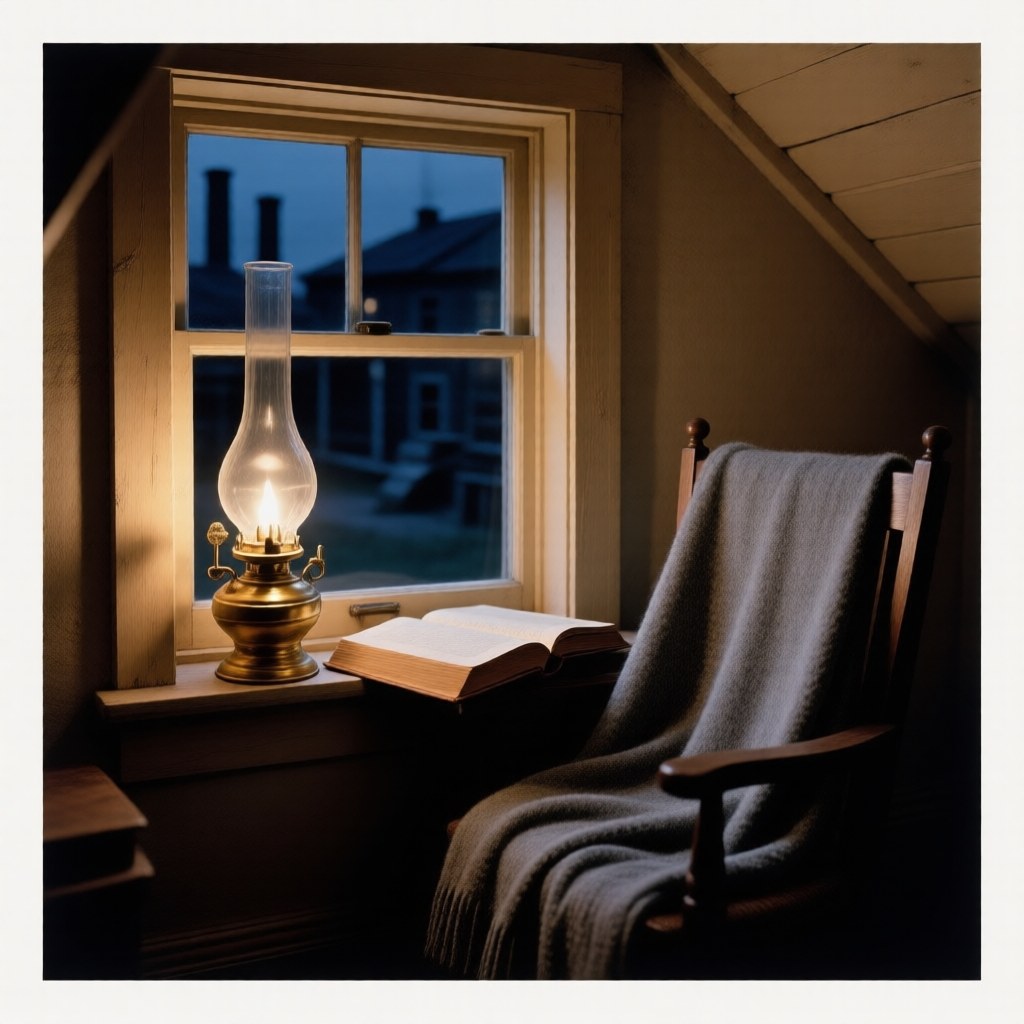
parlor upright piano and a hymn hummed by a lone male voice, a counting-house clock ticking, slow first minute then a hard beat drop → minimal techno at 126 bpm, cold half-spoken male lead, deep sub, metallic hi-hats, story-driven

🎶 The Sizzle: parlor upright piano and a hymn hummed by a lone male voice, a counting-house clock ticking, slow first minute then a hard beat drop into minimal techno at 126 bpm, cold half-spoken male lead, deep sub, metallic hi-hats, story-driven

🎬 The Story: Cleveland 1855: a sixteen-year-old clerk at Hewitt and Tuttle works a whole season for fifty dollars, keeps a small book of every cent and every tithe, and the page is the only thing that stays while his father is on the road.

Cettie cover

[Intro]

We met in a room full of ledgers. He was learning to add.

I was learning to see what he'd leave out.

[Verse 1]

My father's house had a back door that opened in the night,

For the people on the long road north who could not stand in the light.

I learned my sums at fourteen and I stood up first in class,

And I taught the children of the town to let the numbers pass.

[Verse 2]

He sat across the aisle from me in the accounting room,

A quiet boy in a black coat with a pencil and a gloom.

He asked me how I balanced, I said I count the ones who stay,

We married in September, the fall before the war went quiet.

[Verse 3]

A house that grew with every child, a nursery full of noise,

He counted barrels, I counted fevers, and I counted girls and boys.

When the money came like weather and it would not go away,

I sent it south to Atlanta where my family's name could stay.

[Chorus]

He keeps the book with the money.

I keep the other book.

The one with the people in it, the one he never reads,

And mine is the one that balances his.

[Drop]

Count the ones who stay. Count the ones who stay.

Add them up in the morning. Count the ones who stay.

[Verse 4]

They built a house up on the hill above the river with a view,

I grew old in it the way the quiet does, and then I was through.

In March, with the ice still in the river, my heart gave out its last,

And he lived on without my book for twenty years and past.

[Chorus]

He keeps the book with the money.

I keep the other book.

The one with the people in it, the one he never reads,

And mine is the one that balances his.

[Bridge]

He would say the money was the Lord's.

I would say: then the Lord has children, and they need shoes.

[Outro]

I keep the other book.

[Fade Out]

[End]

03 · Cettie

Congregational hymn on a harmonium with a warm female alto, slow first minute then a hard beat drop → deep house at 122 bpm with a warm sub, intimate, story-driven

🎶 The Sizzle: Congregational hymn on a harmonium with a warm female alto, slow first minute then a hard beat drop into deep house at 122 bpm with a warm sub, intimate, story-driven

🎬 The Story: Cleveland 1864: Laura Spelman, a teacher and the daughter of an abolitionist, meets a bookkeeper in an accounting class and marries him on September 8; she keeps the other book, the one with people in it.

The Flats cover

[Intro]

Every barrel that left Cleveland, I had my hands on.

He had his hands on the barrels too. That's the difference between us.

[Verse 1]

Down in the Flats the river bends and the whole sky smells of oil,

I bend the staves and set the hoops from before the kettles boil.

A barrel holds whatever a man decides to pour in,

And the man who built the refinery was pouring it all in.

[Verse 2]

When his partners wanted out of it they went to the auction floor,

He bid against them to the end and then he bid once more.

The hammer came down in the winter and he walked out with the yard,

And he looked at me and the barrels like a man who's dealt his card.

[Verse 3]

In January with the river froze he signed a company,

A few men around a table, and the quietest was he.

He learned to make his barrels cheaper than I ever could,

Then he bought the cooper down the road, and the road, and the wood.

[Chorus]

A barrel is a promise.

A barrel is a promise you make to someone else.

I made a promise every morning,

And every one of them was his.

[Drop]

Stave. Hoop. Fire.

Stave. Hoop. Fire.

A promise every morning.

Stave. Hoop. Fire.

[Verse 4]

By the time the decade ended, nine of every ten that poured

Went through his pipes and his kettles and his book and his word.

I still make barrels in the Flats, I still set the hoops by hand,

But every one I make is his before it hits the stand.

[Chorus]

A barrel is a promise.

A barrel is a promise you make to someone else.

I made a promise every morning,

And every one of them was his.

[Bridge]

He never raised his voice. He never had to. He had the barrels.

[Outro]

A barrel is a promise.

[Fade Out]

[End]

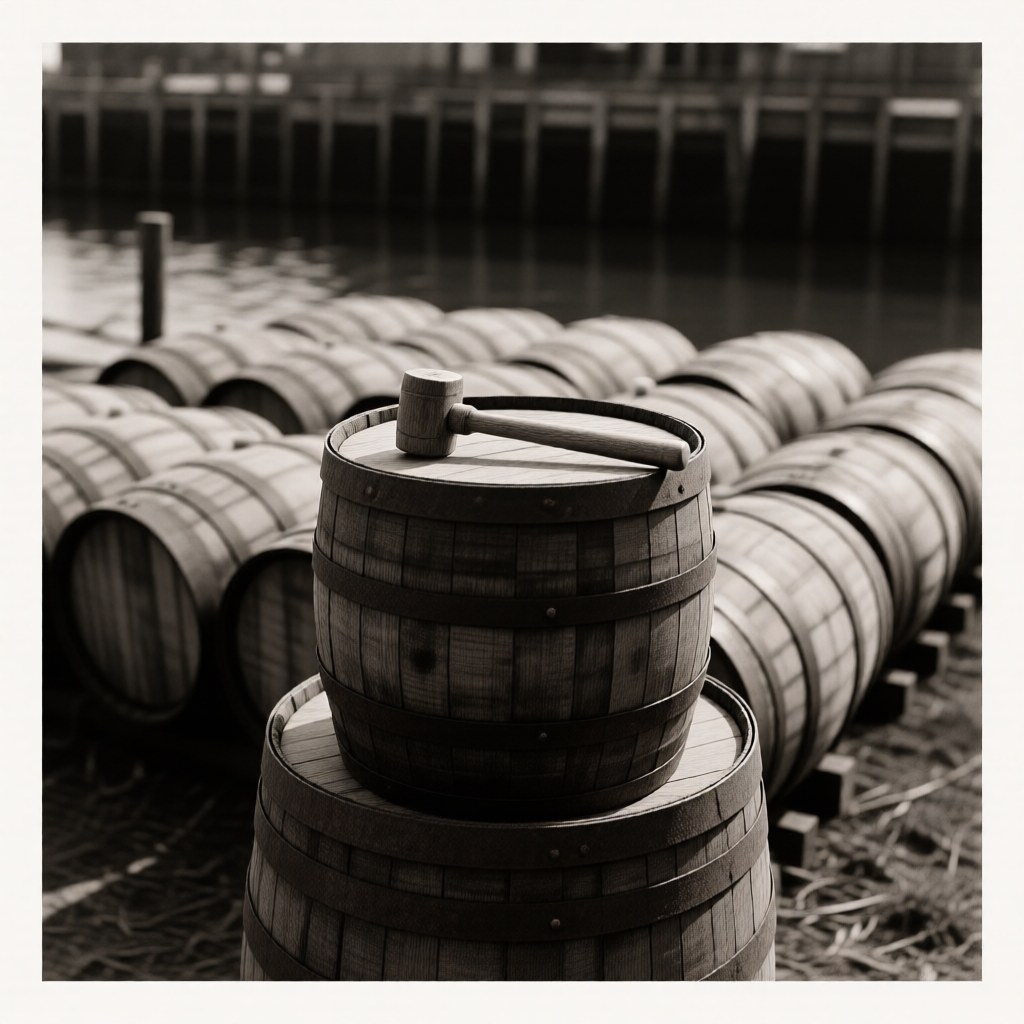
04 · The Flats

work-song call and response with hammers on wooden staves, slow first minute then a hard beat drop → industrial techno at 128 bpm, rough male lead, story-driven

🎶 The Sizzle: work-song call and response with hammers on wooden staves, slow first minute then a hard beat drop into industrial techno at 128 bpm, rough male lead, story-driven

🎬 The Story: The Flats, Cleveland 1863 to 1870: a cooper makes barrels for a refinery that soon makes its own barrels cheaper than he can; the partnership of January 1870 is signed in an office he will never enter.

Twenty-Two of Twenty-Six cover

[Intro]

It took him one winter to buy the city.

[Verse 1]

My husband had a refinery with his name across the door,

He had men on every floor of it and the river at the floor.

The railroads made a company that nobody could see,

And the freight went up for everyone, and down for only him.

[Verse 2]

He came to us on a Tuesday with the papers in his hand,

He said: sell to me or sell to no one, and he said we'd understand.

He offered us in stock or cash, he said the cash was less,

My husband took the cash in March and did not sleep for weeks.

[Verse 3]

In Pennsylvania they tore the charter up and called it a disgrace,

But the paper that we'd signed in March stayed signed in any case.

Twenty-two of twenty-six in less than one spring season,

And the four who wouldn't sign, he said, would learn the reason.

[Chorus]

They called it a massacre in the papers.

Nobody died. I checked.

Nobody died in Cleveland that winter,

Only the names on the doors.

[Drop]

Freight. Rebate. Sign.

Freight. Rebate. Sign.

The name comes off the door.

Freight. Rebate. Sign.

[Verse 4]

I walked past the building in the fall; the sign had changed its face,

The men inside were his men now, in the very same old place.

My husband sells insurance and he tells it as a joke,

That he sold the thing he built for cash, and the cash is what he's got.

[Chorus]

They called it a massacre in the papers.

Nobody died. I checked.

Nobody died in Cleveland that winter,

Only the names on the doors.

[Bridge]

He never raised the price of oil on us.

He raised the price of being anyone but him.

[Outro]

Only the names on the doors.

[Fade Out]

[End]

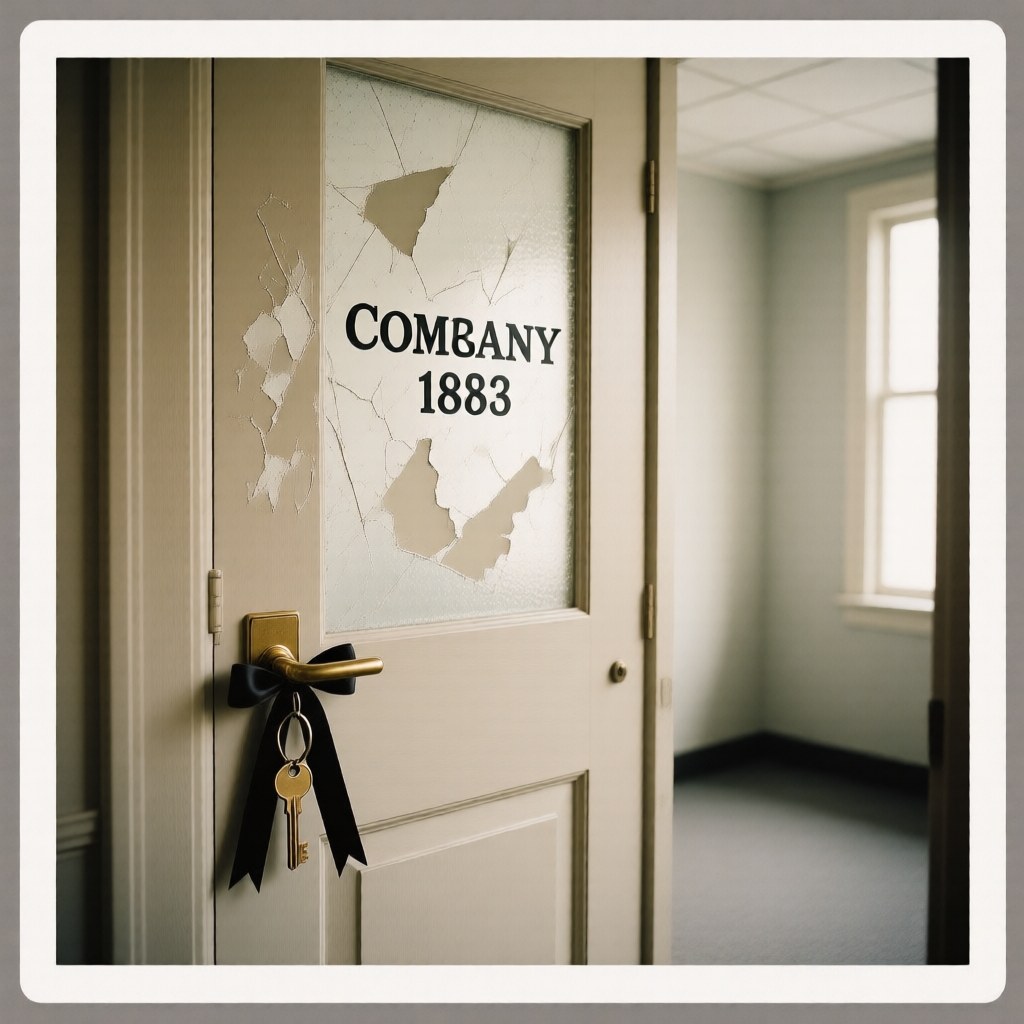
05 · Twenty-Two of Twenty-Six

funeral brass band and a parlor dirge, slow first minute then a hard beat drop → Detroit industrial techno at 130 bpm, cold female lead, story-driven

🎶 The Sizzle: funeral brass band and a parlor dirge, slow first minute then a hard beat drop into Detroit industrial techno at 130 bpm, cold female lead, story-driven

🎬 The Story: Cleveland, early 1872: in six weeks twenty-two of twenty-six refiners sign over their works after the South Improvement Company rebates; a refiner's wife watches her husband's name scraped off the door glass; the papers call it a massacre and nobody dies.

The Lamp Doesn't Ask cover

[Intro]

My father curses the man every night at the table.

Then he turns up the lamp so I can read. I never said a word about that.

[Verse 1]

A full day in the mill and the dark comes early in the fall,

My mother sewed the hem by candle once and squinted at it all.

Then the oil came down in price until a jar of it was ours,

And the kitchen stayed awake with us past the sleeping hours.

[Verse 2]

He made it in Cleveland, my father says, by breaking better men,

By buying up the river and the rails and then the rest of them.

Nine of every ten lamps burning in the country burn his oil,

And my father spits his name, and lights the lamp, and keeps his toil.

[Verse 3]

They say he goes to church on Sunday and he sings the hymns out plain,

They say he says the Lord gave him the oil, and the Lord won't give it again.

I don't know about the Lord. I know the dark came early once,

And now it doesn't.

[Chorus]

The lamp doesn't ask who made it.

The lamp doesn't ask who paid.

I read my book by the oil man's light,

And I read it anyway.

[Drop]

Turn it up. Turn it up.

The oil man's light. Turn it up.

Turn it up. Turn it up.

[Verse 4]

The price came down by four parts in five while he ran the whole machine,

And the cheapest thing in any house was the light to read between.

I finished every book the schoolhouse had before the spring,

And my father cursed his name, and the lamp did not say a thing.

[Chorus]

The lamp doesn't ask who made it.

The lamp doesn't ask who paid.

I read my book by the oil man's light,

And I read it anyway.

[Bridge]

I'm not saying he was good. I'm saying I finished the book.

[Outro]

I read it anyway.

[Fade Out]

[End]

06 · The Lamp Doesn't Ask

music-box lullaby and a young female hum, slow first minute then a hard beat drop → deep house at 121 bpm, soft female lead, warm, story-driven

🎶 The Sizzle: music-box lullaby and a young female hum, slow first minute then a hard beat drop into deep house at 121 bpm, soft female lead, warm, story-driven

🎬 The Story: A mill town in the 1880s: a girl reads at night by a kerosene lamp that costs a fraction of what her father paid, nine of every ten lamps burning the same oil; her father curses the man who made it and she reads anyway.

The Nine cover

[Intro]

They asked me to make forty-one companies into one, without making one company.

So I made a word.

[Verse 1]

The law said a company can't own another company's share,

So I wrote a piece of paper that put the shares into the air.

The nine would hold them, not for themselves, but as a trust,

And the forty-one would move like one, because the paper said they must.

[Verse 2]

We signed it in the winter in a room above Broadway,

Nine signatures, no company, and nothing much to say.

Nine of every ten barrels in the world were in the room,

And the room was not a company, and the law had no name for whom.

[Verse 3]

Then a woman from the oil fields wrote nineteen chapters down,

Of the spies and the rebates and the price wars town by town,

And the states came in a line to court like weather off the lake,

And the thing I wrote on paper was the thing they came to break.

[Chorus]

A trust is the thing nobody had.

A trust is a word I made.

I gave it to the nine on a Tuesday,

And the country learned to spell it as a crime.

[Drop]

Hold. Vote. Sign.

Hold. Vote. Sign.

The nine and the air.

Hold. Vote. Sign.

[Verse 4]

I never owned a barrel and I never lit a lamp,

I made a word in a warm room and it went out like a stamp.

They passed a law against the word, and then against the men,

And the word I made in a warm room is the word they use again.

[Chorus]

A trust is the thing nobody had.

A trust is a word I made.

I gave it to the nine on a Tuesday,

And the country learned to spell it as a crime.

[Bridge]

You can't outlaw a word. You can only outlaw the men who say it.

[Outro]

A trust is the thing nobody had.

[Fade Out]

[End]

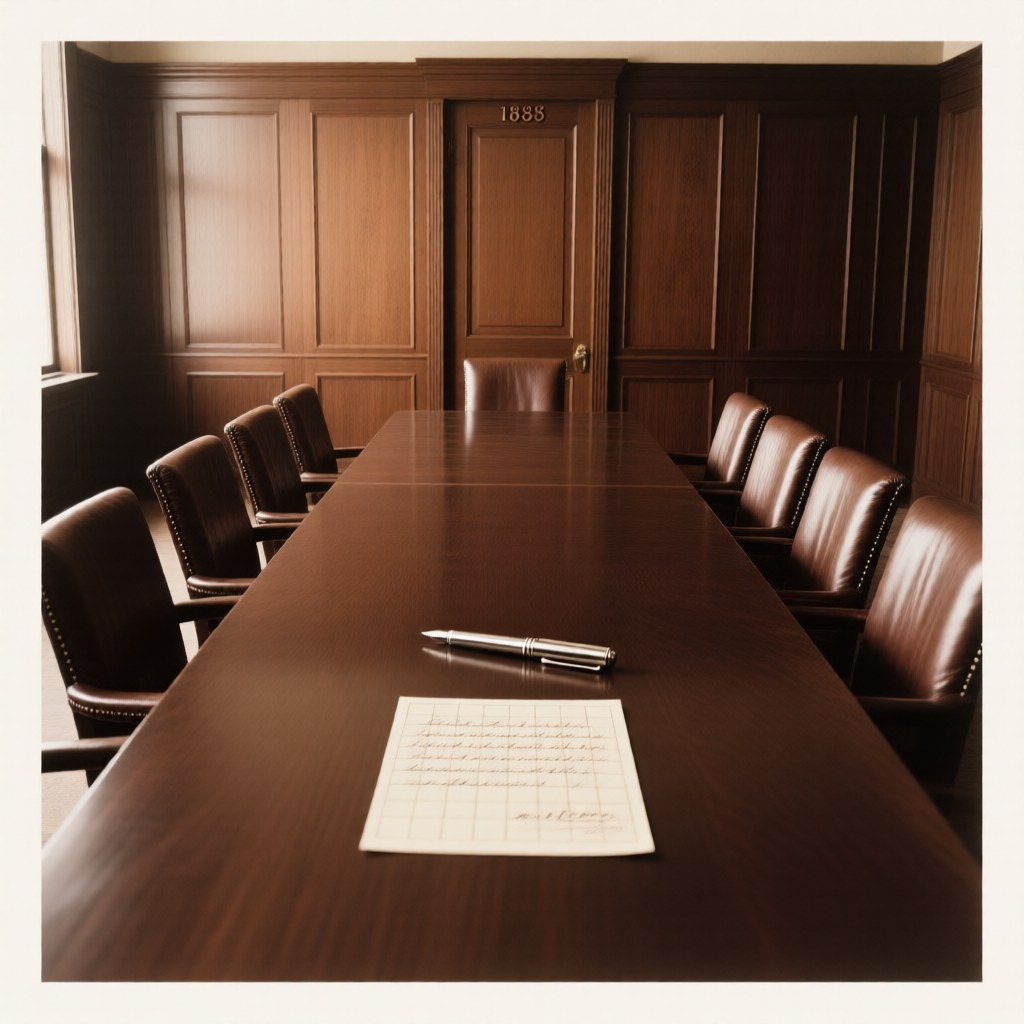
07 · The Nine

string quartet in a wood-paneled room, slow first minute then a hard beat drop → acid techno at 127 bpm with a squelching bass, dry spoken-sung male lead, story-driven

🎶 The Sizzle: string quartet in a wood-paneled room, slow first minute then a hard beat drop into acid techno at 127 bpm with a squelching bass, dry spoken-sung male lead, story-driven

🎬 The Story: 1882: a lawyer in a boardroom draws the trust, nine trustees over forty-one companies, and invents a word that will later be outlawed; the only sound is a pen.

Miss Tarbarrel cover

[Intro]

My father kept his tanks in the oil region. One winter the freight went up for him,

and down for a company nobody could name. I was a girl. I remembered.

[Verse 1]

I grew up in the oil fields where the derricks scratched the sky,

My father built his tanks by hand and sold what he could buy.

Then the fear came into town one winter, in every house and store,

And it had no face and had no name, so I went to find the door.

[Verse 2]

I sat with one of his own men, a partner from the start,

He talked for months across a desk and gave me every part.

I wrote it down in nineteen pieces, month by month by month,

And the country read it on the train, and the train was never done.

[Verse 3]

He called me Miss Tarbarrel to the men inside his hall,

He said: not a word about that misguided woman, that was all.

I saw him once across a room, an old man in a wig,

Who looked at every face but mine, and gave a nickel to a kid.

[Chorus]

I never said he wasn't great.

I said they never played fair.

And that is what ruined their greatness for me,

And he said not a word.

[Drop]

Type. Line. Proof.

Type. Line. Proof.

Nineteen pieces, month by month.

Type. Line. Proof.

[Verse 4]

Seven years after the last piece the court cut the thing apart,

Into thirty-four small giants, and the giants grew from the start.

He got richer on the morning that the paper said he'd lost,

And I had told the truth, and that was all, and that was what it cost.

[Chorus]

I never said he wasn't great.

I said they never played fair.

And that is what ruined their greatness for me,

And he said not a word.

[Bridge]

I was not against him. I was for the men who kept their tanks.

[Outro]

They never played fair.

[Fade Out]

[End]

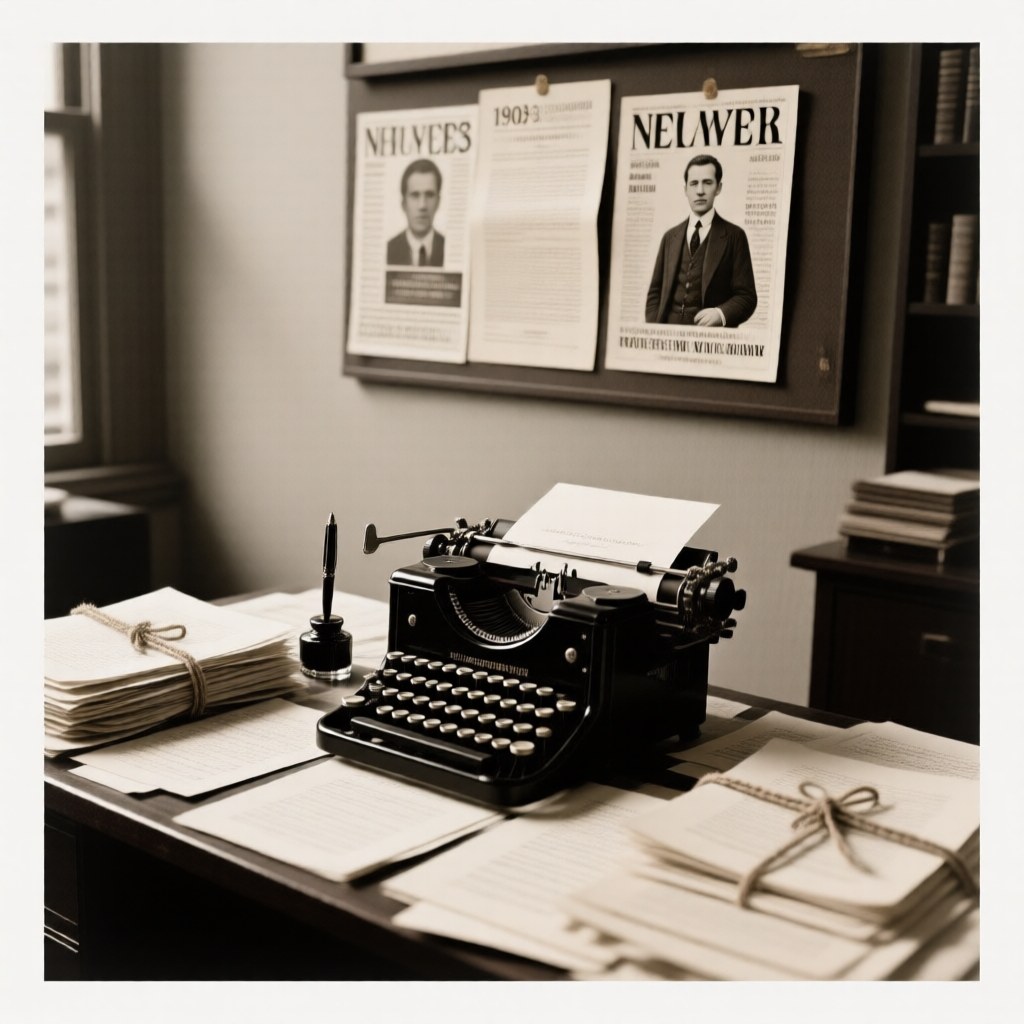
08 · Miss Tarbarrel

ragtime piano with a typewriter rhythm, slow first minute then a hard beat drop → New York garage house at 126 bpm, determined female lead, story-driven

🎶 The Sizzle: ragtime piano with a typewriter rhythm, slow first minute then a hard beat drop into New York garage house at 126 bpm, determined female lead, story-driven

🎬 The Story: 1902 to 1904: Ida Tarbell, daughter of an oil-region independent, writes nineteen magazine parts on the company, needing the man to be a man and not a monster for the story to hold; a source talks, the typewriter keeps time.

Ludlow cover

[Intro]

We dug a hole under the tent so the children could sleep below the bullets.

That is the first thing you need to know about Ludlow.

[Verse 1]

A city of canvas on the plain since the cold came in September,

The company guards on the ridge and a searchlight on our door.

We asked for the scale to weigh the coal we cut them,

They sent the Guard instead, and the Guard was theirs, not ours.

[Verse 2]

In April, on a Monday, the rifles started early,

I put the little ones down in the hole beneath the floor.

Four of us women and every child we could gather,

And the smoke found the hole before the morning did.

[Chorus]

They call it a massacre in the papers,

They call it a plan in New York.

I call it the morning I counted my children,

And the count came back short.

[Verse 3]

The Greek who ran our camp went up to talk them down,

They broke a rifle on his head and shot him in the back.

They wrote that it was heroic, they wrote it in a report,

And they tried their own and let them go, and then they tried us.

[Drop]

Canvas. Searchlight. Smoke.

Canvas. Searchlight. Smoke.

Count them in the morning. Count them in the morning.

Canvas. Searchlight. Smoke.

[Verse 4]

The Rockefeller son went up the river to his garden,

He hired a man to write a plan and a man to fix the news.

Paved roads and a ballfield, and no word for the union,

And they charged our men with murder for the hole we dug for you.

[Chorus]

They call it a massacre in the papers,

They call it a plan in New York.

I call it the morning I counted my children,

And the count came back short.

[Bridge]

There is a stone there now, with the names on it.

I did not need the stone. I had the names.

[Outro]

Count them in the morning.

The count came back short.

[Fade Out]

[End]

09 · Ludlow

miners' folk song on mandolin and accordion with a low female voice, wind over a plain, slow first minute then a hard beat drop → dark driving techno at 128 bpm, hollow kick, metallic clang, half-spoken female lead, grim and relentless, story-driven

🎶 The Sizzle: miners' folk song on mandolin and accordion with a low female voice, wind over a plain, slow first minute then a hard beat drop into dark driving techno at 128 bpm, hollow kick, metallic clang, half-spoken female lead, grim and relentless, story-driven

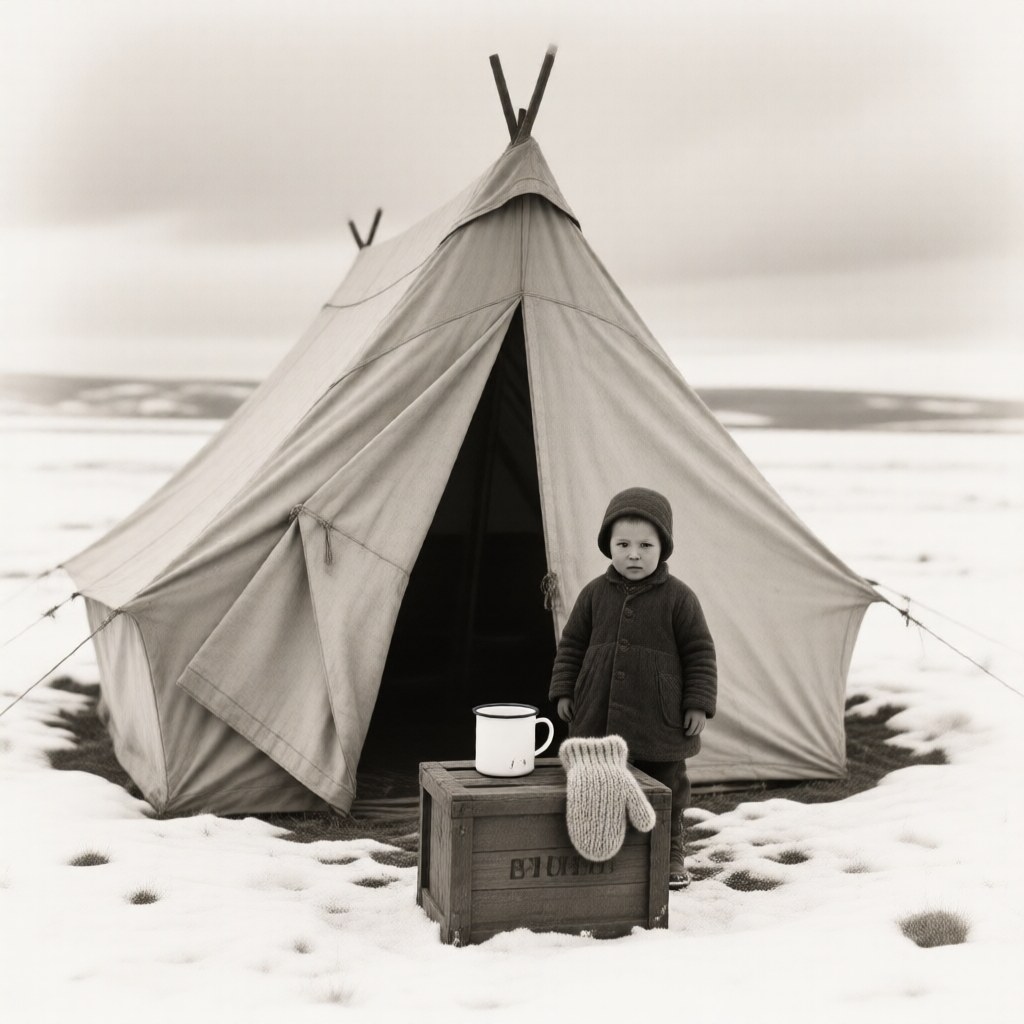
🎬 The Story: Ludlow, Colorado, April 1914: a mother in a tent colony counts her children after the fire and the count comes back short; from New York comes a plan instead of names.

Thirty-Four covervideo in production

[Intro]

May, nineteen-eleven. The Supreme Court says the company must die.

I'm the one who has to count the pieces.

[Verse 1]

I keep the certificates in a room without a view,

High above Broadway, where the ticker stutters through.

The paper came at noon: the court had cut the thing apart,

Thirty-four new companies, and one old man, and one old heart.

[Verse 2]

We thought the price would fall. The price went up and up and up.

Each piece was worth more on its own than the whole had ever been,

Within the years the whole of it had climbed to five times what it was,

And the old man had nine hundred million, and the court was the cause.

[Verse 3]

He doesn't come in much. His hair went years ago, they say,

He wears a wig now, and the mustache is gone, and he smiles like a slate.

He plays golf and gives a dime to every man he meets,

And the thing the court dissolved runs on in thirty-four new streets.

[Chorus]

Dissolved, said the paper.

Dissolved, said the court.

And the pieces were worth more than the whole,

And the old man said thank you.

[Drop]

Split. Climb. Count.

Split. Climb. Count.

Thirty-four and climbing.

Split. Climb. Count.

[Verse 4]

Five years on a paper said the first billionaire was made,

A number nobody had seen before, and nobody had paid.

I count the certificates that night in the room without a view,

And I think: they broke it to pieces, and every piece grew.

[Chorus]

Dissolved, said the paper.

Dissolved, said the court.

And the pieces were worth more than the whole,

And the old man said thank you.

[Bridge]

The government won the case. I'd like to know what losing looks like.

[Outro]

The pieces were worth more than the whole.

[Fade Out]

[End]

10 · Thirty-Four

ticker-tape clatter and a brass fanfare, slow first minute then a hard beat drop → peak-time tech house at 128 bpm, big snare, nervous male lead, story-driven

🎶 The Sizzle: ticker-tape clatter and a brass fanfare, slow first minute then a hard beat drop into peak-time tech house at 128 bpm, big snare, nervous male lead, story-driven

🎬 The Story: New York, 1911: a clerk counts share certificates on the day the court cuts the company into thirty-four pieces, and the pieces are worth more than the whole; his boss grows richer on the day he loses.

Avalanche covervideo in production

[Intro]

I was a preacher with a Baptist pulpit and a plan for a school.

He was a Baptist with more money than any man alive.

We met in January. We shook hands. I never preached again.

[Verse 1]

I came to him for a college on a cold day in the year,

The oil was coming in so fast the man could barely steer,

I said: the money's piling up behind you like a hill of snow,

And one day it will come down on you unless you let it go.

[Verse 2]

He gave the school in Chicago more than any man had spent,

And called it the best investment that he'd ever made or meant.

Then a house for the doctors, for the sicknesses of the poor,

And a board for every schoolhouse from the hills down to the shore.

[Verse 3]

In the spring the Foundation got its charter and its name,

And a sum that made the senators sit up and ask who came.

Half a billion through my hands before my hands were done,

And every dollar came from oil, and every dollar from the one.

[Chorus]

Give it faster than it grows.

Give it faster than it grows.

The Lord gave you the money, you keep telling me,

Then the Lord is in a hurry.

[Drop]

Give. Give. Give.

Faster than it grows.

Give. Give. Give.

Faster than it grows.

[Verse 4]

They said we bought the conscience of a country for a song,

They said the gift was blood, and the blood was in the wrong.

I said: the money's real, the hookworm's real, the schoolhouse has a door,

And I would take the oil man's dollar, and I'd ask him for more.

[Chorus]

Give it faster than it grows.

Give it faster than it grows.

The Lord gave you the money, you keep telling me,

Then the Lord is in a hurry.

[Bridge]

He asked me once if it was enough. I said: not while it's still growing.

[Outro]

Give it faster than it grows.

[Fade Out]

[End]

11 · Avalanche

Baptist choir and a church organ, slow first minute then a hard beat drop → Chicago house at 124 bpm with piano stabs, preaching male lead, joyful, story-driven

🎶 The Sizzle: Baptist choir and a church organ, slow first minute then a hard beat drop into Chicago house at 124 bpm with piano stabs, preaching male lead, joyful, story-driven

🎬 The Story: 1889 to 1913: a Baptist minister tells the richest man alive to give it away faster than it grows, and the bookkeeper who once tithed from a fifty-dollar season signs away a university, an institute, a foundation.

Ninety-Seven covervideo in production

[Intro]

He gave me a dime every time he came off the course. I was a kid.

I thought he was the richest man in the world. He was.

[Verse 1]

Ormond Beach, the wind off the river, and an old man on the green,

Thin as a rail in a straw hat, the oldest man I'd seen.

He'd finish his round and shake my hand and press a coin in it,

A dime for the men, a nickel for the boys, and he never once forgot it.

[Verse 2]

He told me once he'd had two wishes when he was a boy like me,

To make a hundred thousand, and to live a hundred years, you see.

He made the first so many times that nobody could count,

And he counted every birthday like a column, like an amount.

[Verse 3]

Every May they came from Cleveland, the doctors and the sons,

And he'd sit out on the porch at the Casements and watch the river run.

That last spring he didn't come out. I waited by the gate.

And they said it was his heart, and they said it was just late.

[Chorus]

A dime from a billionaire is still a dime.

I know. I know.

I kept it in a box my whole life,

And I never once spent it, and I never once knew why.

[Drop]

Swing. Walk. Dime.

Swing. Walk. Dime.

Count the years. Count the years.

Swing. Walk. Dime.

[Verse 4]

He died in May, two months before ninety-eight, three short of his dare,

They took him north to Cleveland to the hill above the lake up there.

I read it in the paper with his dime inside my hand,

And I thought: he lost the only bet he ever made, and I don't think he'd understand.

[Chorus]

A dime from a billionaire is still a dime.

I know. I know.

I kept it in a box my whole life,

And I never once spent it, and I never once knew why.

[Bridge]

He wanted a hundred. He got ninety-seven. It's the only number of his I ever cared about.

[Outro]

A dime from a billionaire is still a dime.

[Fade Out]

[End]

12 · Ninety-Seven

porch ukulele and a whistled hymn, slow first minute then a hard beat drop → tropical tech house at 123 bpm, easing into an ambient techno outro, warm old male lead, story-driven

🎶 The Sizzle: porch ukulele and a whistled hymn, slow first minute then a hard beat drop into tropical tech house at 123 bpm, easing into an ambient techno outro, warm old male lead, story-driven

🎬 The Story: Ormond Beach, Florida, 1937: a caddie holds the dime an old man pressed into his hand on the green above the sea; the man wanted a hundred years and came up three short, two months before ninety-eight.