
BEATRIFULThe Widow's Ledger: Four Debts · The Widow's Ledger: Paid in FullSizzleC
album cover

THE WIDOW'S LEDGER

SizzleC · 10 songs · in production

Volume 1 of the Olha of Kyiv (Olga of Kiev) concept album. 945: the Drevlians kill Prince Ihor and send twenty men to offer his widow a wedding. Olha pays them back four times, in order, the way the Primary Chronicle tells it: a boat, a bathhouse, a funeral feast, and a town set alight by its own pigeons. Every song opens in the sound of tenth-century Rus' and drops hard into dark tech house. Female lead, first person, no apologies.

steppe wind and gusli → dark tech house · Slavic women's choir → dark tech house · Slavic chant and fire → deep house · funeral lament → aggressive tech house · bells and pigeon wings → peak-time dark tech house

all takes and alternates →

The Widow's Ledger: Four Debts · 5 songs

Two Birch Trees (The Tribute Run) cover

[Intro]

Nine hundred forty-five. The Dnipro running low.

Ihor rode to the Drevlians. Twice, for the same gold.

[Verse 1]

They paid him once in honey, in black fox and in wax.

He turned the horses round for more. He never came back.

[Verse 2]

A wolf among the sheep, they said, takes the flock one by one.

They bent two birch trees to the ground and tied my husband on.

That's how the Greeks tell it. The rider wouldn't say.

My son is three. My hands are dry. I sent the rider away.

[Pre-Chorus]

Bar the gate. Count the spears. Light the long hall.

Prince Mal of Iskorosten, I have learned your name. That's all.

[Time]

[Drop]

Ihor's dead. Ihor's dead.

(Слава! Слава! Давай!)

Four debts on the Drevlians and I keep them in my head.

The widow holds the river, the widow holds the throne,

Sviatoslav is three years old, so Kyiv is my own.

[Drop 2]

(Слава! Слава! Давай!)

[Verse 3]

I didn't tear my dress. I didn't tear my hair.

I called in every boyar and I sat in Ihor's chair.

They think a widow is a door you simply walk straight through.

Twenty men are rowing down to tell me what to do.

I have Ihor's sword, Ihor's son and Ihor's gate.

Prince Mal, you want a wedding? Set the date. I'll wait.

A boat, a bath, a barrel and a sky full of birds.

Four debts. I'll pay them in order. You have my word.

[Outro]

Nine hundred forty-five. The river's running low.

Ihor's dead. I know.

[Fade Out]

[End]

01 · Two Birch Trees (The Tribute Run)

Wind over the open steppe, a creaking wooden boat and a single gusli under a low female hum, then a hard switch → dark tech house: heavy rolling sub-bass, cold minor stabs, dry female lead vocal, first person, 126 BPM

🎶 The Sizzle: Steppe wind, a creaking boat and one gusli under a woman's low hum, then a hard switch into cold dark tech house with a rolling sub. Mood: a widow who does not cry, counting.

🎬 The Story: Two Birch Trees: 945. Ihor collects the Drevlian tribute, turns back for a second helping and is killed. The news reaches Kyiv; Olha, with a three-year-old son, bars the gate and starts her ledger. Fact: Ihor died among the Drevlians in 945 and Olha ruled as regent for Sviatoslav. Legend: the two bent birch trees come from the Byzantine historian Leo the Deacon and may be borrowed from a Greek myth; the wolf-and-sheep line is the Primary Chronicle's.
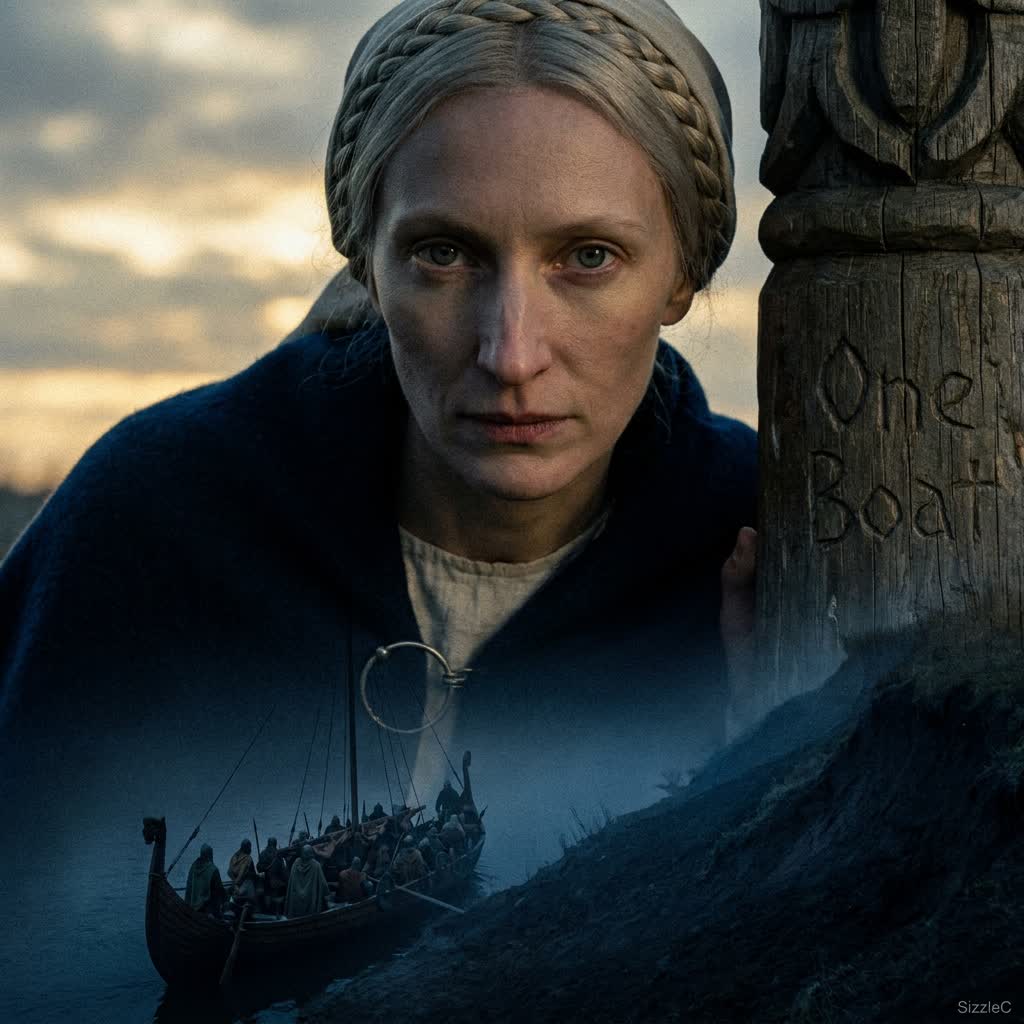
Twenty Men, One Boat (The Proposal) cover

[Intro]

Twenty men in one boat, down the Dnipro in the spring.

Prince Mal sends his compliments. Prince Mal sends a ring.

[Verse 1]

We killed him like a wolf, they say, but our princes are kind.

Marry Mal of Iskorosten. Put Ihor out of mind.

[Verse 2]

I say: your offer pleases me. A dead man won't rise.

Tomorrow I will honour you in front of Kyiv's eyes.

Go back and sleep on board tonight, and when my people call,

Say: we won't ride, we won't walk. Carry us, boat and all.

[Pre-Chorus]

All night in the courtyard, shovels in the clay.

Long enough for one boat. Deep enough to stay.

[Time]

[Drop]

Carry them in! Carry them in!

(Давай, давай! Ура!)

Twenty men on the benches with their chests out and their chins.

Carry them in! Over the edge!

How's the honour, gentlemen? Worse than Ihor's death.

[Drop 2]

(Давай, давай! Ура!)

[Verse 3]

They sat up in their silver and they never saw the ground.

My men let go the gunwales and the whole boat went down.

I leaned over the edge. I asked them how it felt.

Worse than Ihor, said the boat. I said: then that's one debt.

Prince Mal, send me your best men, the ones who run your land.

I'm coming to be married. I want a proper hand.

Twenty men came down the Dnipro. None of them went home.

Nine hundred forty-five. The widow's on the throne.

[Outro]

Carry them in.

One debt. Three to go.

[Fade Out]

[End]

02 · Twenty Men, One Boat (The Proposal)

A Slavic women's choir in close harmony, oars dipping in the Dnipro, a wooden hull creaking, then a hard switch → dark tech house: heavy sub-bass, clipped vocal chops, dry female lead vocal, first person, cold and precise, 125 BPM

🎶 The Sizzle: A Slavic women's choir and oars on the Dnipro, then a hard switch into dark tech house with clipped vocal chops. Mood: hospitality as a trap.

🎬 The Story: Twenty Men, One Boat: Prince Mal's envoys arrive by boat to propose marriage. Olha tells them to demand to be carried in their boat as an honour; her men carry them to a trench dug overnight and bury them alive. She asks whether the honour is to their taste. Chronicle legend throughout, including the count of twenty and the reply 'worse than Ihor's death'; historians allow that the killing of a first embassy is plausible, the rest is the chronicler's design.

keeper not picked yet

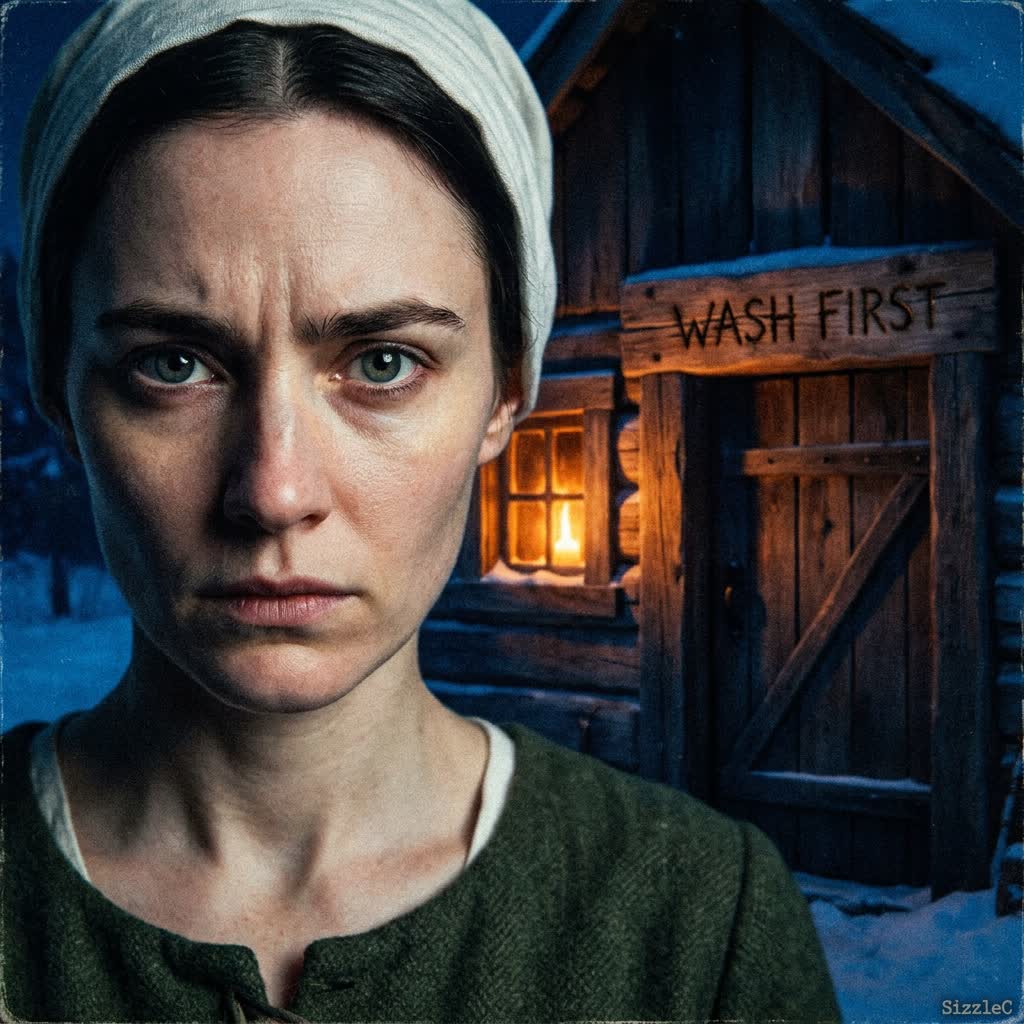
Wash First (The Bathhouse) cover

[Intro]

Send me your best men. The ones who rule the land.

Kyiv won't let me leave with less. You understand.

[Verse 1]

They came in on the road this time. No boats. They'd heard.

Clean linen, oiled beards, every one of them a lord.

[Verse 2]

I said: you've travelled far. You smell of horse and road.

The bathhouse by the river's lit. The water's hot. The stones are glowing.

Go in and wash before the wedding, every noble son.

I'll see you when you're clean. I'll see you when you're done.

[Pre-Chorus]

Pine walls, pine roof, a bar across the door.

Fire takes a bathhouse fast. That's what pine is for.

[Time]

[Drop]

Wash first! Wash first!

(Боже мій! Давай!)

Steam up to the rafters, and the rafters catching first.

Wash first! Lock the door!

Prince Mal, that was your best men. Two debts. Two more.

[Drop 2]

(Боже мій! Давай!)

[Verse 3]

At first they sang. A wedding song. Through the steam, through the wall.

Then the bar came down across the door and the fire took it all.

I didn't watch. I counted. Every lord was there.

They came to wash for a wedding. Now they're smoke in the air.

No one rode home to Iskorosten. No one took the road.

Prince Mal is short of counsel now. The widow pays what's owed.

Two debts cleared and not a drop of blood on my dress.

Send a rider up to Iskorosten: I'm coming next.

[Outro]

Wash first.

Two debts. Two to go.

[Fade Out]

[End]

03 · Wash First (The Bathhouse)

Slavic chant over the crackle of a wood fire, water hissing on hot stones, a birch whisk slapping, a slow bell, then a hard switch → deep house: slow, steam-heavy and hypnotic, warm sub-bass, muted chords, dry female lead vocal, first person, 122 BPM

🎶 The Sizzle: Slavic chant over a wood fire and water on hot stones, then a hard switch into slow, steam-heavy deep house. Mood: polite, warm, locked.

🎬 The Story: Wash First: Olha asks for the Drevlians' best men to escort her to her wedding, offers them a bathhouse and burns it with the door barred. Chronicle legend: the second revenge as the Primary Chronicle tells it; no independent source.

Pour Them Another (Five Thousand) cover

[Intro]

Brew the mead. Brew a lot. I'm coming to the grave.

I'll weep for Ihor where he fell. Then we'll eat. Behave.

[Verse 1]

I came with a small escort. I wept, and that was true.

We raised the mound above him. Then I did what widows do.

[Verse 2]

I set the tables on the hill. My own men pour the mead.

They ask about the twenty men, the lords who came before.

Behind me, with the bodyguard, I say. Then: pour them more.

Drink to Ihor, Drevlians. Drink to the widow's peace.

[Pre-Chorus]

A funeral feast is for the dead. Nobody asked me whose.

When the mead is in their legs I stand. One nod. That's the cue.

[Time]

[Drop]

Pour them another! Pour them another!

(Горько! Горько! Давай ще!)

Five thousand on the hillside, every son and every brother.

Pour them another! Drink to the prince!

The chronicle says five thousand. I haven't counted since.

[Drop 2]

(Горько! Горько! Давай ще!)

[Verse 3]

My men stayed sober. Theirs did not. That's all the trick there was.

Five thousand at a funeral. The monks still count the cost.

I rode back down to Kyiv and I raised a proper host.

Prince Mal, you asked me for a wedding. Here's the toast.

Three debts in a single year, no army, just a plan.

A boat, a bath, a barrel. Now I'm coming for the land.

Iskorosten, shut your gates and count your wood and your beer.

The widow's done with dinners. This debt takes a year.

[Outro]

Pour them another.

Three debts. One to go.

[Fade Out]

[End]

04 · Pour Them Another (Five Thousand)

A Slavic funeral lament, a lone gusli, a mead horn knocked on a table, a drunken men's chorus, then a hard switch → aggressive dark tech house: rolling hi-hats, hard analog bass, stabbing brass, dry female lead vocal, first person, 128 BPM

🎶 The Sizzle: A funeral lament and a drunken men's chorus, then a hard switch into aggressive dark tech house with rolling hi-hats and brass. Mood: a wake that turns.

🎬 The Story: Pour Them Another: Olha comes to Ihor's grave for the funeral feast, has her men pour mead until the Drevlians are drunk, then has them killed; the Chronicle counts five thousand. Fact: Olha did campaign against the Drevlians and subdue them. Legend: the feast and the number five thousand are the Chronicle's; the song says so out loud ('the chronicle says five thousand').

The Pigeon Tax (Iskorosten) cover

[Intro]

A year outside your walls, Iskorosten. Spring to spring.

Every other town has paid me. Why are you still standing?

[Verse 1]

My son threw the first spear. It fell beside his horse.

He's four. Sveneld said: the prince has begun. And the army followed, of course.

[Verse 2]

You shout down from the ramparts: we'd pay, but you want blood.

I've had my blood three times, I say. I'm finished. I'm good.

I don't want your honey. I don't want your wax.

Three pigeons and three sparrows from each house, and I'll go back.

[Pre-Chorus]

They laughed up on the walls. They sent the birds. Birds are cheap.

One bird for every soldier. Sulphur in a rag. Wait for dark.

[Time]

[Drop]

Fly home! Fly home!

(Ура! Ура! Слава!)

Every pigeon knows its roof, every sparrow knows its own.

Fly home! Light the town!

Three birds a house, Iskorosten, and every house burns down.

[Drop 2]

(Ура! Ура! Слава!)

[Verse 3]

Dovecotes, eaves and haylofts, every thatch alight,

No one fights a fire that starts on every roof the same night.

They ran out through the gates to me. I had men at the gates.

The elders to the sword. Some sold. The rest stayed on and paid.

Two parts of the tribute to Kyiv. One part to Vyshhorod, mine.

The monks say it was birds. Maybe. The town burned down fine.

Four debts, one year, one widow, and a boy who threw a spear.

Prince Mal, we're even. Drevlians, I'll see you every year.

[Outro]

Fly home.

Four debts. Paid.

[Fade Out]

[End]

05 · The Pigeon Tax (Iskorosten)

Wind through a wooden palisade, a distant wooden horn, a single village bell, the beating of pigeon wings, a women's choir holding one low note, then a hard switch → peak-time dark tech house: huge kick, distorted sub-bass, long hissing risers, dry female lead vocal, first person, 128 BPM

🎶 The Sizzle: Wind on a palisade, a village bell and pigeon wings, then a hard switch into peak-time dark tech house with a huge kick and long risers. Mood: the cheapest tribute ever asked.

🎬 The Story: The Pigeon Tax: after a year's siege Olha asks Iskorosten for three pigeons and three sparrows per house, ties lit sulphur to the birds and lets them fly home. The town burns; survivors are killed, sold or taxed, two parts to Kyiv and one to Vyshhorod. Fact: the Drevlians were defeated and made tributary, and Vyshhorod was Olha's own town. Legend: the birds are a folk-tale motif found in other medieval sieges; the child Sviatoslav's spear-throw and Sveneld's line are the Chronicle's. The song admits it: 'the monks say it was birds. Maybe.'

keeper not picked yet

The Widow's Ledger: Paid in Full · 5 songs

Two Parts to Kyiv (The Pogosts) cover

[Intro]

Ihor rode out every winter for the tribute. Ihor's dead.

I'm not riding every winter. I'll have posts instead.

[Verse 1]

Nine hundred forty-seven. Novgorod. The Msta and the Luga.

A station on each river and a man of mine to run it.

[Verse 2]

Furs by the forty, honey by the barrel, wax by the weight.

Here's the quota, here's the season, here's the day you pay.

No more princes riding round with swords to ask for more.

Ihor asked for more. You know what asking's for.

[Pre-Chorus]

Two parts to Kyiv. One part to Vyshhorod, mine.

Count it in the autumn. Ship it on the river in good time.

[Time]

[Drop]

Pogost! Pogost!

(Хорошо! Давай!)

A post on every river and a quota on each town.

Pogost! Pogost!

Nobody dies collecting when the count is nailed down.

[Drop 2]

(Хорошо! Давай!)

[Verse 3]

I set hunting lodges north of Vyshhorod for hawks.

The Greeks pay gold for falcons. I sell them by the box.

My sledge still stands in Pskov, they say. I don't need it anymore.

A woman with a ledger doesn't ride from door to door.

Twenty years I ran it while my son learned war instead.

The Drevlians pay on time now. Nobody's lost his head.

Nine forty-seven to the Greek gold: this is how you build a state.

Not a sword in every village. A man, a post, a rate.

[Outro]

Two parts to Kyiv.

One to Vyshhorod. Mine.

[Fade Out]

[End]

06 · Two Parts to Kyiv (The Pogosts)

A gusli plucked in a steady counting rhythm, sledge runners on snow, wooden abacus beads clicking, a low women's choir, then a hard switch → groovy deep house: steady warm bassline, crisp percussion, organ-style chords, dry female lead vocal, first person, 124 BPM

🎶 The Sizzle: A gusli plucked like someone counting, sledge runners and abacus beads, then a hard switch into warm, groovy deep house with organ chords. Mood: the quiet pleasure of a system that works.

🎬 The Story: Two Parts to Kyiv: 947. Olha stops the prince's armed winter tribute circuit and sets up pogosts, posts with fixed quotas, on the Msta and Luga; two parts of the Drevlian tribute go to Kyiv and one to Vyshhorod, her town; hunting lodges supply falcons for the Byzantine trade. Chronicle, broadly accepted by historians as the first Rus' revenue reform; the exact quotas and dates in the song are the Chronicle's, and 'my sledge still stands in Pskov' is the chronicler's own aside.

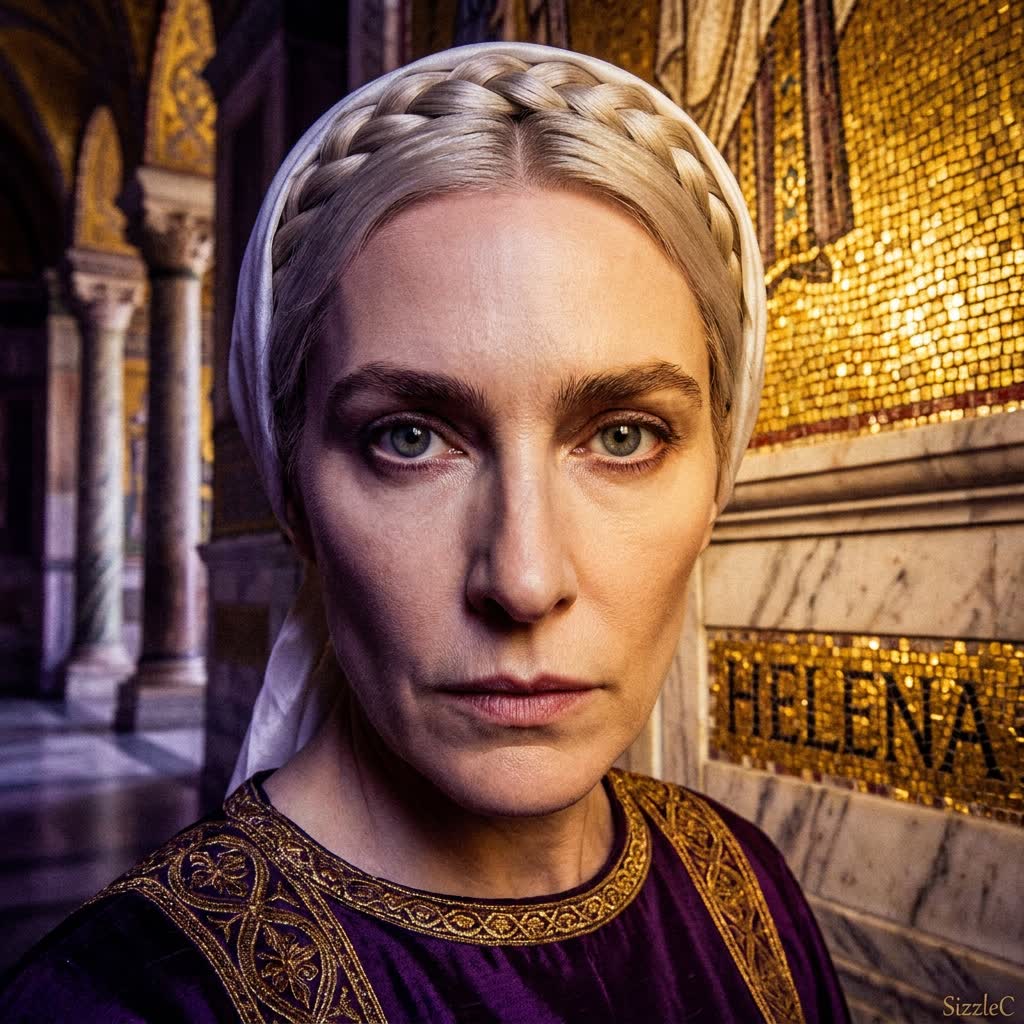
Daughter of the Emperor (Helena) cover

[Intro]

Down the Dnipro, over the rapids, across the Black Sea.

A widow from the north with forty-three merchants and a priest.

[Verse 1]

Constantinople. Ninth of September. The Magnaura hall.

A golden tree with singing birds. Brass lions. I'm not impressed at all.

[Verse 2]

They sat me with the Empress, not down on the floor.

Five hundred silver pieces on a dish of gold. I've had more.

The dome of Hagia Sophia is a sky somebody built.

The Patriarch pours the water. Constantine stands sponsor. I kneel.

[Pre-Chorus]

I came in Olha: widow, pagan, regent of the Rus'.

I walk out Helena. The emperor's daughter. I know which one I'll use.

[Time]

[Drop]

Helena! Helena!

(Боже мій… Слава!)

They poured the water, I took the name, I took the better deal.

Helena! Helena!

Daughter of the emperor. First on the throne to kneel.

[Drop 2]

(Боже мій… Слава!)

[Verse 3]

Eighteenth of October. Second reception. Dinner with the family.

Two dates the emperor kept himself. That much is history.

The monks at home say Constantine stood sponsor at the font.

The Greeks don't mention it. Believe whichever one you want.

I've seen the light inside that dome. I'm not going back to wood.

Kyiv has a river and a gate. Now Kyiv has a God.

Olha for the Drevlians. Helena for the Greeks.

Both of them are me. Whichever one Kyiv needs.

[Outro]

Helena.

Daughter of the emperor.

[Fade Out]

[End]

07 · Daughter of the Emperor (Helena)

Byzantine chant in a vast stone dome, deep bells, a court organ drone, incense-slow, then a hard switch → warm melodic deep house: rich pads, deep bass, gospel-tinged female choir stabs, dry female lead vocal, first person, 123 BPM

🎶 The Sizzle: Byzantine chant under a stone dome, bells and an organ drone, then a hard switch into warm melodic deep house with choir stabs. Mood: awe, immediately priced.

🎬 The Story: Daughter of the Emperor: Olha sails to Constantinople with her retinue, is received by Constantine VII in the Magnaura and seated with the imperial family, and takes the Christian name Helena. Fact: the two receptions (9 September and 18 October), the forty-three merchants, the priest Gregory and the five hundred silver miliaresia on a gold dish are in the emperor's own ceremonial book De Ceremoniis; Byzantine chroniclers confirm she was baptised. Disputed: the year (957 is the common date; some argue 946) and whether the baptism happened in Constantinople or earlier in Kyiv; De Ceremoniis does not mention a baptism and a priest already travelled with her. The song sings the Chronicle's version and says the Greeks do not mention it.

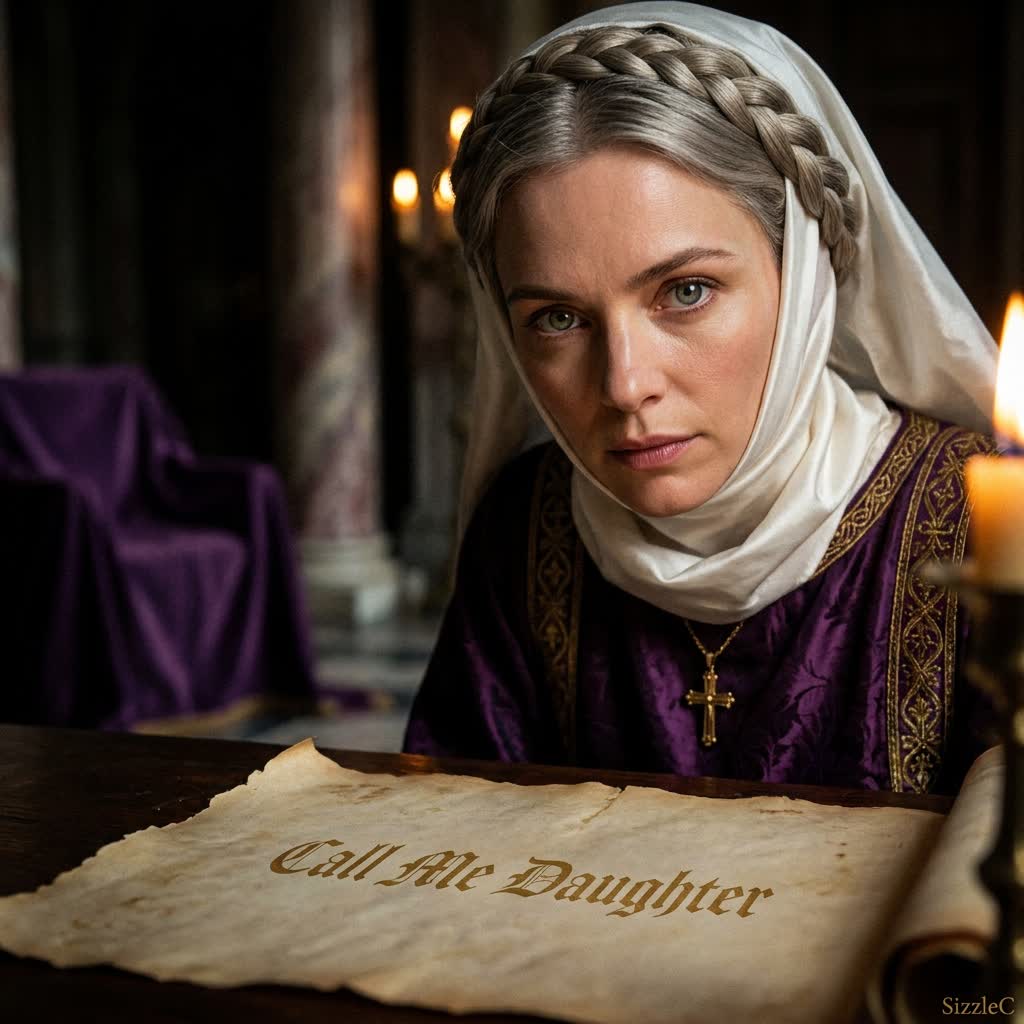
Call Me Daughter (The Proposal) cover

[Intro]

He looked at me across the hall. He said: you're fit to reign.

You and I, in this city. I said: baptise me first. Then ask again.

[Verse 1]

He has an empress upstairs and a crown he wants to share.

A widow with a river, that's a dowry anywhere.

[Verse 2]

So he stood at the font himself. He poured. He called me daughter.

That's the thing about a godfather: he's family after.

Church law, Constantine. You taught it to me. You know the line.

Can't marry what you christened. It's your rule, not mine.

[Pre-Chorus]

He went quiet for a minute. Then he laughed, they say.

Olha, you have outwitted me. Gold, silver, silk. Good day.

[Time]

[Drop]

Call me daughter! Call me daughter!

(Нєт, нєт, нєт! Давай!)

You said it at the font, you can't un-say the water.

Call me daughter! Not your bride!

I'll take the God, I'll take the name, and I'll sail home with the tide.

[Drop 2]

(Нєт, нєт, нєт! Давай!)

[Verse 3]

Back in Kyiv, his envoys came for what I'd said I'd send:

Slaves and wax and furs and soldiers, like you'd send a friend.

I said: when your emperor has stood down in the Pochaina

Half as long as I stood in his court, we'll talk. Not before.

I sent them home with nothing. He had called me daughter.

Daughters don't pay tribute. He should have thought of that.

Twenty men once brought me a ring. They're under the courtyard.

An emperor brought me a crown. He's fine. I've gone soft.

[Outro]

Call me daughter.

Olha, you have outwitted me.

[Fade Out]

[End]

08 · Call Me Daughter (The Proposal)

A Byzantine court lute and a soft women's chant in a marble hall, a fountain, a slow ceremonial drum, then a hard switch → bouncy dark tech house: rubbery bassline, sly syncopated stabs, dry female lead vocal with a smirk, first person, 126 BPM

🎶 The Sizzle: A court lute and a soft chant in a marble hall, then a hard switch into bouncy dark tech house with a rubbery bass and a smirk. Mood: the cleverest no in the tenth century.

🎬 The Story: Call Me Daughter: the emperor proposes; Olha points out that a godfather cannot marry his goddaughter under his own church law, and he says 'Olha, you have outwitted me'. Back in Kyiv she sends his envoys home empty-handed. Chronicle legend: historians regard the proposal as a literary set piece (Constantine VII was married to the empress Helena at the time); the godfather trap, the 'outwitted' line and the Pochaina reply are all the Chronicle's. Fact: the gifts and the title of honour; Olha did receive Byzantine envoys afterwards.

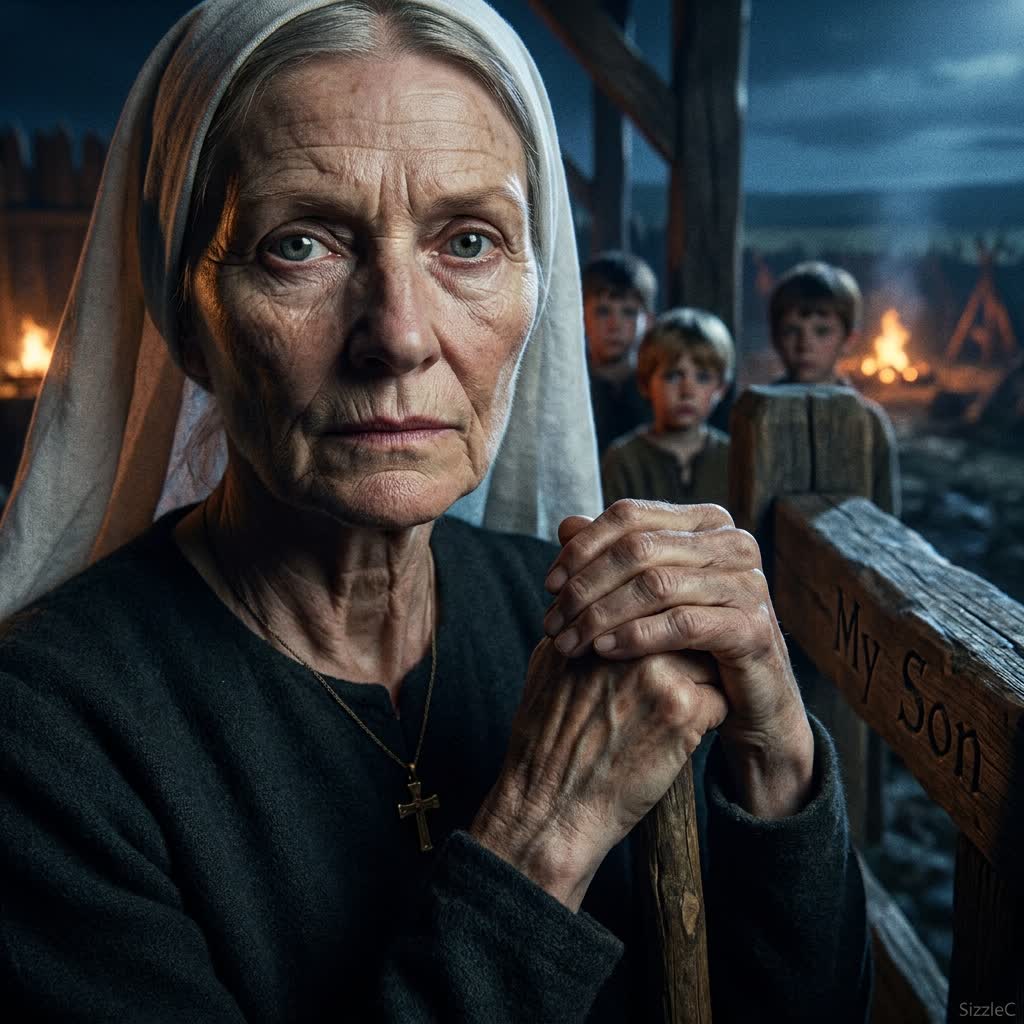
They Will Laugh (My Son) cover

[Intro]

Sviatoslav, my son. I've seen it. Kneel with me. It's light.

He says: alone, Mother? My retinue would laugh. Not tonight.

[Verse 1]

I say: if you go first, they'll follow. That's what princes are for.

He says: a prince goes first in battle. He pulls the gate and rides to war.

[Verse 2]

I asked the German king for bishops. Adalbert came north.

He lasted one winter. Some of his men didn't make it home.

My son won't stop a Christian. He just laughs at them in the hall.

A mother can baptise a city. Can't baptise a boy at all.

[Pre-Chorus]

He wants the Danube. Pereyaslavets. Silk and wine and Greek gold.

Kyiv's just his mother's town, and his mother's getting old.

[Time]

[Drop]

They will laugh! They will laugh!

(Пошлі! Давай, давай!)

A thousand men with swords, and the prince is scared of a laugh.

They will laugh! So let them!

I put twenty men in the ground for a ring. Your men can laugh.

[Drop 2]

(Пошлі! Давай, давай!)

[Verse 3]

Nine sixty-eight. The Pechenegs around the walls. He's on the Danube, far.

Me inside with three grandsons: Yaropolk, Oleh, Volodymyr.

A boy swam the Dnipro with a bridle, shouting for his horse.

The relief came. Then my son came. Then he wanted to leave, of course.

I said: you see I'm ill, son. Where are you going? Bury me first.

Then ride to your Danube. Take your gold. Take your silk. Take your thirst.

The smallest at my knee was Volodymyr. He'll do what I couldn't do.

Give him nineteen years. The whole river. That's who.

[Outro]

They will laugh.

Bury me first. Then go.

[Fade Out]

[End]

09 · They Will Laugh (My Son)

Pagan war drums, a men's Slavic battle chant, horses stamping, a bronze horn, iron on a shield, then a hard switch → hard dark tech house: tense, driving, distorted kick, acid-tinged bass, dry female lead vocal, first person, 130 BPM

🎶 The Sizzle: Pagan war drums, a men's battle chant and iron on a shield, then a hard switch into tense, hard dark tech house with acid bass. Mood: a mother losing an argument she knows she will win later.

🎬 The Story: They Will Laugh: Sviatoslav refuses baptism because his retinue would laugh; Olha brings a Latin bishop, Adalbert, from Otto I and he is driven out; in 968 the Pechenegs besiege Kyiv with Olha and her three grandsons inside while her son is on the Danube; when he returns and wants to leave again she tells him to bury her first. Fact: Olha's embassy to Otto I in 959 and Adalbert's failed mission (961 to 962) are in seven Latin sources; Sviatoslav stayed pagan and campaigned on the Danube; the Pecheneg siege of 968 is in the Chronicle. Legend or dramatisation: the 'my retinue will laugh' exchange, the boy swimming the Dnipro for his horse and Olha's dying words are the Chronicle's; 'nineteen years' points to Volodymyr's baptism of Rus' in 988.

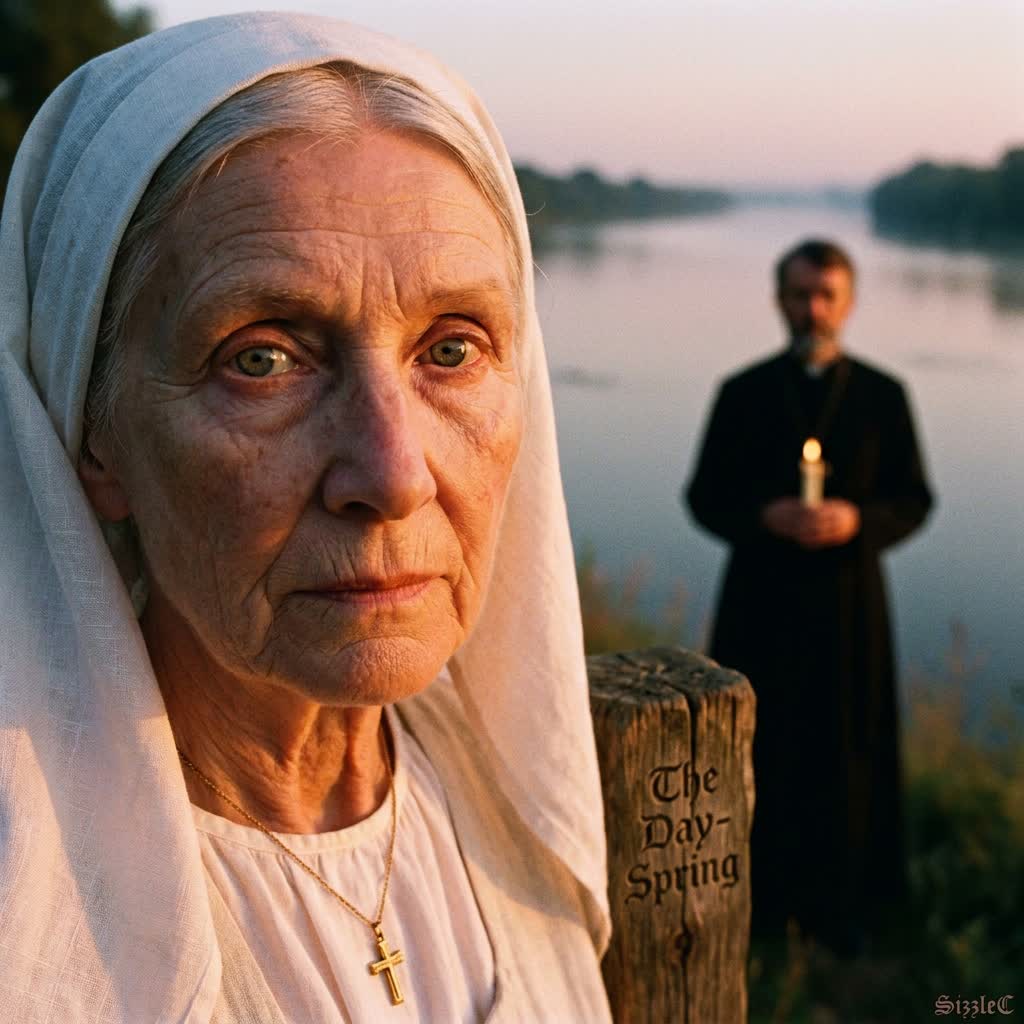
No Feast for Me (The Day-Spring) cover

[Intro]

Eleventh of July, nine sixty-nine. Kyiv. Heat on the river.

No feast for me. No mead on the mound. Gregory knows what to do.

[Verse 1]

I buried twenty men for a ring and five thousand for a cup.

Don't drink to me. Don't raise a mound. Let the priest speak, then that's enough.

[Verse 2]

My son stood dry-eyed. My grandsons cried. That's fine.

Yaropolk, Oleh, Volodymyr. One of the three is mine.

Nineteen years, Volodymyr. You'll bring the whole town to the water.

The Dnipro for a font. You'll finish what I started.

[Pre-Chorus]

Day-spring before the sun. That's what the monks will call me.

Moon by night in a dark land. The light's not mine. It's coming.

[Time]

[Drop]

No feast for me! No feast for me!

(Слава! Слава! Ура!)

I've seen enough of funerals to last eternity.

No feast for me! Just the priest!

The widow's debts are paid in full. Let the widow rest in peace.

[Drop 2]

(Слава! Слава! Ура!)

[Verse 3]

Thirty-eight years later my grandson dug me up, they say.

Not a mark on me. He laid me in his Tithe Church. Fine. I'll stay.

Twelve-forty: Batu's horsemen burned the city, tomb and all.

Fifteen forty-seven, Moscow: Equal to the Apostles. That's the call.

A widow with a boat, a bathhouse, a barrel and some birds.

Equal to the Apostles. I've been called worse.

Olha for the Drevlians. Helena at the font.

Saint for the ones who come after. Take whichever one you want.

[Outro]

No feast for me.

Day-spring. Then the sun.

[Fade Out]

[End]

10 · No Feast for Me (The Day-Spring)

A women's choir in slow Orthodox chant, church bells at dawn over a wide river, a single held organ note, then a hard switch → euphoric melodic house: warm piano chords, soaring pads, deep rolling bass, dry female lead vocal lifted by a choir, first person, 124 BPM

🎶 The Sizzle: A women's choir in Orthodox chant, bells at dawn over the river and one organ note, then a hard switch into euphoric melodic house with piano and pads. Mood: paid in full.

🎬 The Story: No Feast for Me: Olha dies on 11 July 969 and is buried by the priest Gregory with no pagan funeral feast; her grandson Volodymyr later moves her body into his Tithe Church; in 1240 Batu's Mongols destroy Kyiv and her tomb; in 1547 the Russian Church names her Equal to the Apostles. Fact: the death date, the Christian burial, the 1240 sack and the 1547 canonisation. Legend: the incorrupt body found by Volodymyr comes from a fifteenth-century life, and 'day-spring before the sun' is the Chronicle's own eulogy. The series is called Olha of Kyiv after the subject's historical name; the city is Kyiv.