BEATRIFULThe storySizzleC

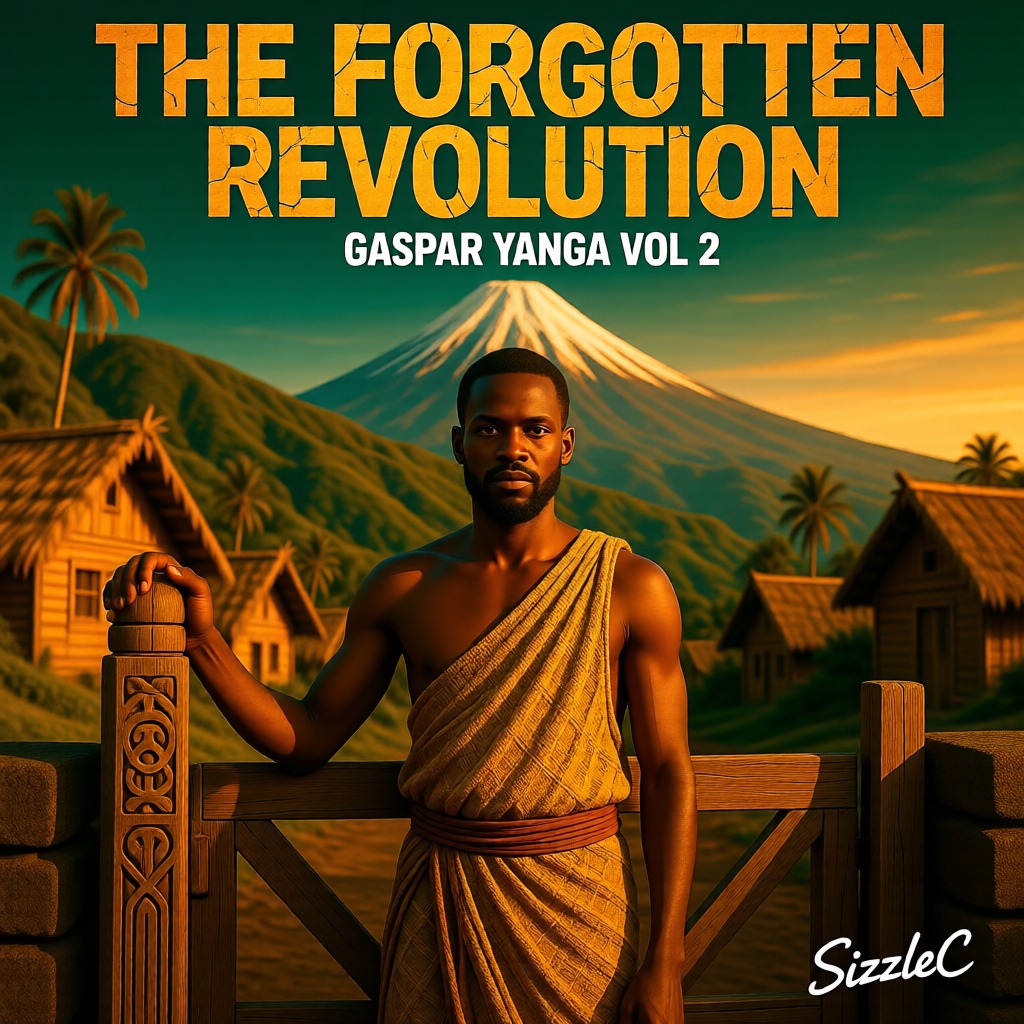
THE FORGOTTEN REVOLUTION: GASPAR YANGA (VOL 2)

SizzleC · 5 songs · in production

Volume 2 of the Gaspar Yanga concept album: the free town of San Lorenzo, the alliance of Africans and Indigenous people, the Viceroy's fear, the old king handing the crown down, and the Bamba that outlived the empire. Every song starts in a sound of the era and drops into a modern one halfway through.

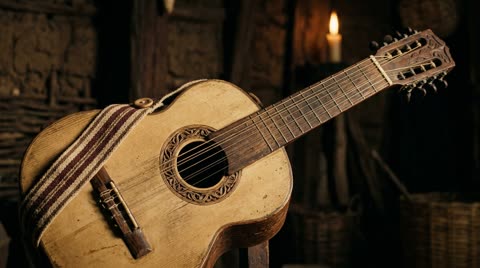
Afro-Cuban percussion → Latin tech house · Mesoamerican flutes → deep house · harpsichord → Latin trap · Afrobeat → deep house · son jarocho → global bass

all takes and alternates →

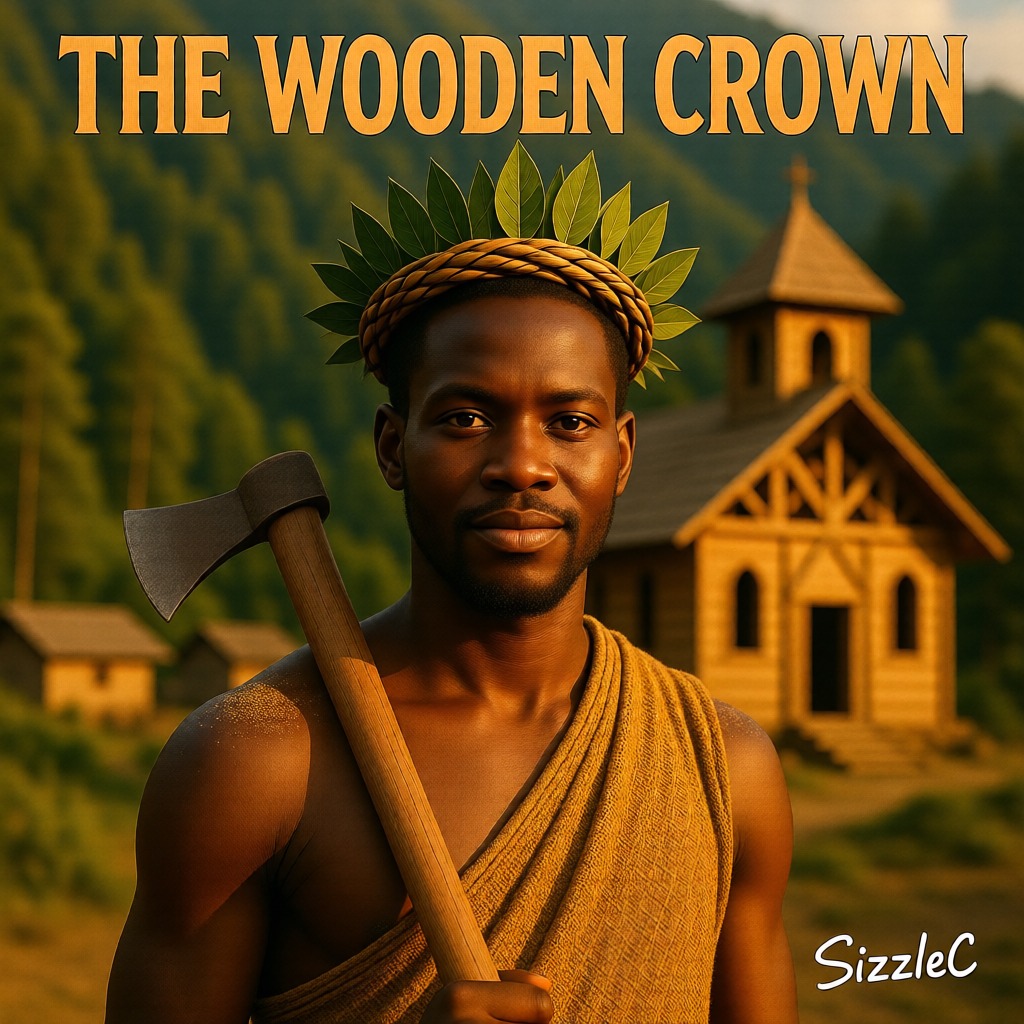
The Wooden Crown (The Free City) cover

[Intro]

Thirty years of running, sleeping in the rain.

Now we plant the seed and we harvest our own cane.

[Verse 1]

From the ashes of the empire, we built a wooden town,

Gaspar Yanga wearing an invisible crown.

[Verse 2]

No Spanish overseer, no heavy iron lock,

We built our own sanctuary right upon the rock.

The first free maroon city shining in the West,

Putting absolute colonial power to the test!

[Pre-Chorus]

We govern our own people, we make our own law.

The greatest independence that the jungle ever saw.

[Drop]

Build the city! Sow the seed!

Everything a free man is ever gonna need!

San Lorenzo standing in the shadow of the peak,

Listen to the ancestors, listen to them speak!

[Drop 2]

[Verse 3]

Carving out the wood, mixing up the clay,

Keeping all the Viceroy soldiers far away.

Indigenous and African, blood in the soil,

Keeping all the profits from the sweat and the toil!

We dictate the trade and we dictate the price,

Living in an Afro-Mexican paradise!

A beacon in the dark for the brothers in the chain,

Gaspar Yanga driving the colonizers insane!

[Outro]

Our land. Our blood. Our crown.

The first free city.

06 · The Wooden Crown (The Free City)

Slow Afro-Cuban percussion building → Heavy Latin Tech House. Deep analog bass, brass stabs

🎶 The Sizzle: Slow Afro-Cuban congas and clave for the first minute, then a heavy Latin tech house drop with analog bass and brass stabs. Mood: pride, then a builder's joy.

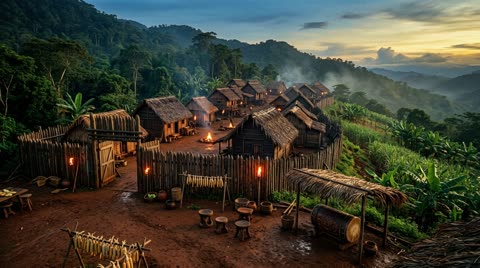
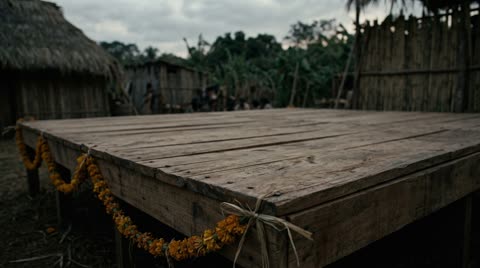
🎬 The Story: The Wooden Crown: after thirty years on the run, the maroons build their own town on the rock — San Lorenzo, the first free Black city in the Americas, and Yanga rules it without a crown.
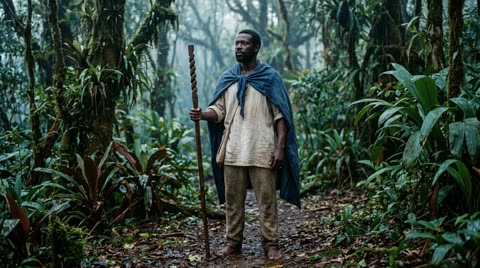
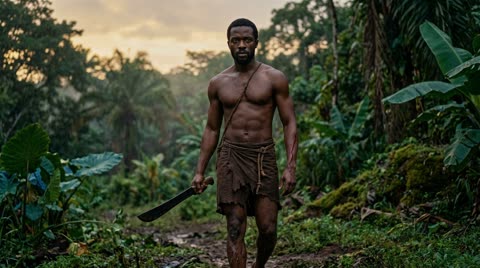
Yanga, the maroon leader
Yanga, the maroon leadercharacter
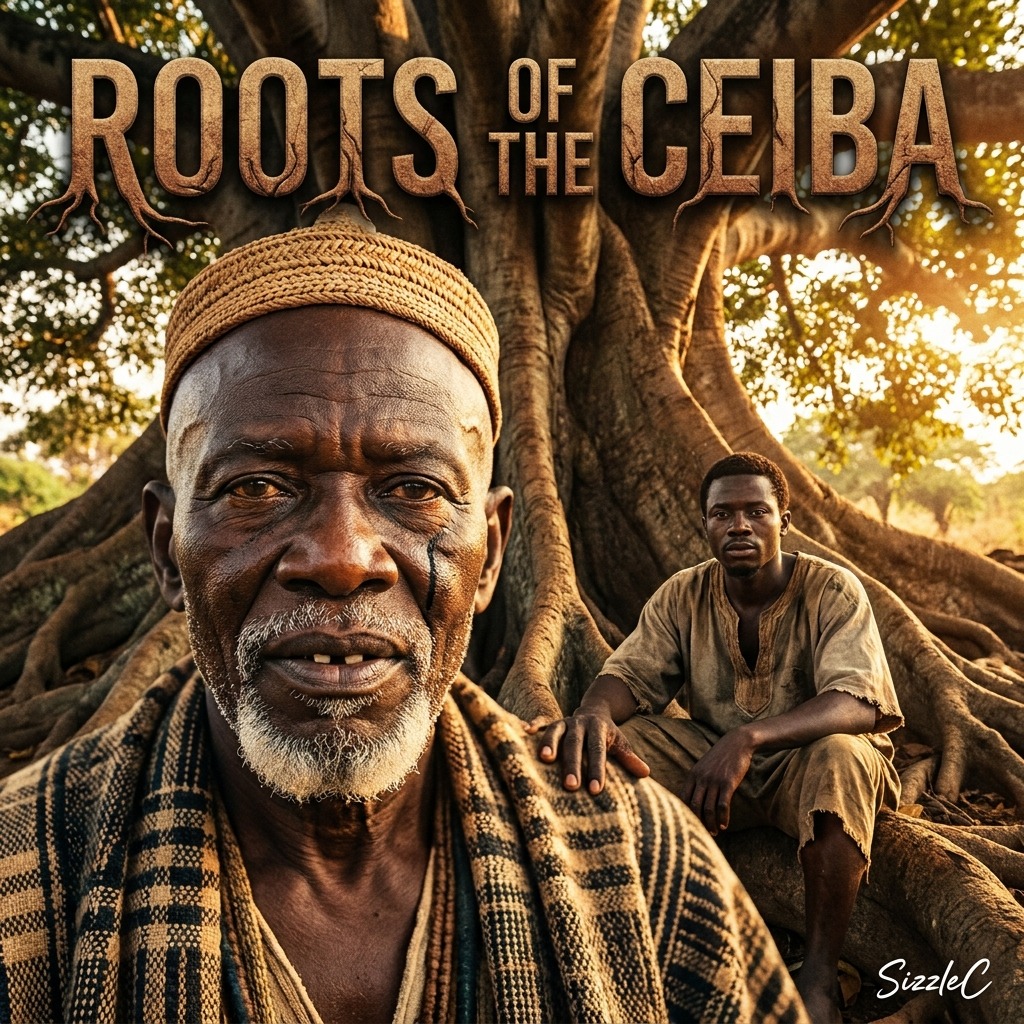
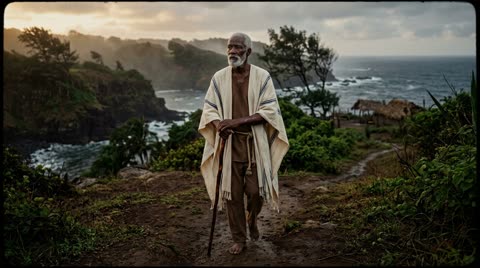
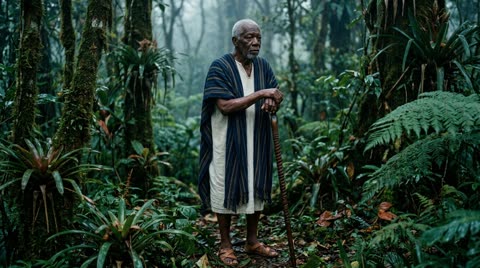
The elder of San Lorenzo (Yanga aged)
The elder of San Lorenzo (Yanga aged)character
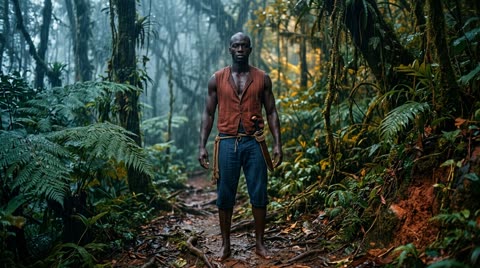
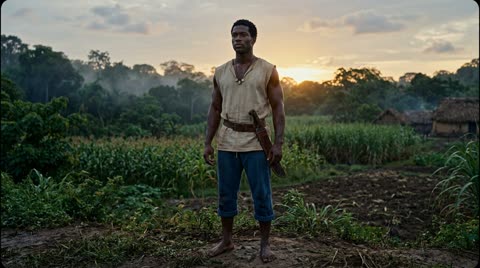
The war captain
The war captaincharacter
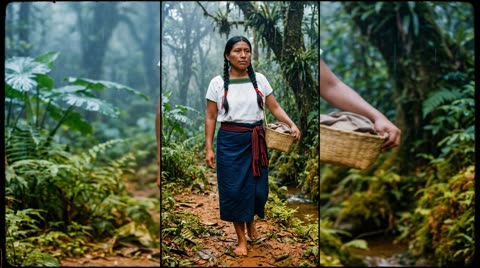
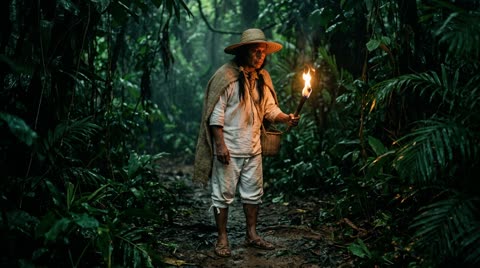
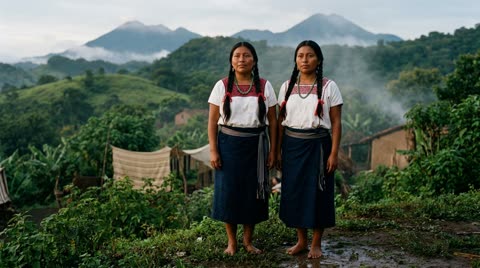
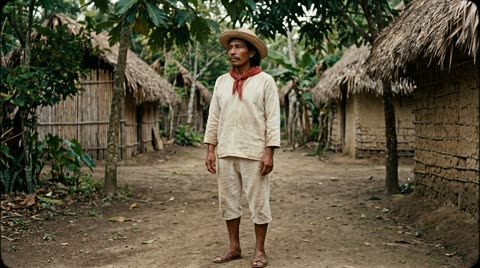
The Nahua farmer
The Nahua farmercharacter
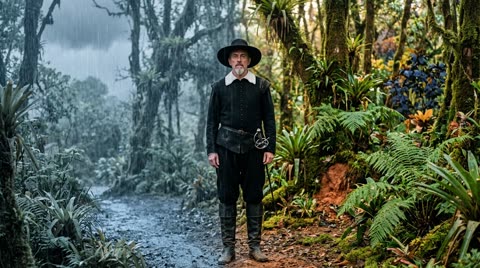
The Viceroy's envoy
The Viceroy's envoycharacter
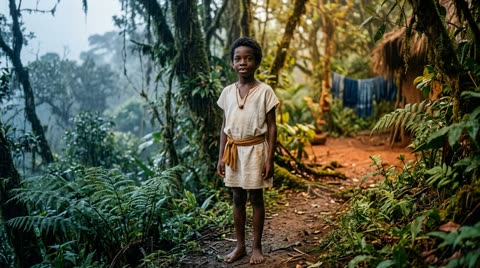
The boy of the free town
The boy of the free towncharacter
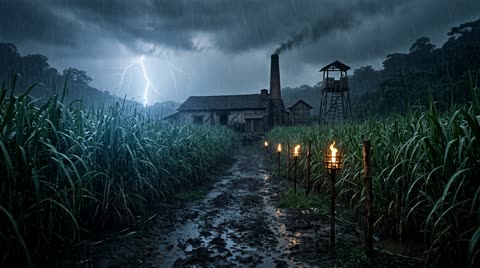
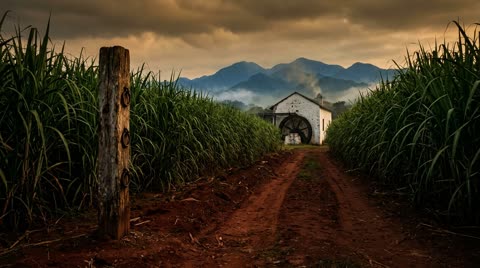
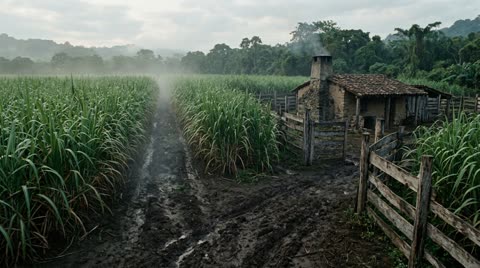
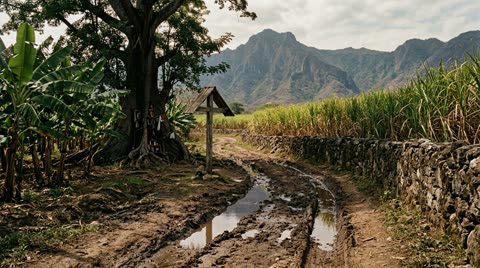
Sugar estate cane field near Córdoba, night rain
Sugar estate cane field near Córdoba, night rainlocation
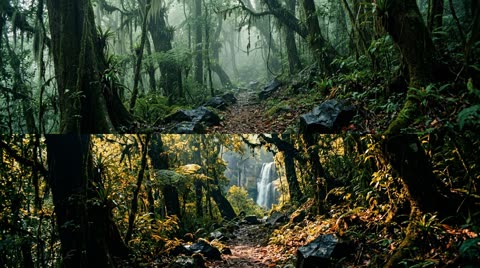
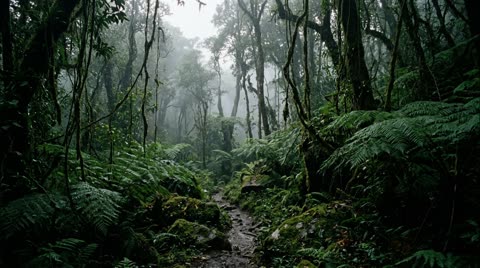
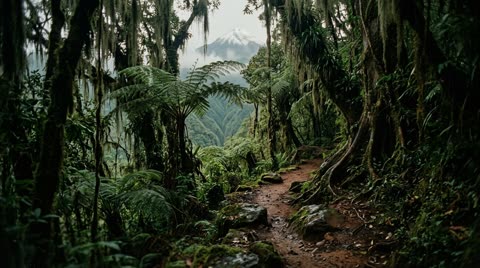
Orizaba cloud forest slopes
Orizaba cloud forest slopeslocation
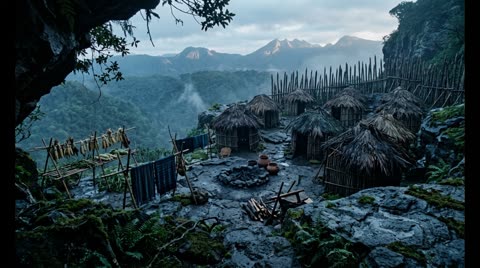
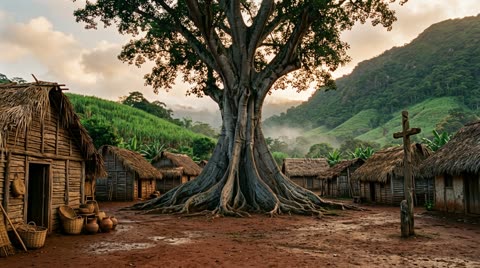
The palenque camp on the rock
The palenque camp on the rocklocation
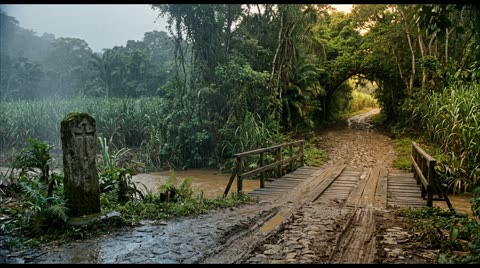
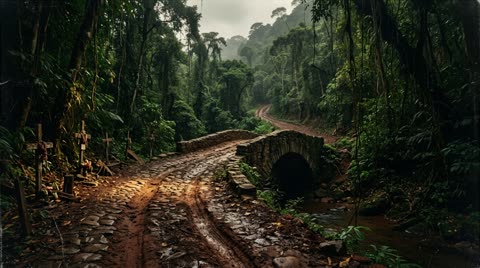
The colonial road, Camino Real Veracruz to Mexico
The colonial road, Camino Real Veracruz to Mexicolocation
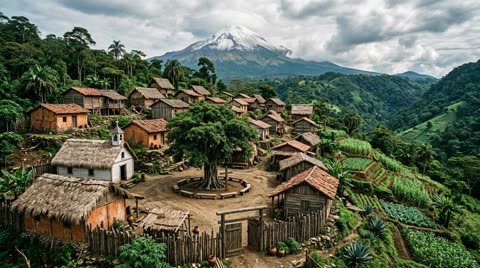
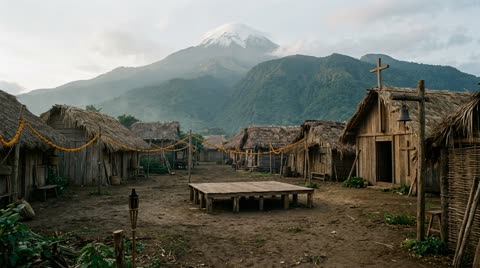
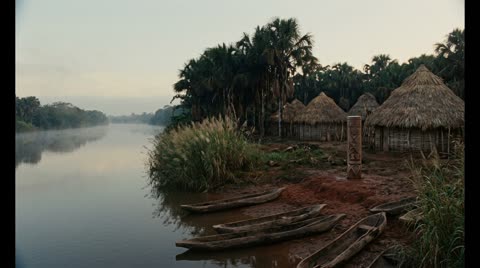
San Lorenzo de los Negros, the free town
San Lorenzo de los Negros, the free townlocation
Beat sheet — the real board (56 shots)

Characters

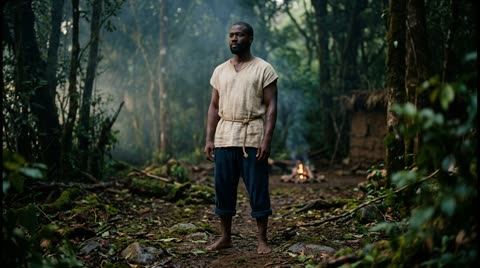
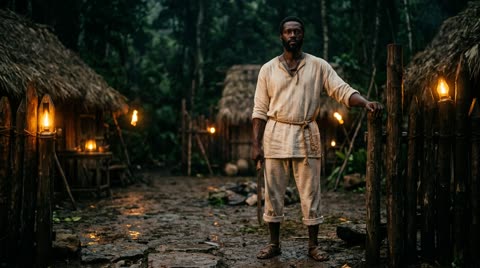
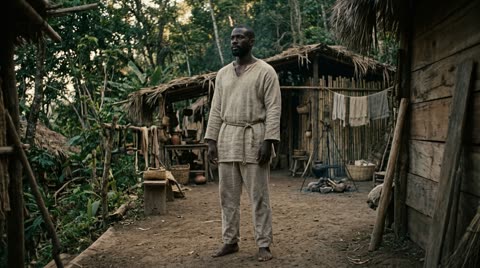
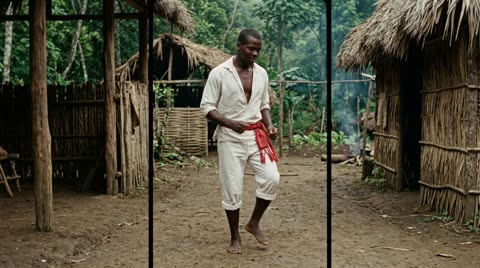
  • Yanga, the maroon leader — Gaspar Yanga, the maroon leader: a tall, broad-shouldered African man in his forties, dark brown skin, close-cropped black hair, a short dense black beard, a thin pale scar across his left forearm; wears a loose undyed woven cotton tunic and rough woven trousers, a woven cotton cloak in faded indigo
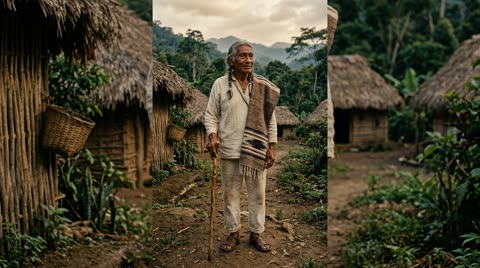
  • The elder of San Lorenzo (Yanga aged) — The same maroon leader thirty years on, in his seventies: a tall African man, dark brown skin now lined and weathered, close-cropped white hair, a short white beard, the same thin pale scar across his left forearm; wears a clean undyed woven cotton tunic with a woven indigo-and-ochre striped cloak o
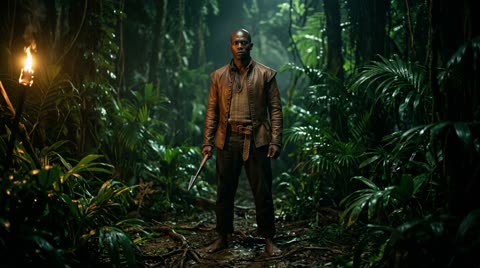
  • The war captain — The war captain of the maroons, an Angolan man in his thirties, very dark skin, shaved head, a lean muscular build, a small brass ring in one ear; wears a sleeveless woven cotton vest dyed rust-red, knee-length woven trousers tied with a cord, a cane knife with a wooden handle in a rope belt at his
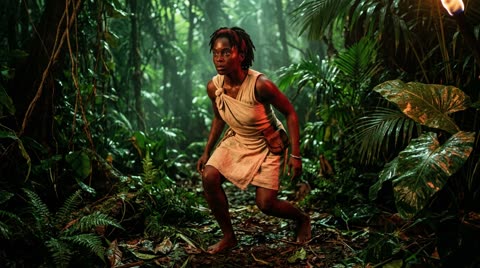
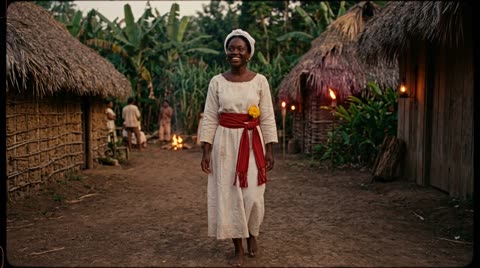
  • The Nahua farmer — An Indigenous Nahua woman in her thirties, warm copper-brown skin, long straight black hair in two braids bound with red cotton cord, a strong square face; wears a white cotton huipil with a narrow band of green and red embroidery at the neck, a wrapped dark blue cotton skirt with a woven sash, bare
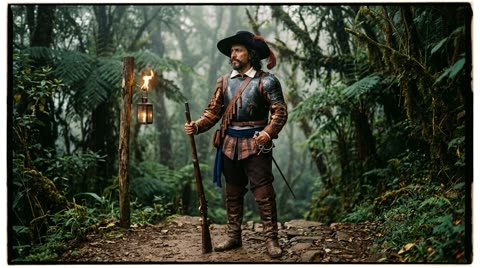
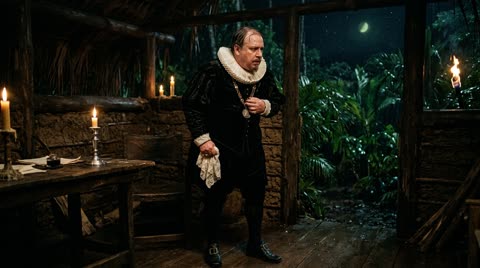
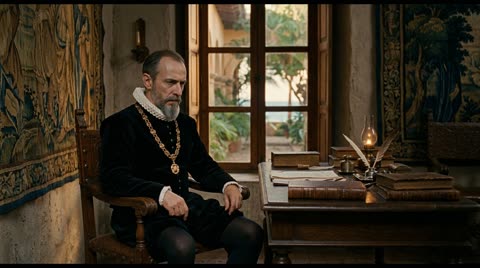
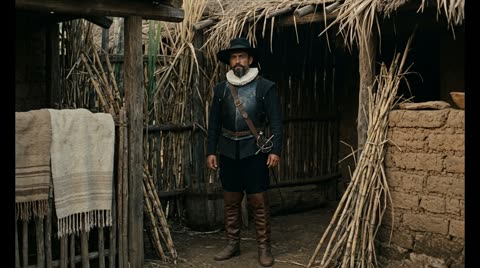
  • The Viceroy's envoy — A Spanish colonial official in his fifties, pale olive skin flushed from the climate, grey pointed beard and moustache, receding grey hair; wears a black wool doublet with a starched white linen collar, black breeches and hose, tall dusty black leather riding boots, a black wide-brimmed felt hat, a
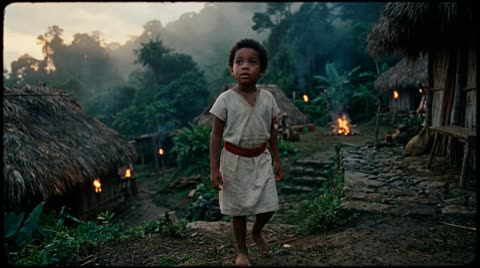
  • The boy of the free town — An Afro-Mexican boy of about ten, deep brown skin, short tight black curls, thin quick limbs, a gap in his front teeth; wears a short undyed cotton tunic belted with a strip of ochre cloth, bare feet, a small cord necklace with a single wooden bead. Open curious face, mouth closed at rest.

Shots

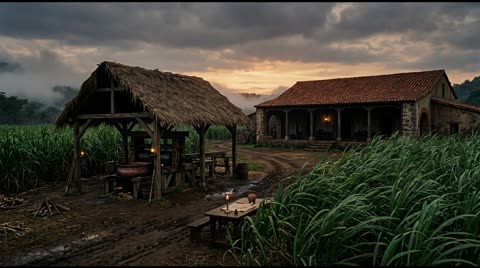
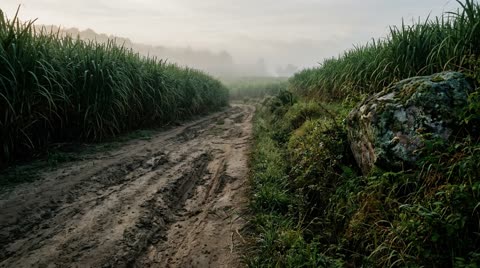
  1. #1 · 5 s — Wide high view over rows of tall sugar cane at night in heavy rain, the rows bending under the downpour, black mud lanes between them, a stone boiling house with a brick chimney far in the back and a few torches in iron cages on posts flickering orange in the distance. Cold blue-grey light, a single distant lightning flash. The camera holds still while rain streaks across the frame and the cane sways.
  2. #2 · 5 s — Medium view from the front, low to the mud: the maroon leader runs toward the camera down a narrow lane between walls of sugar cane, heel-to-toe, chest leading, cane leaves whipping past his shoulders, rain pouring off his head, one hand clutching the indigo cloak closed. Black mud splashes at each stride. Cold blue-grey night light, one lightning flash lighting the cane white for an instant. The camera holds still a
  3. #3 · 5 s — Close view down at black mud between cane stalks: the broken iron shackle lies half sunk in the mud, its snapped U-bolt bent open, four chain links trailing, rain drops striking the puddle around it and the rust running in thin brown threads. A cane leaf drips at the frame edge. Cold grey-blue night light. The camera pushes in very slowly on the open hinge.
  4. #4 · 5 s — Medium close view in profile: the maroon leader stands pressed against a huge moss-covered ceiba trunk in the cloud forest at night, rain streaming down the bark and off his beard, his head tilted toward the dark path behind him, lips together, one hand flat on the wet bark. Dripping vines and tree ferns crowd the frame. Cold green-grey light with mist drifting low. The camera holds still; only his chest rises and fa
  5. #5 · 5 s — Wide view from high on a dark forested slope looking down over a valley of sugar cane at night in rain: a ragged string of five or six small orange torch flames moves slowly through the cane far below, unevenly spaced, one lagging well behind the rest, the boiling house chimney a black shape against grey cloud. Rain haze softens everything. Cold blue-grey night light. The camera holds still while the tiny flames cree
  6. #6 · 5 s — Medium view from slightly above: the war captain is already on the slick black volcanic rock face in the rain, both hands gripping a ledge just below the camera, feet set on holds below, and he pulls his body up one arm's length toward the lens, water sheeting off the stone past his shoulders. Moss and dripping ferns fringe the ledge. A lightning flash throws his shaved head into hard relief, then cold green-grey dar
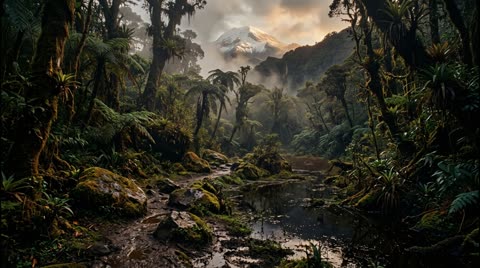
  7. #7 · 5 s — Very wide view across the cloud-forest slopes at first light: layers of mist lie in the valleys between ridges of dark green canopy, a thin waterfall threading down a far cliff, the pale snow cone of Orizaba emerging above the cloud line. Cold slate-blue light warming faintly to grey-rose at the peak. The camera drifts forward very slowly over the treetops as the mist thins.
  8. #8 · 5 s — Close view at ground level: the maroon leader kneels on a shelf of black volcanic soil at the hidden camp, both hands pressing a green sugar-cane cutting upright into a small hole and firming the earth around it, his staff lying on the ground beside his knee. Palm-thatch huts and a stone fire ring soft behind him, mist in the valley beyond the cliff edge. Cold grey dawn light. The camera holds still.
  9. #9 · 5 s — Medium view from the side at knee height: the Nahua farmer kneels before a grey stone metate outside a palm-thatch hut, rolling the stone mano forward and back over yellow maize, meal gathering at the near edge, her braids swinging slightly with the rhythm. A clay pot and a woven basket of maize ears beside her, the camp's palisade stakes and grey valley mist in the back. Cold soft dawn light. The camera holds still.
  10. #10 · 5 s — Medium close view in profile: the war captain stands at the tall log drum beside the stone fire ring, both palms striking the deerskin head in a slow steady pattern, wrists loose, his shaved head bowed toward the drum. Low grey flames in the fire ring, thatch huts and the misty drop behind. Cold dawn light with a faint orange glow on the drum's carved chevrons. The camera holds still.
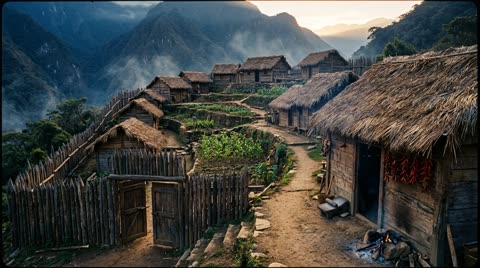
  11. #11 · 5 s — Wide view of the hidden camp on its volcanic rock shelf at early morning: a dozen round palm-thatch huts at uneven spacing, one with a sagging roof, drying racks of cane and maize, a sharpened-stake palisade along the cliff edge and a sheer drop to a valley of mist. A few maroon men and women, African and Indigenous, move between the huts at different paces, one sitting still on a log, one carrying water away from th
  12. #12 · 5 s — Medium wide view from behind and to the side: the maroon leader stands at the sharpened-stake palisade on the cliff edge, staff planted in the rock beside him, his gaze fixed on the thin pale thread of the colonial road winding through cane far down in the valley at frame bottom. Wind stirs the indigo cloak. Overcast grey-green midmorning light. The camera holds still.
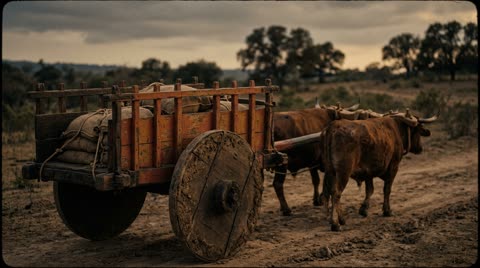
  13. #13 · 5 s — Wide view along the colonial road: the ox cart rolls FORWARD left-to-right across the frame, its two red-brown oxen leading nose-first along the rutted earth, the tall spoked wheels turning through a puddle, a Spanish muleteer in a straw hat and brown jerkin walking beside the near ox with a switch, facing the direction of travel. Sacks and a barrel lashed on the plank bed. Walls of cane and jungle close in on both s
  14. #14 · 5 s — Close view through a gap in green cane stalks: the war captain crouches low in the cane at the road's edge, the wooden-handled cane knife held down along his thigh, his eyes on the rutted road visible through the leaves at frame left, lips pressed together. Cane leaves brush his shoulders; the dirt road and a stone marker post soft beyond. Humid overcast grey light. The camera holds still while a single leaf trembles
  15. #15 · 5 s — Medium wide view from the road surface: the ox cart stands halted, both red-brown oxen still under their cedar yoke at frame right, and the maroon leader already stands at the oxen's heads at frame center-left, feet planted, cloak hanging still, and raises his carved staff slowly to shoulder height in one continuous motion. The plank bed of the cart and its lashed sacks fill the right of the frame, cane walls behind.
  16. #16 · 5 s — Medium view from the jungle edge: the boy of the free town walks toward the camera off the dirt road and into the tree line, heel-to-toe, a heavy hemp sack of grain hugged against his chest with both arms, his bare feet finding the wet leaf litter, the halted ox cart's tall spoked wheel soft behind him on the road. Ferns and vines frame the shot. Humid overcast grey-green light. The camera holds still.
  17. #17 · 5 s — Medium view at the camp: a stand of tall ripe sugar cane grows right up to the cliff palisade, and beside it three bundles of freshly cut cane stalks lean against a drying rack, their cut ends pale and wet, a woven basket of maize at their foot, the grey valley mist beyond. A light breeze moves the cane tops. Cold morning light, a faint warm tint on the highest leaves. The camera pushes in very slowly on the cut stal
  18. #18 · 5 s — Medium view from the side: the maroon leader stands in the camp's cane stand, a wooden-handled cane knife in his right hand, and swings it down once through the base of a tall stalk in a single clean stroke, the stalk toppling into his waiting left arm. Cane leaves fill the frame around him, the palisade stakes soft behind. Cold morning light, pale gold at the leaf edges. The camera holds still.
  19. #19 · 5 s — Wide view from behind: the maroon leader and the war captain stand side by side at the cliff palisade at dusk, the leader's staff planted between them, both facing out over the darkening valley of mist and cane far below, the leader's cloak lifting faintly in the wind while the captain's arms hang at his sides. The snow cone of Orizaba catches the last cold rose light above them. Deep slate-blue dusk. The camera hold
  20. #20 · 5 s — Very wide view from the black basalt ledge: the vast snow cone of Orizaba fills the sky, its summit and upper snowfields in the first hard gold of sunrise, the slopes below in deep blue shadow, wind-bent pines silhouetted at the frame edge, a sea of cloud forest under haze far below. The camera pushes forward slowly toward the peak.
  21. #21 · 5 s — Close view from low beside a squared pine beam in blazing sun: the maroon leader, sleeves pushed up, brings the iron adze down onto the beam in one hard chopping stroke, a pale chip of wood leaping from the blade, sweat bright on his forearm. Fresh sawdust and shavings litter red-brown earth around the beam, a framed house post soft behind. Hard gold tropical sunlight from above, deep emerald shade beyond. The camera
  22. #22 · 5 s — Wide view of the town site on its mountain shelf under a hard blue sky: a dozen house frames of raw pine posts stand at uneven angles, two already roofed with fresh palm thatch, stacks of cedar planks and heaps of red clay between them, the great ceiba tree at the plaza's center and the snow cone of Orizaba above. African and Indigenous builders work at different tasks and tempos, one sawing, one resting on a log wit
  23. #23 · 5 s — Medium close view: the Nahua farmer stands at a half-built wattle wall of woven green sticks and presses a double handful of wet red clay into the lattice, smoothing it upward with her palms in one slow continuous stroke, clay to her wrists. A wooden trough of clay at her hip, a thatched roof edge casting a stripe of shade above her, the plaza's ceiba soft behind. Hard gold sun with bounce off the terracotta wall. Th
  24. #24 · 5 s — Medium view from below: the war captain leans back hard against a thick hemp rope, both hands gripping it, bare feet braced in red earth, as a heavy pine roof beam rises slowly on the rope toward the top of a house frame above him. Muscles taut in his arms and back, the rust-red vest dark with sweat. Hard gold sun behind the frame, emerald leaves at the frame edge. The camera holds still.
  25. #25 · 5 s — Wide view from below the town on the slope: two dozen finished houses of hewn pine plank with steep palm-thatch and clay-tile roofs at irregular heights crowd a mountain shelf, terracotta wattle walls glowing, a small whitewashed timber chapel at the plaza's edge, a cedar palisade gate at the foot of the shelf, and the snow cone of Orizaba enormous above. Ripe gold cane on terraces below. Hard midday sun. The camera
  26. #26 · 5 s — Medium wide view from the plaza looking up at a house porch: the maroon leader stands on the plank porch of a finished cedar house, staff planted upright beside him, one hand resting on the porch post, his gaze on the plaza's great ceiba tree at frame left, lips together in a slow closed-mouth smile. Palm thatch shade cuts across his shoulders, terracotta wall glowing behind. Hard gold afternoon sun. The camera holds
  27. #27 · 5 s — Wide view under the great ceiba tree in the plaza: the maroon leader sits at the head of a ring of log benches, staff across his knees, and slowly raises one open palm toward the center of the circle. Around him sit eight African and Nahua elders at uneven spacing, one leaning forward on his elbows, one woman with her back to the camera, an old man fanning himself with a leaf, none mirroring another. Dappled gold sun
  28. #28 · 5 s — Close view at a boy's eye level: the boy of the free town kneels at the base of a cedar house post and draws a small iron knife downward through the wood in one slow stroke, a pale curl of shaving peeling off, lips pressed together in concentration. Red earth and a scatter of shavings at his knees, emerald jungle blazing beyond the plank wall. Hard gold sun from the side. The camera holds still.
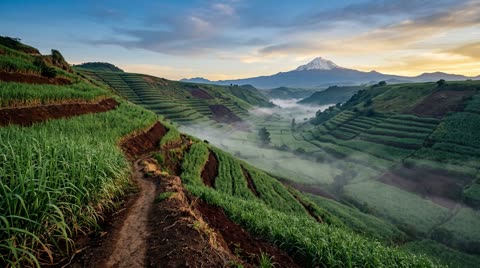
  29. #29 · 5 s — Wide view down the mountainside: terraces of tall ripe sugar cane step down the slope in uneven curved bands, gold plumes catching the sun, narrow red-earth paths between them, maize plots wedged among the cane, the cloud forest closing in emerald at the terrace edges and a haze of valley far below. A steady breeze rolls waves through the cane tops. Hard gold afternoon sun. The camera holds still.
  30. #30 · 5 s — Medium view down a narrow red-earth path between walls of ripe gold cane: the maroon leader walks toward the camera, heel-to-toe, staff in his left hand, his right palm trailing along the cane stalks as he passes them, cloak loose over one shoulder, lips together. Cane plumes sway overhead against a hard blue sky. Gold late-afternoon sun flaring through the leaves. The camera holds still as he approaches.
  31. #31 · 5 s — Medium wide view at the town's cedar palisade gate: the ox cart stands still, heaped high with bundles of cut sugar cane lashed with hemp rope, its two red-brown oxen resting under the cedar yoke with heads low, a maroon driver in a straw hat and undyed tunic standing at the near ox's shoulder facing forward with a hand on the yoke. Terracotta walls and thatch behind, gold cane terraces below. Hard gold sun. The came
  32. #32 · 5 s — Wide view down the long audience hall of the Viceroy's palace: a dark polished stone floor reflecting shafts of dusty gold light from tall half-shuttered windows, dark carved wood wainscot, a long oak table with iron-studded chairs, a heavy brass candelabra, an oil painting of a Spanish galleon on the far wall and a red-velvet chair on a dais beneath it. Dust hangs in the light. The camera pushes forward very slowly
  33. #33 · 5 s — Medium close view from the side: the Viceroy's envoy sits at the long oak table in a shaft of gold window light and lowers a sheet of parchment he has been reading, the written face of the page toward him and its blank back toward the camera, his jaw tightening, lips pressed together. A quill and inkpot beside his hand in a thin brown leather glove, the galleon painting dim behind. Cool shadowed hall with one hard go
  34. #34 · 5 s — Medium view up a steep jungle footpath: the Viceroy's envoy walks toward the camera up the wet leaf-litter trail, heel-to-toe, one hand holding his black hat to his head, dusty boots slipping slightly on a mossy root, sweat shining on his flushed face, mouth closed and grim. Giant moss-wrapped trunks and tree ferns crowd the path, dappled hot emerald light from above. The camera holds still as he labors upward.
  35. #35 · 5 s — Wide view from behind the envoy's shoulder at the town's cedar palisade gate: the Viceroy's envoy stands still with his back to the camera, hat in hand, while the maroon leader stands facing him in the open gateway, staff planted, and slowly lowers his chin in a single small nod of acknowledgement, lips together. Terracotta houses, thatch roofs and the snow cone of Orizaba rise behind the leader. Hard gold sun, deep
  36. #36 · 5 s — Medium close view from low at the plaza fire at night: the war captain stands over the tall log drum, both palms striking the deerskin head fast and hard, wrists snapping, sweat glinting on his shaved head and shoulders, his eyes closed. Orange firelight from frame left carves his arms and the drum's chevrons, the great ceiba's trunk and a thatch roof edge dim behind. Deep blue night beyond. The camera holds still.
  37. #37 · 5 s — Wide view across the plaza fire at night: a loose scatter of African and Nahua townspeople move in the orange firelight at different tempos, a tall man stamping slowly with his back to the camera, a woman spinning once with her skirt flaring, two old men seated on a log bench clapping off each other's time, a girl hopping on one foot at the far edge, no two bodies mirroring, several facing away. Terracotta walls glow
  38. #38 · 5 s — Medium view from a three-quarter front angle: the Nahua farmer dances alone in the firelight, knees soft and apart, chest lifted, her bare feet stamping heel then toe into the packed earth in a steady pattern while both arms rise slowly above her head, braids swinging, eyes half closed and lips together. Orange firelight from frame right on her white huipil, deep blue night and a dim thatch roof behind. The camera ho
  39. #39 · 5 s — Close view in profile: the maroon leader sits on a log bench at the plaza fire, the staff upright in his fist, his eyes fixed on the flames at frame left, firelight flickering across his beard, lips together, his only motion a slow blink and the light moving on his face. Dark thatch and the ceiba trunk behind. Orange fire glow against deep blue night. The camera holds still.
  40. #40 · 5 s — Very wide view from the basalt ledge at night: the snow cone of Orizaba stands pale blue-white under a dense field of stars, the Milky Way arching over its summit, wind-bent pines black at the frame edge, and far below on the mountain shelf a faint cluster of orange points where the town's fire burns. Cold starlight, deep indigo sky. The camera drifts upward very slowly toward the stars.
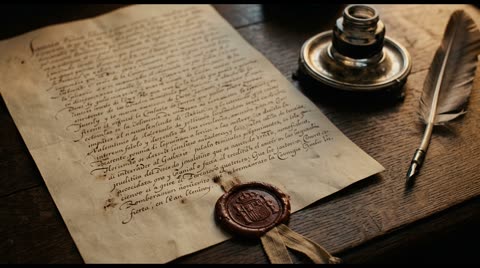
  41. #41 · 5 s — Close view from across a rough plank table: the Viceroy's envoy leans over the treaty parchment weighted by a river stone, the page facing him with the date "1618" written large at its head, and draws a quill slowly across the bottom of the page in one continuous signing stroke, his grey beard almost touching the parchment. An inkpot and a stick of red wax beside the page, dappled gold ceiba light across the wood. Th
  42. #42 · 5 s — Close view down onto the plank table: the maroon leader's open right hand already rests flat on the treaty parchment beside the red wax seal, fingers spread, the page's brown ink lines showing between them, and the hand presses down a fraction and holds. The river stone weight and an inkpot at the frame edge, dappled gold light moving across the wood. The camera holds still.
  43. #43 · 5 s — Wide view along the colonial road in hard gold afternoon sun: the ox cart rolls FORWARD away from the camera down the rutted road, its two red-brown oxen leading nose-first toward the far jungle canopy, the tall spoked wheels turning, bundles of cane heaped on the plank bed, a maroon driver in a straw hat and undyed tunic walking at the near ox's shoulder facing the direction of travel. Cane walls glow gold on both s
  44. #44 · 5 s — Medium close view low to the ground: the Nahua farmer drives a fire-hardened wooden digging stick down into dark red-brown soil at the edge of a maize plot and levers it back in one slow continuous motion, a clod of earth breaking open, her braids falling forward. Young maize leaves at the frame edge, gold cane terraces soft behind, the snow peak a pale shape above. Hard warm afternoon sun on the turned earth. The ca
  45. #45 · 5 s — Wide view across the plaza on market day under the ceiba: a scatter of mats and rough plank stalls at irregular spacing hold cone-shaped brown sugar loaves, heaps of maize, folded indigo and ochre cloth, iron tools and clay pots. African and Nahua townspeople and two Spanish traders in dusty doublets move among them at different paces, a woman weighing maize into a basket, a man squatting to inspect a pot, an old man
  46. #46 · 5 s — Medium close view from the side of a plank stall: the war captain stands behind a hanging iron balance scale with two brass pans and sets a cone-shaped brown sugar loaf into the near pan, the beam tipping then settling level against a stack of iron weights in the far pan, his eyes on the beam, a small closed-mouth grin. Folded ochre cloth and maize on the stall, the plaza soft behind. Hard gold sun from above. The ca
  47. #47 · 5 s — Wide view from the basalt ledge at dusk: a tall signal fire of stacked pine logs burns on the edge of the black rock, flames leaning in the wind over a sheer drop to the darkening valley where a few faint estate lights glimmer far below, the snow cone of Orizaba rose-violet above. Wind-bent pines black at the frame edge. Deep violet dusk sky. The camera holds still while the flames move.
  48. #48 · 5 s — Medium view from across the oak table: the Viceroy's envoy sits in a shaft of dusty gold window light staring down at a large hand-drawn map of the Veracruz coast and mountains spread flat before him, ink coastline and hatched mountain shapes on the paper, and slowly lays his quill down on the map in one deliberate motion, his jaw set, lips pressed thin, eyes fixed on the drawn mountain at the map's center. The cande
  49. #49 · 4 s — Very wide high view over San Lorenzo at golden hour: the cluster of thatch and clay-tile roofs on the mountain shelf, the ceiba's dark crown at the plaza center, the white chapel, the cedar gate, and the curved gold cane terraces stepping down into emerald jungle, long shadows stretching across it all, the snow cone of Orizaba glowing pink above. Warm gold light raking from the side. The camera drifts forward very sl
  50. #50 · 4 s — Close view low in the cane: the maroon leader kneels on one knee between rows of gold cane, scoops a handful of red-brown soil in his right hand and slowly closes his fist around it, the earth pressing out between his fingers. Cane leaves glow gold above him, his staff planted at the frame edge. Warm low golden-hour sun from the side. The camera holds still.
  51. #51 · 4 s — Close view down onto a cedar carving block on a porch: the wooden crown rests on the block, its cane-leaf points catching low gold light, its oiled surface glowing red-amber, a scatter of pale curled shavings around its base and a small iron carving knife lying beside it. Plank porch boards and a stripe of thatch shade behind. Warm golden-hour sun raking across the block. The camera pushes in very slowly on the crown
  52. #52 · 5 s — Medium view from the plaza looking up at a cedar house porch: the elder of San Lorenzo sits in a plank chair with the wooden crown resting in his lap, both hands loosely cupped around it, his staff leaning against the porch post, his gaze on the ceiba's dark crown at frame left, lips together in a slow closed-mouth smile. Terracotta wall glowing behind, thatch shade across his shoulders. Warm golden-hour sun. The cam
  53. #53 · 5 s — Medium close view from the side on the porch: the boy of the free town stands still before the seated elder of San Lorenzo, hands at his sides, and the elder lifts the wooden crown from his lap with both hands and lowers it slowly onto the boy's curls in one continuous gesture, his hands staying on the crown as it settles. Their faces in profile, both mouths closed. Warm golden-hour light from frame right, terracotta
  54. #54 · 5 s — Wide view along the main lane of San Lorenzo at golden hour: hewn plank houses with thatch and clay-tile roofs at uneven heights on both sides, long shadows across packed red earth, a clay pot by a doorway, woven cloth drying on a line, a brown dog asleep in the lane. Three townspeople at different distances, a woman carrying a basket away from the camera, a man seated in a doorway, a child crouched over something in
  55. #55 · 5 s — Wide view from behind down a red-earth path between walls of gold cane: the elder of San Lorenzo walks slowly away from the camera along the path, heel-to-toe, his staff tapping the earth at each step, his striped cloak swaying, the cane plumes glowing above him and the snow cone of Orizaba filling the sky at the path's end, rose-gold in the last light. Warm low sun from the side, long shadow trailing behind him. The
  56. #56 · 5 s — Very wide view from the basalt ledge: the snow cone of Orizaba fills the frame, its summit deep rose-gold in the very last sunlight while the lower slopes and the sea of cloud forest below lie in blue shadow, one bright planet in the darkening sky above the peak, wind-bent pines black at the frame edge. Still, cool evening air. The camera pushes forward very slowly toward the summit.
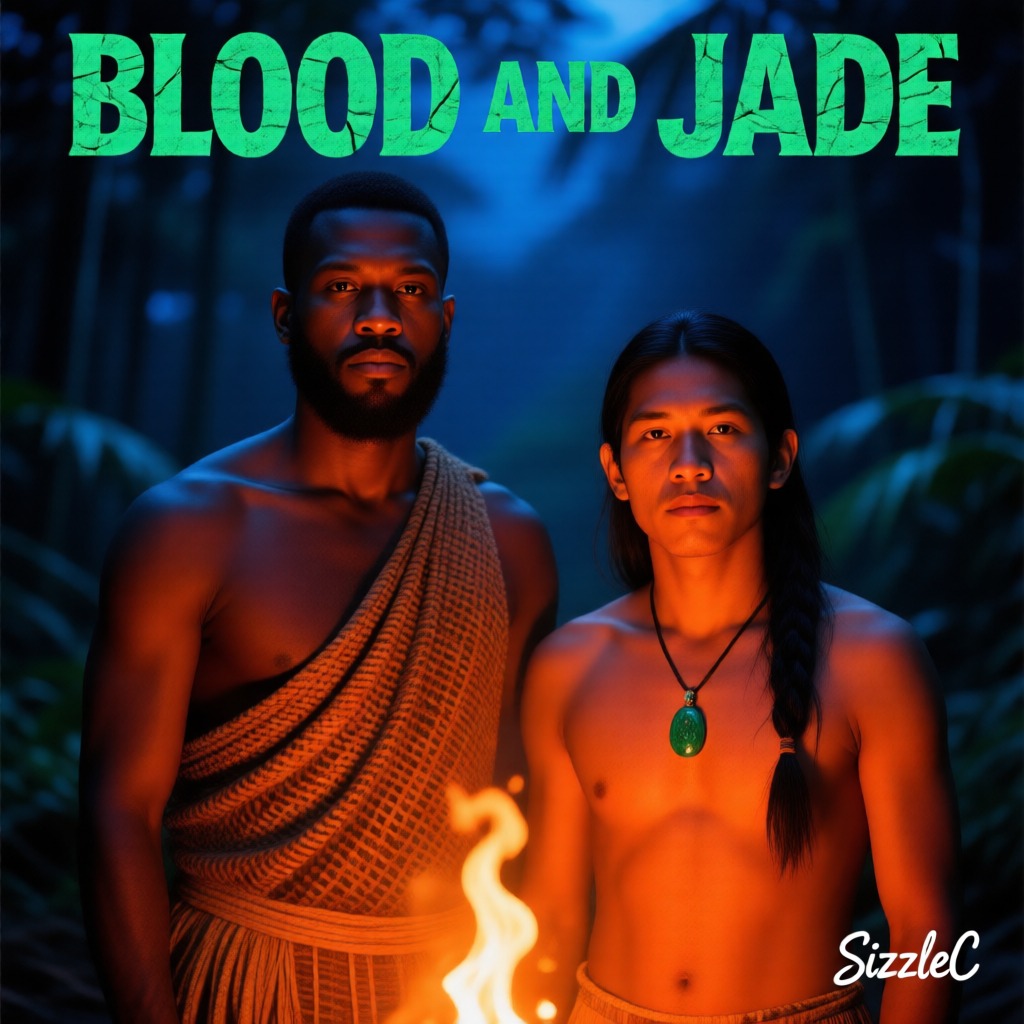
Blood and Jade (The Alliance) cover

[Intro]

From the Congo river to the Aztec stone.

Two different peoples, but we ain’t alone.

[Verse 1]

Escaping from the galleon, escaping from the mine,

Fugitives walking on the very same line.

[Verse 2]

African warriors and Mesoamerican blood,

Building up a family in the middle of the mud.

Trading out the language, sharing the corn,

A brand new civilization being magically born.

[Pre-Chorus]

The Spanish call us rebels. The Spanish call us wild.

But we are building freedom for every single child.

[Drop]

Blood and jade! Iron and the wood!

Doing what the empire never thought we could!

Two continents meeting on the side of a hill,

Living out the prophecy, keeping it chill!

[Drop 2]

[Verse 3]

The rhythmic integration of the drum and the flute,

Tearing out the colony directly by the root!

They tried to keep us separate, they tried to divide,

But now we’re riding into battle standing side by side!

The maroon and the native, a powerful force,

Knocking the conquistadors straight off the horse!

A union in the jungle, a beautiful sight,

Dancing round the bonfire in the middle of the night!

[Outro]

Together we stand. The first free people.

Blood and jade.

07 · Blood and Jade (The Alliance)

Mesoamerican Flutes and Acoustic Guitar → Dark, Hypnotic Deep House. Slow, driving, atmospheric, female background vocals

🎶 The Sizzle: Mesoamerican flutes and acoustic guitar into dark, hypnotic deep house with female backing vocals. Mood: two peoples, one fire.

🎬 The Story: Blood and Jade: escaped Africans and Indigenous fugitives share corn, language and a hillside, and ride into battle side by side.

The Maroon Leader
The Maroon Leadercharacter
The Totonac Ally
The Totonac Allycharacter
The Kongo Woman
The Kongo Womancharacter
The Spanish Captain
The Spanish Captaincharacter
The Child of the Town
The Child of the Towncharacter
Congo River Bank
Congo River Banklocation
The Niche Pyramid
The Niche Pyramidlocation
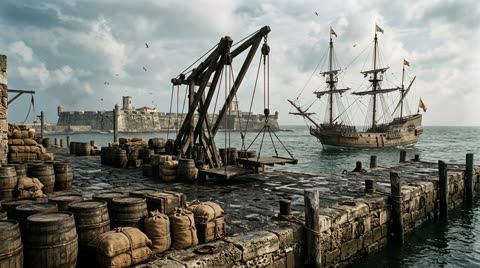
Galleon Hold and Veracruz Mole
Galleon Hold and Veracruz Molelocation
Sugar Estate near Córdoba
Sugar Estate near Córdobalocation
Orizaba Cloud Forest
Orizaba Cloud Forestlocation
San Lorenzo, the Free Town
San Lorenzo, the Free Townlocation
The Colonial Road
The Colonial Roadlocation
The Bonfire Clearing
The Bonfire Clearinglocation
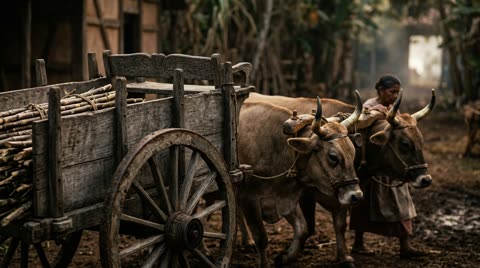
The Ox Cart
The Ox Cartprop
The Jade Pendant
The Jade Pendantprop
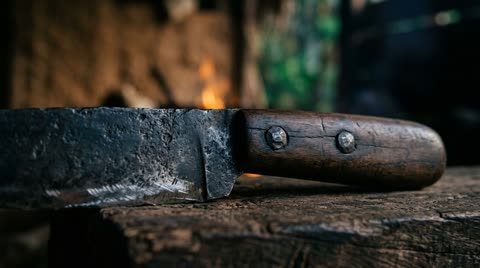
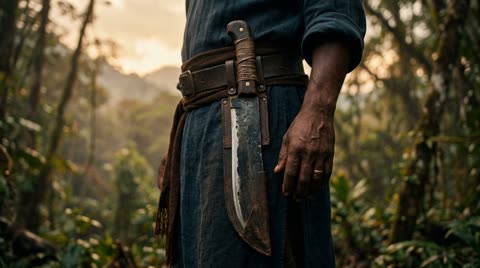
The Cane Knife
The Cane Knifeprop
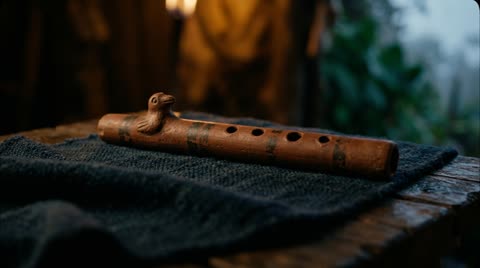
The Clay Flute
The Clay Fluteprop
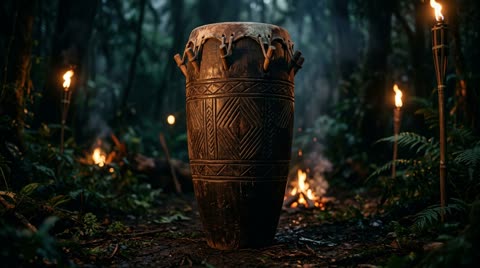
The Ngoma Drum
The Ngoma Drumprop
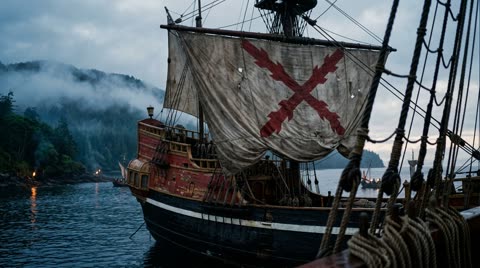
The Spanish Galleon
The Spanish Galleonprop
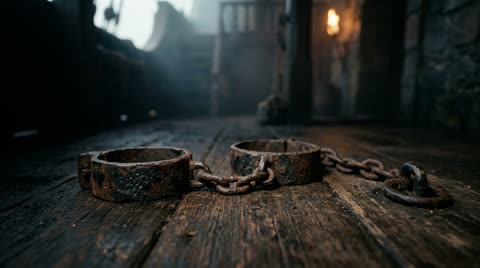
Iron Shackles
Iron Shacklesprop
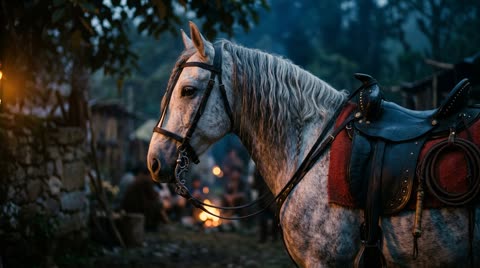
The Captain's Andalusian
The Captain's Andalusianprop
Beat sheet — the real board (54 shots)

Characters

  • The Maroon Leader — A tall, broad-shouldered West Central African man, dark brown skin, close-cropped hair, a short black beard, a thin pale scar across his left forearm; undyed hand-woven cotton tunic with a rope belt and loose woven trousers rolled to the calf, bare feet; calm, watchful face, upright posture.
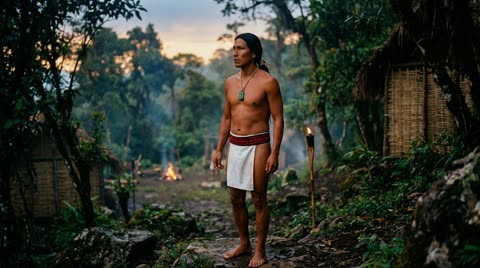
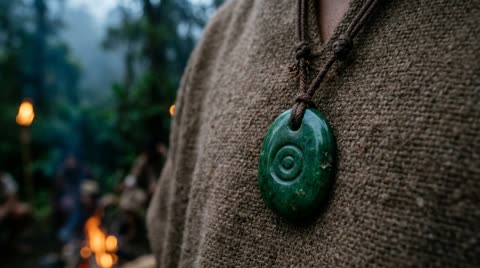
  • The Totonac Ally — A lean Indigenous Totonac man, warm copper-brown skin, long straight black hair tied back at the nape with a cotton cord, hairless face, high cheekbones; white cotton loincloth with a woven red-and-black hip band, a polished green jade pendant on a knotted cord at his chest, bare feet; quiet, alert
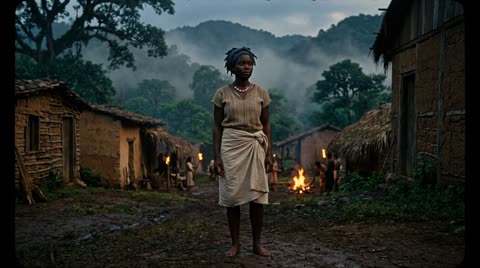
  • The Kongo Woman — A West Central African woman in her twenties, deep brown skin, hair in short twists bound with a strip of indigo cloth, strong shoulders; a wrapped skirt of undyed cotton knotted at the hip and a short woven top, a strand of small white shell beads at her throat, bare feet; steady, grounded presence
  • The Spanish Captain — A Spanish colonial officer of New Spain, olive skin, dark pointed beard and waxed moustache, hair to the collar; blackened steel breastplate over a slashed brown leather doublet, wide-brimmed black felt hat with a red plume, high riding boots, a rapier and a dagger at his belt; hard, narrowed expres
  • The Child of the Town — A child of about seven of mixed African and Totonac parentage, warm brown skin, tight black curls cut short, wide dark eyes; a small undyed cotton tunic to the knee with a red woven sash, bare feet; open, curious face.

Shots

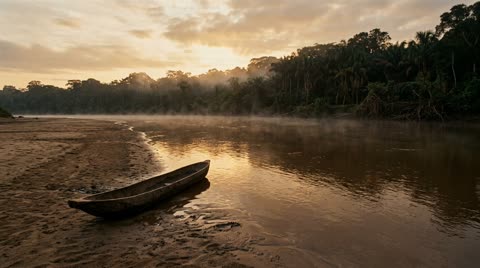
  1. #1 · 5 s — Wide view from a low sandbar across the Congo River at dawn, brown water sliding left-to-right past a wall of raffia palms and mangrove roots, a single dugout pirogue beached on the near bank with its paddle laid across the gunwale. Pale amber sun low behind the far treeline. The camera drifts slowly forward over the sand toward the river edge, the river the only other motion. Hushed, ancestral mood.
  2. #2 · 5 s — Medium view from the water's edge: the maroon leader kneels on the wet sand of the Congo bank, cups river water in both hands and lifts it slowly toward his face, eyes on the water in his palms, lips together. Behind him raffia palms and a thatched village roofline. Warm low sun from the right skims the river and lights the side of his face. Camera holds still; only his arms move, one slow lift.
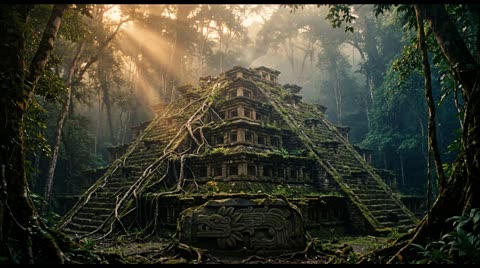
  3. #3 · 5 s — Wide view of a Totonac stepped pyramid with hundreds of square stone niches, half swallowed by ceiba and strangler-fig roots, in the cloud forest of Veracruz. Morning light in golden shafts through the canopy, the stone stairway rising toward the top platform. A pair of parrots crosses high and far. Slow push forward toward the base of the stairway across mossy flagstones.
  4. #4 · 4 s — Close view at the foot of the pyramid: the Totonac ally stands beside a carved stone panel of a feathered serpent and presses his open right palm flat against the glyph, holding it there, head bowed toward the stone so we see him in three-quarter profile. Moss in the carved grooves, a fern brushing the edge of the panel. Golden shaft of morning light from above-left across the stone and his shoulder. Camera holds sti
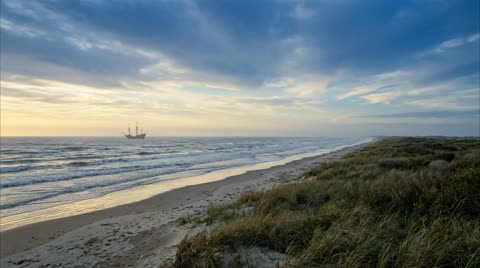
  5. #5 · 5 s — Wide view from sea level of the galleon under full sail, heeled slightly, bow pointed toward the right edge of frame, driving FORWARD along its own heading left-to-right across grey-green Gulf swell, white water peeling from its stem. Low overcast sky, a break of pale gold light on the horizon behind it. Camera holds on the water; the ship moves and the swell rolls with it. Heavy, foreboding mood.
  6. #6 · 5 s — Medium view inside the galleon's lower hold: the Kongo woman sits on rough oak planking against a curved hull rib, iron shackles closed on her ankles, the chain running to a ring bolt in the deck, her hands resting in her lap. Her eyes lift and hold on a thin seam of daylight between the hatch boards above her, lips together. Other figures are dark shapes far behind her in the gloom. One narrow strip of white dayligh
  7. #7 · 5 s — Wide view along the stone mole of the port of Veracruz at midday, the galleon moored stern-on with sails furled, a gangplank down to the quay. A file of African captives descends heel-to-toe toward camera and along the mole, irregularly spaced, some carrying bundles, one man stumbling and caught by the woman ahead of him, an older man at the rear walking slower than the rest. Spanish soldiers in morion helmets stand
  8. #8 · 5 s — Medium view in a sugar-cane field near Córdoba: the maroon leader stands among cane stalks taller than his head, grips the cane knife and brings it down in one slow heavy cut through the base of a stalk, the stalk folding over. Sweat on his shoulders, the cane rows running off behind him toward a wooden mill roof. Hard afternoon sun from behind-left, deep shadow across his face. Camera holds still; one cut, one stalk
  9. #9 · 5 s — Close view of a colonial three-roller wooden sugar mill, vertical hardwood rollers with iron-banded tops turning slowly as a long sweep pole passes through the top of frame, green cane stalks fed between the rollers and grey juice running down a wooden trough into a copper kettle below. Thatched mill roof overhead, flies in the light, spilled bagasse on the packed-earth floor. Sun through gaps in the thatch in narrow
  10. #10 · 5 s — Medium view from low in the cane: the Spanish captain sits upright in the saddle on the Andalusian horse at the edge of the cane field, reins gathered in his left hand, and rests his right hand on the pommel, his gaze fixed on the cane rows in front of him, lips together, jaw set. A whip coiled at the saddle. The horse stands square, tail flicking once. Behind him the estate house with its red-tiled roof and arcaded
  11. #11 · 5 s — Medium view from within the cane at night: the maroon leader runs directly TOWARD camera, heel-to-toe, nose leading, shouldering cane stalks aside, eyes fixed on the black shape of the mountains above the frame's top edge, closing the distance through the whole take. Behind him a single orange torch flare far back at the estate. Moonlight blue on the cane leaves, the torch a distant warm point. Camera holds still at
  12. #12 · 4 s — Medium view in a foggy jungle marsh below the mountain: the Totonac ally wades thigh-deep through black water and reeds, moving FORWARD away from camera toward a wall of tree ferns, arms lifted clear of the water, a bundle on his back. Flat grey pre-dawn light, the water dark around his legs. Camera holds still; he pushes slowly through, one continuous wade.
  13. #13 · 4 s — Close view looking down at a muddy jungle trail after rain: two lines of bare footprints, one set larger and deeper along the left, one narrower along the right, joined into a single line that leads away up the trail into ferns. Rainwater pooled in the prints, a fallen red bromeliad flower beside them. Soft grey dawn light from above. Slow push forward along the trail following the joined prints.
  14. #14 · 4 s — Medium view on the jungle trail at first light: the maroon leader and the Totonac ally stand two paces apart facing each other in profile to camera, mud to the knees, the leader's hands at his sides. The ally lifts his right hand slowly and holds it open toward the maroon leader, palm up, and holds it there. Ferns and a moss-covered boulder behind them. First warm sun breaking through from behind the ally's shoulder.
  15. #15 · 4 s — Wide view from the valley floor at night up the flank of the mountain: a scatter of torch and cookfire points climbing the slope in an irregular line, a palisade of sharpened logs and the roofs of wooden houses catching the light, the jungle above them deep jade-green under a full moon. Moonlight cool blue on the palisade and thatch, the fires warm amber points. Slow push forward up the slope toward the palisade gate
  16. #16 · 5 s — Medium view in the free town at night: the maroon leader stands in ankle-deep mud beside a half-built wooden house and drives a sharpened post downward into the ground with both hands, leaning his weight onto it, the post sinking as he pushes. Behind him a frame of lashed poles and a stack of palm thatch. Warm amber firelight from the left across his arms and the wet mud; moonlight cool blue on the thatch. Camera hol
  17. #17 · 5 s — Medium view at the doorway of a wooden house: the Kongo woman kneels at a stone metate and rolls the mano forward across yellow maize kernels, cornmeal spilling to the near edge; the Totonac ally kneels beside her in profile, one hand resting flat on the edge of the metate, watching the stone. A clay pot of dried cobs between them, a woven palm mat under their knees. Firelight from the doorway behind them, warm on th
  18. #18 · 5 s — Close view on the step of a wooden house at night: the child sits on the worn plank step with a fresh ear of maize in one hand, the other hand resting on the clay flute lying in the lap, and slowly turns the maize cob in the firelight, looking at the kernels, a soft closed-mouth smile. Behind, the dark doorway and a hanging string of drying chilies. Warm amber from a fire to the right, cool blue moonlight on the far
  19. #19 · 5 s — Medium view across a heavy oak table in the estate house at night: the Spanish captain stands over a hand-drawn map of the Orizaba slopes, candlelight from a brass candlestick, and presses the point of his dagger slowly down into the map at the mountain, holding it there, eyes on the blade, lips together, jaw set. A clay wine jug, a quill, a rolled decree with a red wax seal beside the map. Warm candle glow from the
  20. #20 · 5 s — Wide view along the inside of the log palisade at night: the maroon leader walks slowly TOWARD camera along the wall with the child seated on his shoulders, the child's small hands resting on his head, both looking ahead at the torch on the gate post beyond the camera. Sharpened stakes lean against the wall, a fire pit glowing to the left, a dog asleep by a doorway. Torch amber from ahead, moon-blue on the wall behin
  21. #21 · 5 s — Close view of the Totonac ally's open right hand held out at chest height, the jade pendant lying in his palm with its cord trailing over his wrist, dust in the creases of the knuckles, his fingers closing slowly around the stone until only the cord shows. Torchlight and the log wall soft behind. Warm torch amber from the right catching the polished green of the jade. Camera holds still; the fingers close once.
  22. #22 · 5 s — Close view over the maroon leader's shoulder at a work log: the cane knife blade laid against the end of a straight hardwood shaft, and his two hands wind a strip of wet rawhide tightly around the joint, pulling each turn taut, the binding growing as he winds. Wood shavings, a stone, a clay lamp on the log. Small lamp flame from the left throwing warm light on the iron and his knuckles, blue night beyond. Camera hold
  23. #23 · 5 s — Medium view of a rack of lashed poles against a wooden house wall: a row of spears and hafted cane blades leaning at uneven angles, some shafts pale and freshly cut, some dark and old, one with a broken tip, one wrapped in red cloth, spaced unevenly. A grindstone and a bucket of water at the base, the stone wet. A torch on the wall bracket to the right, its flame the only motion, amber over the iron with moon-blue on
  24. #24 · 5 s — Wide view of the free town's terraces on the mountainside at deep dusk: wooden houses with palm thatch stepping up the slope, small maize plots between them, a woman carrying a water gourd up a path, two men squatting by a fire on a lower terrace, a man mending a roof, a girl chasing a chicken across a yard in the opposite direction, none of them moving at the same pace. Snow on the peak of Orizaba faint above the ri
  25. #25 · 5 s — Medium view at the bonfire clearing: the Kongo woman sits on a log with the child leaning against her side, half asleep, and she slowly strokes the child's hair with one hand, her gaze resting on the flames in front of them, seen in three-quarter profile. A clay pot warming at the fire's edge, a woven blanket over the log. Fire glow warm from below-left, deep green jungle black behind. Camera holds still; one slow ha
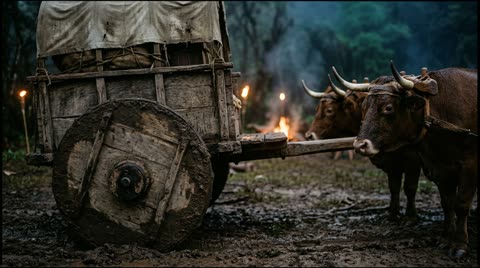
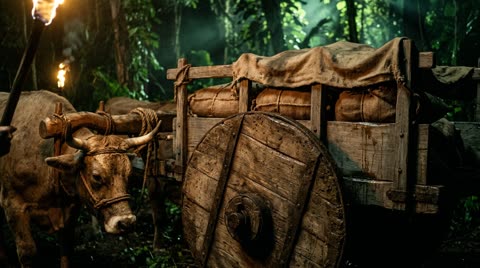
  26. #26 · 5 s — Wide view down a rutted colonial dirt road between walls of sugar cane at late afternoon: the ox cart rolls FORWARD toward camera along the road, the two oxen leading, nose first, the wooden wheels turning in the ruts, a Spanish teamster in a straw hat seated on the front bench with the goad in his right hand, facing forward down the road. Canvas lashed over the cargo behind him. Low gold sun from the left through th
  27. #27 · 5 s — Close view low in the cane at the road's edge: the maroon leader crouches among the stalks, one hand parting two cane leaves, the other hand steadying a spear shaft against his shoulder, his eyes fixed on the dust of the road through the gap in front of him, the parted leaves trembling slightly in his grip. Sweat on his temple. Gold sidelight through the cane from the right, striping his face. Camera holds still.
  28. #28 · 5 s — Medium view from below: the Totonac ally stands on a mossy boulder above the road, jungle behind him, and slowly raises his right arm straight up, fingers spread, and holds the arm raised, his gaze on the bend of the road below the frame's bottom edge. Wind moves the leaves behind him. Late gold sun from behind-left, his figure half in silhouette against bright canopy. Camera holds still; one raised arm.
  29. #29 · 5 s — Close view at the tailboard of the ox cart, the canvas lifted back by the corner: crates of iron hoe blades and machete blanks, two small oak powder kegs stamped with a crown, a coil of hemp rope, dust sifting through the light as the cart jolts forward along the road. The cane wall slides past behind the tailboard. Low gold sun through the cane, warm on the iron. Camera rides with the cart, holding on the cargo.
  30. #30 · 5 s — Close view at the bonfire clearing at night: a shirtless African man kneels behind the tall wooden ngoma drum and brings his right palm down flat on the hide, the drumhead flexing, his left hand resting on the rim. Firelight on the carved drum body. Warm fire glow from the left, jade-green dark beyond. Camera holds still; one strike, the hand rising for the next.
  31. #31 · 5 s — Medium view in profile: the Totonac ally sits cross-legged at the bonfire's edge with the clay flute at his lips, fingers moving slowly over the holes, eyes closed, head tilted slightly toward the fire. The drummer a dark shape across the flames behind him. Fire glow warm on his face and the clay. Camera holds still; only his fingers move.
  32. #32 · 5 s — Medium view across the flames: the maroon leader sits on a log opposite the fire with a stick held loosely in his right hand, his eyes resting on the fire between him and camera, lips together, slowly nodding once to the drum. Low flames in the foreground. Warm fire glow from below on his face, deep green night behind him. Camera holds still.
  33. #33 · 5 s — View straight down onto packed earth beside the fire: the maroon leader's right hand and forearm already in frame from the bottom edge, holding a stick, drawing one slow single line in the dirt for the road, small pebbles already placed on both sides of it. Firelight from the left, long shadows of the pebbles across the dirt. Camera holds still; one drawn line.
  34. #34 · 5 s — Wide view down the colonial road at first light: the Spanish captain rides the Andalusian horse at a walk FORWARD toward camera, the horse's head leading, reins in his left hand; behind him a loose file of soldiers on foot at irregular spacing, one with an arquebus over his shoulder, one drinking from a leather flask, one lagging to adjust his boot, a pack mule off to the verge. Cane walls both sides. Cold grey-gold
  35. #35 · 4 s — Wide view across the sugar estate at dawn: the cane field on fire, a wall of orange flame moving slowly left-to-right through the stalks under a pale sky, the mill roof dark beyond the flames. Camera holds still; the fire advances.
  36. #36 · 5 s — Medium view from below on a jungle slope: the maroon leader and the Totonac ally run downhill TOWARD camera side by side, heel-to-toe, nose leading, spears held low, ferns whipping their legs, eyes fixed on the road below the frame's bottom edge. Trees and ferns behind them. Dawn light broken through the canopy in cool shafts. Camera holds still; the two men close the distance.
  37. #37 · 5 s — High wide view looking down on the colonial road: the ox cart halted mid-road with its oxen, the soldiers scattered around it; maroon and Totonac fighters already among them on both sides of the road, one man vaulting the roadside ditch, one throwing a spear, one dragging a soldier by the collar, a soldier running away down the road, spacing ragged, no two figures moving alike. Dust rising. Dawn light long and low fr
  38. #38 · 5 s — Medium view from road level: the Andalusian horse rears high on its hind legs, forelegs pawing air, and the Spanish captain pitches backward out of the saddle, one hand losing the reins, his hat already falling. Cane wall and dust behind, a dropped halberd in the rut. Dawn light from the right catching the horse's belly and the flying reins. Camera holds still; the rear and the fall are one motion.
  39. #39 · 5 s — Medium view in the jungle off the road: the maroon leader and the Totonac ally stand facing each other in profile and grip each other's forearms, the clasp tightening, dust and cane chaff on their shoulders, eyes on each other, lips together. A captured Spanish morion helmet lies in the ferns at their feet. Morning sun now full through the canopy from above-right in warm shafts. Camera holds still; one clasp.
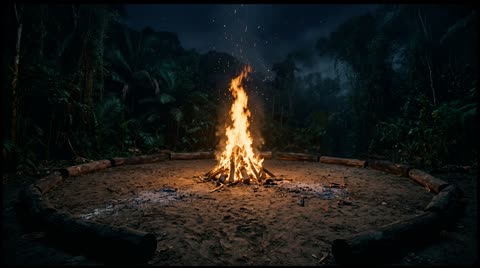
  40. #40 · 5 s — Wide view of the bonfire clearing at night, flames tall at center: a Kongo man stamping heavily in place to the left, a Totonac woman turning slowly with her arms out on the far side, two children chasing each other around the fire's edge in opposite directions, an old African man clapping off-tempo on a log with his back to camera, a young Totonac man leaping once near the right edge. No two bodies mirror each other
  41. #41 · 5 s — Medium view at the bonfire: the Kongo woman dances alone at the fire's edge, seen in three-quarter profile, her hips swaying slowly side to side with knees soft, both arms lifted high, wrists turning slowly, head tipped back, eyes toward the sparks above. Dancers blurred and moving behind her across the fire. Fire glow warm from the left on her arms and face. Camera holds still; one continuous sway.
  42. #42 · 5 s — Medium view at the bonfire's edge: the maroon leader sits on the ground with his back against a log, the child asleep across his lap, his large hand resting on the child's back rising and falling slowly, his gaze on the fire in front of him, seen in three-quarter profile, lips together. The drum silent beside him. Low ember glow warm from below, blue moonlight on his shoulder. Camera holds still.
  43. #43 · 5 s — Close view at the fire: the Totonac ally kneels before the child, who stands awake now, and lowers the jade pendant's cord slowly over the child's head, settling the green stone on the small chest, his hands letting go of the cord. The child's eyes on the stone. Fire glow warm from the right on the jade, the ally's face in three-quarter profile. Camera holds still; one lowering of the cord.
  44. #44 · 5 s — Wide view at the palisade gate of the free town at dawn: the ox cart rolls FORWARD away from camera through the open gate, oxen leading nose first, the Totonac ally seated on the front bench with the goad in his right hand, his gaze on the houses ahead up the slope. Two maroons swing the gate wider, one on each side. Cool blue dawn with the first warm sun on the thatch above. Camera holds still on the road outside th
  45. #45 · 5 s — Medium view at the tailboard of the ox cart inside the town: a Kongo man on the cart bed lowers an iron hoe blade down into the open hands of a Totonac woman standing on the ground, her fingers closing around it; a stack of blades already on a palm mat at her feet, a child sitting on the mat counting them, an old man leaning on the wheel. Morning sun from the left across the iron. Camera holds still; one hand-off.
  46. #46 · 5 s — Wide view from behind: the maroon leader stands alone on a grassy outcrop above the town, his back to camera, a spear planted upright in the ground beside him, his gaze on the terraces of houses and maize plots below him and the long green valley beyond. Wind moves the grass at his feet and the cloth at his shoulders. Rising sun from the right, gold across the valley, his figure dark against it. Slow push forward tow
  47. #47 · 5 s — Wide view of the free town's terraces at full dawn from across the valley: the wooden houses and palisade lit warm on the mountainside, maize plots green between them, a woman hanging cloth on a line, a man leading a goat up a path, two boys on a roof, spaced unevenly across the slope. Cloud forest dark green above, the snow peak of Orizaba pale beyond the ridge. Clear gold morning light from the right. Camera holds
  48. #48 · 5 s — Wide view of the snow-capped peak of Orizaba rising above a rolling sea of cloud-forest canopy, cloud lying in the valleys below the treeline, a single hawk circling far off. Clean morning sun from the right on the snow, the forest in deep green shadow. Slow push forward toward the peak over the canopy.
  49. #49 · 5 s — Wide view down the colonial road in flat overcast light: the Spanish captain rides the Andalusian horse at a slow walk FORWARD away from camera, the horse's head leading, his shoulders slumped, bare-headed, a torn sleeve, the horse favouring one leg slightly. Burned cane black on both sides of the road, ash on the ruts. Grey even overcast light. Camera holds still; he shrinks down the road.
  50. #50 · 5 s — Close view in a maize plot: the Kongo woman kneels in the wet dark soil and presses three maize kernels down into a hole with her thumb, her fingers drawing wet soil over them in the same slow stroke, her other hand resting on the rim of a woven seed basket at her knee, a wooden digging stick laid beside it. Morning sun warm from the left on her hands and the wet soil. Camera holds still.
  51. #51 · 5 s — Medium view at the wooden house step: the child sits with the clay flute at the lips, fingers lifting and lowering slowly over the holes, the jade pendant resting on the chest, eyes half closed, seen in three-quarter profile toward the morning light. Drying chilies and a clay pot in the doorway shadow behind. Warm sun from the right across the step. Camera holds still; only the fingers move.
  52. #52 · 4 s — Close view at the bonfire clearing in morning light: the ngoma drum standing upright on the packed earth beside the dead grey ash of the fire, the clay flute laid across the drumhead, one ember still faintly orange in the ash. Footprints in the dust around the ash, a dropped red cloth. Soft morning sun from the left across the carved drum body. Slow push forward toward the flute on the drumhead.
  53. #53 · 4 s — Wide view along a mountain ridge at sunrise: the maroon leader and the Totonac ally stand side by side, backs to camera, spears planted upright beside each, their gaze on the sun rising over the cane valley far below them, neither moving but for the wind in their clothing. Cloud forest falling away on both sides of the ridge. Sun full in the frame ahead of them, their figures dark against it. Camera holds still.
  54. #54 · 5 s — Close view of the carved feathered-serpent glyph at the base of the pyramid: the jade pendant lies on the stone in the carved groove, its cord coiled beside it, moss in the carving, a shaft of morning sun resting on the green stone so it glows. A single fern frond stirs at the frame edge. Golden light from above-left. Very slow push forward toward the pendant.
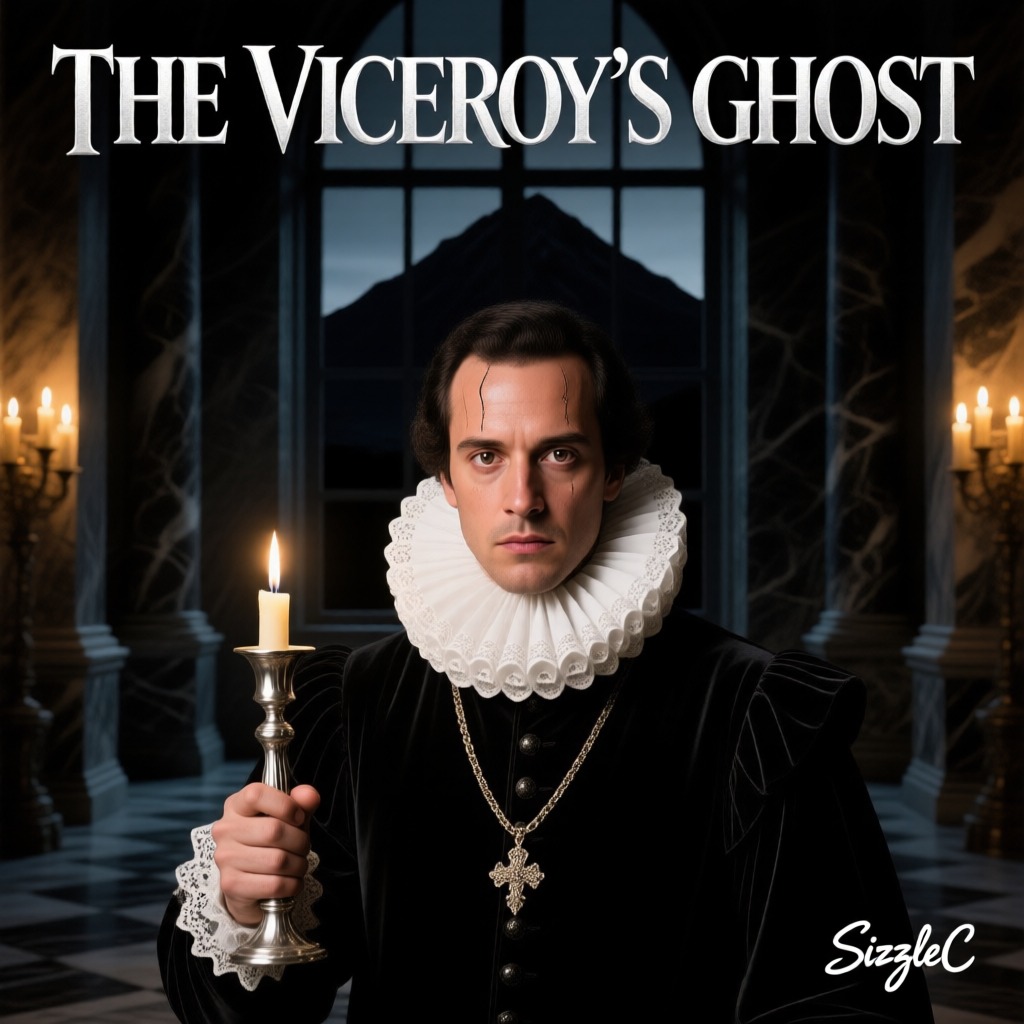
The Viceroy's Ghost (The Paranoia) cover

[Intro]

Sitting in the palace in the Mexico heat.

Listening to the rhythm of the mountain beat.

[Verse 1]

Viceroy pacing on the marble floor.

Terrified of the knocking on the heavy oak door.

[Verse 2]

He looks out the window, he looks at the trees,

Every single shadow brings him down to his knees.

He knows that the rebellion is spreading like a fire,

Gaspar Yanga is the one pulling the wire!

[Pre-Chorus]

Lock the silver away. Guard the gold.

The royal Spanish empire is growing too old.

[Drop]

The nightmare! He’s coming for the crown!

The ghost of the mountain is coming to town!

You can’t sleep at night, you’re shaking in the bed,

Got a million bounties riding on Yanga's head!

[Drop 2]

[Verse 3]

Paranoia setting in, the panic in the chest,

The colonizer failing the ultimate test!

Every time the wind blows, every time it rains,

He hears the heavy rattling of broken iron chains!

The slaves on the coast are starting to talk,

Learning from the Captain exactly how to walk!

The Spanish authority is starting to crack,

And the Afro-Mexican is taking it back!

[Outro]

You can't kill a ghost.

Sleep well, Viceroy.

08 · The Viceroy's Ghost (The Paranoia)

Baroque Harpsichord → Aggressive Latin Trap and Tech House Bassline. High tempo, paranoid, stuttering hi-hats

🎶 The Sizzle: Baroque harpsichord into aggressive Latin trap and a tech house bassline, stuttering hi-hats. Mood: paranoia in a palace.

🎬 The Story: The Viceroy's Ghost: the Spanish Viceroy paces his marble floor, hearing chains in the rain; the rebellion is a ghost he cannot kill.

Yanga
Yangacharacter
The Viceroy
The Viceroycharacter
Nzinga the Scout
Nzinga the Scoutcharacter
Tochtli the Carter
Tochtli the Cartercharacter
The Captain
The Captaincharacter
Viceroy's marble hall
Viceroy's marble halllocation
Viceroy's bedchamber
Viceroy's bedchamberlocation
Viceregal Palace exterior, Mexico City plaza
Viceregal Palace exterior, Mexico City plazalocation
Orizaba mountain jungle trail
Orizaba mountain jungle traillocation
San Lorenzo de los Negros
San Lorenzo de los Negroslocation
Córdoba sugar estate cane field
Córdoba sugar estate cane fieldlocation
Camino Real colonial road
Camino Real colonial roadlocation
Veracruz waterfront
Veracruz waterfrontlocation
The ox cart
The ox cartprop
The heavy oak door
The heavy oak doorprop
The silver chest
The silver chestprop
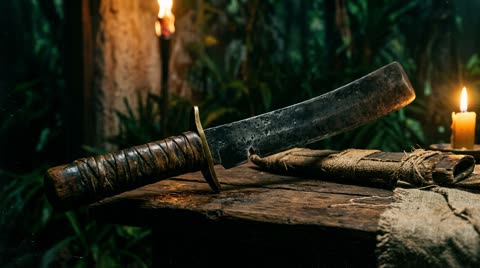
Yanga's machete
Yanga's macheteprop
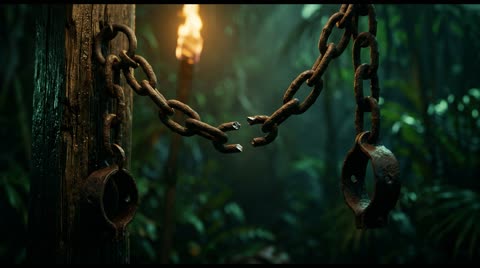
Broken iron chains
Broken iron chainsprop
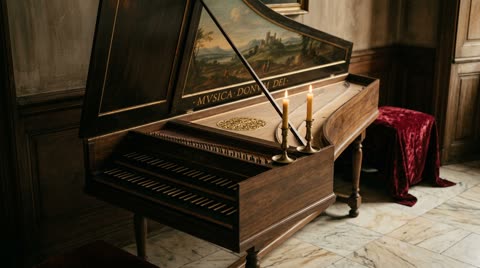
The Ruckers harpsichord
The Ruckers harpsichordprop
Beat sheet — the real board (43 shots)

Characters

  • Yanga — Gaspar Yanga, the maroon leader. A tall, broad-shouldered African man of West Central African (Gabon/Angola) origin, dark brown skin, close-cropped black hair, a short dense beard, a thin pale scar running diagonally across his left forearm. He wears a hand-woven undyed cotton tunic with a rope belt
  • The Viceroy — The Viceroy of New Spain, a pale, heavy Spanish nobleman in his fifties, fleshy jowled face, thin dark moustache and small pointed beard, receding dark hair combed back, damp with sweat. He wears a 1620s black velvet doublet with slashed sleeves, a stiff white starched linen ruff, black breeches, bl
  • Nzinga the Scout — A maroon scout of San Lorenzo, an African woman in her late twenties, very dark brown skin, lean and wiry, hair in tight short twists tied back with a strip of red cloth, alert wide-set eyes. She wears a sleeveless undyed woven cotton wrap-dress knotted at the shoulder, a hemp cord belt with a small
  • Tochtli the Carter — An Indigenous Nahua man in his forties from the Córdoba lowlands, medium brown skin, broad flat cheekbones, long straight black hair tied at the nape with a cord, weathered hands. He wears a white cotton manta shirt, white cotton loose trousers tied at the calf, a woven ixtle-fiber cape over one sho
  • The Captain — The maroon war captain, an Angolan man in his thirties, dark brown skin, shaved head, a strong jaw, a small notch missing from the top of his left ear. He wears a captured brown leather Spanish buff jerkin over a woven cotton shirt, cotton trousers, a wide belt of plaited rawhide, bare feet, a short

Shots

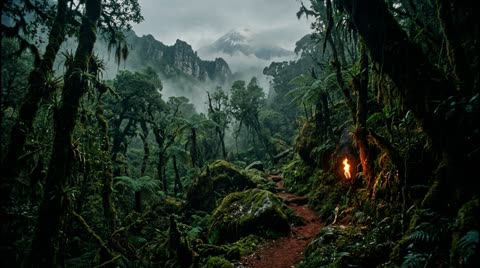
  1. #1 · 5 s — Wide view from a jungle ridge: the snow-capped volcanic cone of Mount Orizaba rising out of grey dawn fog, dense wet cloud-forest canopy of tree ferns and mahogany filling the foreground, moss-dark, dripping. The fog drifts slowly across the lower slopes, thinning to reveal the red-earth footpath below. Light: cold grey pre-dawn from the east, a first pale gold edge on the summit snow. The camera holds still. Silent,
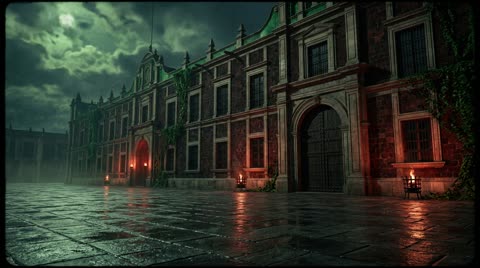
  2. #2 · 5 s — Wide ground-level view across the empty flagstone plaza of Mexico City to the long grey tezontle-stone facade of the Viceregal Palace, rows of barred windows, the iron-studded arched gateway shut. Heat haze shimmers faintly over the flagstones, a lone black vulture perched on the parapet. Light: harsh white midday sun from directly above, short hard shadows under the cornices, the stone bleached and blinding. The cam
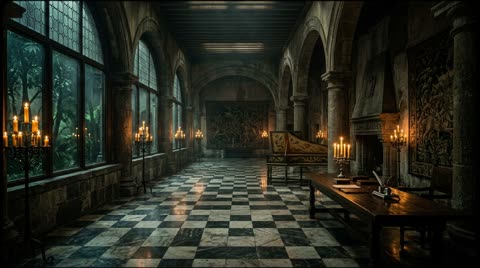
  3. #3 · 5 s — Medium view from the side of the Viceroy seated in a tall carved chair at the long oak table in the marble hall, his gaze fixed on the silver inkstand in front of him, lips together and pressed thin. His one action: he lifts the lace handkerchief and slowly dabs the sweat from his forehead and temple. Behind him black-and-white marble squares recede into darkness, iron candle stands dripping beeswax. Light: warm cand
  4. #4 · 5 s — Close view along the keyboards of the 1620 Andreas Ruckers double-manual harpsichord standing against the marble hall wall, its raised walnut lid showing the painted Flemish landscape inside, two rows of bone and ebony keys, gilt rose in the soundboard. Beeswax candles in brass sticks burn on its top, their flames leaning and steadying in a faint draft. Light: candle-gold across the keys, the room behind lost in blac
  5. #5 · 5 s — Medium view from slightly below of Yanga standing on the red-earth footpath among moss-covered boulders and tree ferns, his gaze fixed on the fog-filled valley below and to the front of him, lips together, face calm. His one action: his head tilts a fraction as he listens to the forest. Wet leaves drip around him, mist moving slowly through the trunks behind. Light: soft grey dawn from above filtered through canopy,
  6. #6 · 5 s — Close view of a maroon drummer, an African man with dark brown skin in a woven cotton tunic, seated on a carved wooden stool under a thatch awning in San Lorenzo, both palms striking the taut hide head of a tall hand-carved wooden drum in a steady slow rhythm, his eyes down on the drum skin. Behind him packed red earth, a timber house wall, maize drying on a rack. Light: warm late-afternoon gold from the side, dust h
  7. #7 · 5 s — Wide view down a red-earth track between towering rows of green sugar cane on the Córdoba estate. Four enslaved African men and women in torn undyed cotton work at different tempos: one man swings a cane knife low into a stalk, a woman bundles cut cane in her arms, an older man straightens with a hand on his lower back, a young man farther back walks away from camera carrying a bundle on his shoulder. Irregular spaci
  8. #8 · 5 s — Wide side view of the ox cart rolling left to right across frame along the rutted red-earth Camino Real, the two dun oxen leading nose-first under the wooden yoke, the solid oak disc wheels turning forward in the direction of travel, jute sacks under stained hemp cloth in the bed. Tochtli the Carter sits on the front plank bench, facing forward toward the oxen, a switch resting in his hand. Jungle walls press in on b
  9. #9 · 5 s — Medium view of Nzinga the Scout crouched low among wet ferns and mossy roots on the slope above the Camino Real, her gaze locked on the ox cart far below on the road at the bottom of the frame, its dun oxen and grey timber small among the trees. Her one action: she parts a fern frond slowly with one hand to see better. Lips together, breathing still. Light: green-filtered afternoon sun from above, a bright fleck on h
  10. #10 · 5 s — Medium view from beside the ox cart's front plank bench of Tochtli the Carter seated alone, framed from his own side, his face toward the oxen's wooden yoke ahead of him at the top of the frame, the plaited palm hat shading his eyes. His one action: his hand tightens on the switch resting across his knee. Grey weathered timber of the cart side fills the lower frame, jungle green sliding past slowly behind. Light: dap
  11. #11 · 5 s — Wide view down the rutted red-earth Camino Real: Yanga already stands in the center of the road, feet planted in the red dust, the machete hanging low in his right hand, facing the halted ox cart in the background, its two dun oxen standing still, nose toward him. His one action: his left palm rises slowly, flat toward the cart. Lips together, face level. Light: dappled hot afternoon sun, shafts through the canopy on
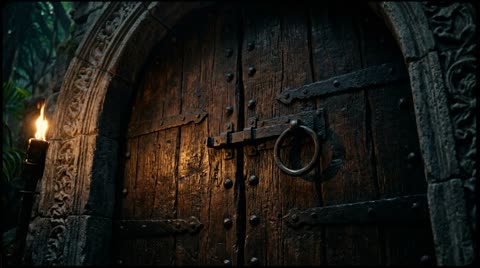
  12. #12 · 5 s — Straight-on view of the great oak door of the Viceroy's hall filling the frame, two tall dark panels, rows of black iron studs, the massive iron ring handle and iron bolt, set in its carved grey stone arch. Candle flames from iron stands at the edges lean and steady, throwing long trembling shadows of the studs across the wood grain. The iron ring handle shivers once against the wood. Light: candle-gold from both sid
  13. #13 · 5 s — Wide view down the length of the marble hall from behind: the Viceroy walks away from the camera along the black-and-white marble squares toward the great oak door at the far end, heel-to-toe, his hands clasped hard behind his back, the gold chain of office swinging faintly, his shoes clicking on stone. Tall arched windows on the left admit a dim grey-green glow from the garden trees; iron candle stands burn along th
  14. #14 · 5 s — Medium view from inside the hall of the Viceroy standing at a tall arched window of small leaded panes, seen in three-quarter profile, his gaze fixed on the dark garden trees outside the glass at the left of frame, lips together, jaw clenched. His one action: he presses his damp palm flat against the glass, fingers spreading slowly. Sweat on his temple, the white ruff stiff at his throat. Light: dim grey-green dusk f
  15. #15 · 5 s — View of the pale plaster and grey stone of the palace garden wall at dusk, a dark cypress and a spreading ahuehuete tree standing in the foreground at the edge of frame, their branches throwing one long crooked shadow across the wall. The branch shadow sways slowly in a faint evening wind, its shape lengthening across the stone. Light: last cold blue-grey dusk from the west, one warm barred window glowing in the wall
  16. #16 · 5 s — Low view across the black-and-white marble floor of the Viceroy on his knees in the middle of the hall, seen from the side, his gaze down on the wooden rosary beads crushed in his fist in front of him, lips pressed shut. His one action: his shoulders sag and his forehead lowers slowly toward his clenched hands. Iron candle stands tower behind him, wax dripping. Light: one candle stand from the left throws hard gold a
  17. #17 · 5 s — Close view from beside the ox cart's plank bed of Yanga's hands at work: his left hand hauls the hemp rope lashing taut, the scar on his forearm catching the light, and his machete blade rests against the rope where it crosses the grey timber rail. His one action: the rope draws tight and the sacks shift under the stained hemp cloth. Jute weave, iron-bound oak wheel rim, red dust. Light: hot dappled afternoon sun fro
  18. #18 · 5 s — Medium view in a vaulted stone treasury room off the marble hall: two Spanish clerks with pale skin in black doublets and white collars stand at the iron-bound oak silver chest on a stone table. The nearer clerk's one action: he presses the heavy brass padlock shut on the center hasp with a firm push. The second clerk stands with a candle held steady, eyes on the lock. Stacked leather ledgers, a barred slit window. L
  19. #19 · 5 s — Close view across the long oak table of the Viceroy seated, seen from the side, his gaze down on the parchment dispatch lying flat before him on the table, the parchment facing him, its blank underside and the silver inkstand toward the camera. His one action: the goose-quill in his fist hovers and trembles above the page without touching it, a drop of black ink gathering at the tip. The white ruff, the gold chain, s
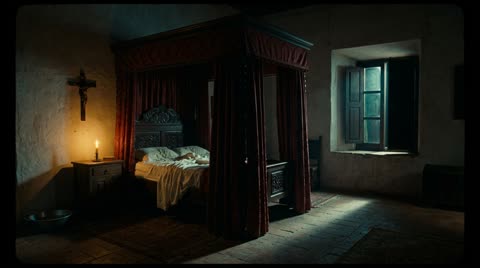
  20. #20 · 5 s — Medium view from the foot of the huge carved walnut four-poster bed of the Viceroy sitting bolt upright against the pillows in a sweat-soaked white linen nightshirt, crimson damask hangings framing him, his gaze fixed on the shuttered window at the right of frame, lips pressed shut and still, eyes wide. His one action: both fists drag the rumpled sheet up to his chest. Light: a single guttering candle on the bedside
  21. #21 · 5 s — Wide view up a rocky ridgeline below Mount Orizaba at night: Yanga stands in the foreground on a boulder, seen from behind and slightly to the side, his gaze fixed on the dark valley below the frame, still as stone. Behind and above him along the ridge, a dozen maroon torches burn at irregular intervals and staggered depths, some bright, two nearly out, one carried by a figure walking away from the line. Light: the t
  22. #22 · 4 s — Close view of a weathered timber post on the Veracruz stone quay, a rain-stained parchment bounty notice nailed to it with an iron tack, the parchment reading "YANGA" in large black ink letters across its top, the rest of the sheet water-blotted. The edge of the parchment lifts and flutters in the salt wind. Behind, out of focus, stacked jute sacks, barrels and the grey-green gulf. Light: blistering white noon sun fr
  23. #23 · 5 s — Close view of Yanga's face and shoulders at night against black jungle, torchlight from below left throwing hard red across one side of his face, green moonlight rimming the other, a bright catchlight in each eye, wet leaves glistening behind him. His gaze is straight into the lens, lips together and still, jaw set, no smile. His one action: a slow blink and the faintest lift of his chin. Rain beads on his beard. The
  24. #24 · 5 s — Close view from beside the four-poster bed of the Viceroy half-sitting against the crimson damask headboard in his sweat-soaked nightshirt, seen from the side, his gaze fixed on the crucifix on the far wall at the top of the frame, lips clamped shut. His one action: his right hand presses flat and hard against his chest, fingers digging into the linen. Light: the candle now a red-orange stub throwing harsh unsteady c
  25. #25 · 5 s — Close view across the steep clay-tiled roof of the Viceregal Palace at night, rain driving hard across the curved terracotta tiles and pouring in a sheet off the edge of the eave, a stone gargoyle spout gushing. Beyond, the dark plaza and one lit barred window in the facade below. Light: a flicker of white-green lightning from the clouds, the wet tiles glossed, the lit window a red-orange point. The camera holds stil
  26. #26 · 5 s — Wide view along a red-earth track between tall sugar cane at night on the Córdoba estate. Four maroon fighters, African men and women in woven cotton, advance toward the camera heel-to-toe at different paces and staggered depths: the nearest man carries a cane knife low, a woman behind him holds a torch, a third crouches to touch the earth, a fourth farther back walks with a spear across his shoulders. No two bodies
  27. #27 · 5 s — Medium view in the red-earth square of San Lorenzo at night by firelight: the Captain stands before a ragged row of five maroon men holding spears and cane knives at varied heights and stances, spaced unevenly, one man at the end looking down at his feet. The Captain's one action: he reaches with his left hand and pushes the nearest man's spear-grip higher up the shaft. His gaze is on that man's hands. Light: a cooki
  28. #28 · 5 s — Medium view from the side of the Viceroy in his nightshirt standing pressed against the great oak door of the hall, his ear flat to the dark wood between two rows of iron studs, his gaze on the iron ring handle at the bottom of frame, lips clamped. His one action: his open palm slides slowly across the wood grain toward the iron bolt. Bare feet on cold marble. Light: a single red-orange candle stub on the floor besid
  29. #29 · 5 s — Front view of the ox cart coming forward toward the camera up a rutted red-earth mountain road at night, the two dun oxen leading nose-first, the solid oak disc wheels turning in the direction of travel. Nzinga the Scout sits on the front plank bench, facing forward toward the oxen and the road ahead, a switch in her hand, torchlight from a bracket on the cart rail on her face. Behind her in the bed the iron-bound si
  30. #30 · 5 s — Medium view along the long oak table in the marble hall of the Viceroy standing at its end in his nightshirt and gold chain, seen in three-quarter profile, his gaze on the silver goblet before him. His one action: his right arm sweeps across the table and knocks the goblet flying off the edge, wine flinging in an arc. Lips pressed white. Light: a single red-orange candle stand behind him, green moonlight through the
  31. #31 · 5 s — Medium view from slightly below of Yanga standing on the red-earth trail in driving night rain, seen in three-quarter profile, his gaze fixed on the storm-lashed valley below the frame, lips together, utterly still while the tree ferns and mahogany branches around him whip in the wind and water streams down his face and tunic. His one action: his hand closes slowly around the plaited grip of the machete at his side.
  32. #32 · 5 s — Close view of the broken iron chain hanging from an iron ring on the weathered wooden post at the edge of the Córdoba cane field at night, the two open shackles and the snapped link swinging and knocking against the post in the wind, rain streaming down the pitted rust-brown links. Behind, tall sugar cane thrashes dark against the sky. Light: a hard flicker of green-white lightning glossing the wet iron, then near-bl
  33. #33 · 5 s — Medium view on the Veracruz stone quay at night: four enslaved African dock workers in torn cotton among stacked barrels and jute sacks. Two men at the left stand in profile with heads bent close together, one speaking low into the other's ear; a woman at the center has stopped with a sack on her shoulder, her gaze fixed on the dark inland mountains at the top right of frame; an older man behind sits on a barrel, han
  34. #34 · 5 s — Wide view up the steep red-earth mountain footpath at night: the Captain walks toward the camera down the center of the trail heel-to-toe, spear upright in his right hand, chin level, his gaze on the path just ahead of his feet. Behind him at irregular distances a column of five African men and women in ragged cotton follow, one carrying a torch, one lagging with a hand on a boulder, one glancing up at the canopy. Li
  35. #35 · 5 s — Close view of a white marble bust of a bearded Spanish king in a ruff standing on a grey stone plinth in the marble hall, a hairline fissure already running from its shoulder up across the cheek. A small flake of marble breaks from the crack and falls to the plinth, dust sifting after it. Behind, a hunting tapestry in shadow. Light: a red-orange candle stand from the left, acid-green moonlight from the arched window
  36. #36 · 5 s — Wide view across the red-earth square of San Lorenzo at night: Yanga already inside the square, mid-stride, walks toward the camera heel-to-toe, the open timber palisade gate standing behind him at the back of frame, machete sheathed at his hip, his gaze on the cooking fire at the bottom center of the frame, lips together. Around the square, spaced unevenly, an African woman stirs a clay pot, a Nahua man stacks firew
  37. #37 · 5 s — View from directly above the four-poster bed looking down at the Viceroy lying flat on his back on the rumpled white linen, arms rigid at his sides, eyes wide open and fixed on the canopy above him, lips together and still, sweat darkening the pillow around his head. His one action: his fingers slowly curl into the sheet. Light: the bedside candle a dying red ember throwing weak color across half his face, acid-green
  38. #38 · 5 s — View of the pale plaster wall of the Viceroy's bedchamber beside the crucifix, a hard slant of acid-green moonlight from the half-open shutters throwing the tall, broad-shouldered black silhouette of Yanga across the wall, motionless, his shape cut by the shutter slats. The silhouette's one action: it grows slowly larger and sharper on the plaster. The crimson bed hangings hang dark at the edge of frame. Light: green
  39. #39 · 5 s — Front view of the ox cart coming forward toward the camera through the open timber palisade gate into the red-earth square of San Lorenzo at first light, the two dun oxen leading nose-first, the oak disc wheels turning in the direction of travel, the bed's load covered in stained hemp cloth. Tochtli the Carter sits on the front plank bench facing forward toward the oxen, his palm hat pushed back, a switch resting in
  40. #40 · 5 s — Wide view across the red-earth square of San Lorenzo at dawn. Spaced unevenly around the square: an African woman at the left pours water from a clay jar into a basin, slow; an older Nahua man at the center sharpens a hoe blade on a stone in short strokes, his back half to the camera; two children at the right chase a brown hen in opposite directions; a young man under the thatch awning taps the carved wooden drum on
  41. #41 · 5 s — Medium view from the side of Yanga seated on a carved wooden stool before the plank door of a timber house in San Lorenzo, the machete laid across his knee, his gaze down on the blade's edge. His one action: he draws a grey whetstone along the dark Toledo steel in one long slow stroke. Lips together, face at peace. Dawn mist thin on the cane slope behind, palm thatch above him. Light: low gold morning sun from the ri
  42. #42 · 4 s — Wide view across the empty rain-wet flagstone plaza of Mexico City at night to the long dark facade of the Viceregal Palace, every barred window black except one on the upper floor glowing weak red-orange. A thin wind moves rainwater in the puddles. The one lit window's glow wavers faintly, the candle inside guttering. Light: acid-green moonlight on the wet stone and tezontle, the single red window. The camera holds
  43. #43 · 4 s — Wide view from a jungle ridge of the snow-capped cone of Mount Orizaba at full dawn, the mist burned down to threads in the valleys, the cloud-forest slopes deep green. On the mountain's lower shoulder a thin column of cooking-fire smoke rises from a small cluster of palm-thatch roofs, drifting slowly to the right. Light: warm gold sunrise from the east on the summit snow, cool shadow still in the valleys. The camera
Roots of the Ceiba (The Legacy) cover

[Intro]

My hair has turned to white, my hands are getting slow.

But the roots of the tree will continue to grow.

[Verse 1]

I brought the Mbamba spirit across the ocean blue,

I fought for the freedom and I give it to you.

[Verse 2]

My son, you take the mantle, you lead the free men now,

Protect the San Lorenzo and the soil that we plow.

I fought the Spanish army so you would never bleed,

Now you are the guardian of the sacred seed.

[Pre-Chorus]

The blood of Africa in the Mexican earth.

A beautiful legacy of freedom and birth.

[Drop]

Hold the line! Keep the roots deep!

A promise to the ancestors we gotta keep!

Gaspar Yanga resting in the shade of the tree,

Leaving behind a people that are totally free!

[Drop 2]

[Verse 3]

From the elder to the son, the crown is passed down,

The permanent ruler of the rebel town.

The Spanish will try, but they will never break the line,

Because the spirit of the mountain is completely divine!

We fought in the mud so you could walk in the sun,

The ultimate battle that we already won.

Breathe in the air, look out at the land,

The future is resting right inside your hand.

[Outro]

Rest now, king.

The roots are deep.

09 · Roots of the Ceiba (The Legacy)

Soulful Afrobeat → Deep House. Warm bassline, emotional female backing vocals, triumphant and beautiful

🎶 The Sizzle: Soulful Afrobeat into warm deep house with emotional female backing vocals. Mood: a king at rest.

🎬 The Story: Roots of the Ceiba: an old Yanga hands the town to his son under the ceiba tree; the roots are deep and the line will hold.

The Elder
The Eldercharacter
The Son
The Soncharacter
The Young Warrior
The Young Warriorcharacter
The Nahua Ally
The Nahua Allycharacter
The Viceroy's Envoy
The Viceroy's Envoycharacter
The Great Ceiba in the plaza of San Lorenzo
The Great Ceiba in the plaza of San Lorenzolocation
Cane fields on the mountain slope
Cane fields on the mountain slopelocation
Jungle ridge of the Orizaba foothills (flashback)
Jungle ridge of the Orizaba foothills (flashback)location
The Elder's wooden house
The Elder's wooden houselocation
Audience hall of the Viceroy's palace, Mexico City
Audience hall of the Viceroy's palace, Mexico Citylocation
Ruined sugar mill near Córdoba (flashback and present)
Ruined sugar mill near Córdoba (flashback and present)location
Colonial mountain road
Colonial mountain roadlocation
Veracruz Gulf coast
Veracruz Gulf coastlocation
The ox cart
The ox cartprop
The son's machete
The son's macheteprop
The seed calabash
The seed calabashprop
The carved staff
The carved staffprop
The Kongo drum
The Kongo drumprop
The royal charter
The royal charterprop
Beat sheet — the real board (64 shots)

Characters

  • The Elder — Tall African man of about sixty, dark brown skin, white close-cropped hair and a full white beard, lean and upright with a long dignified face and calm deep-set eyes; a thin pale scar runs along his left forearm. He wears a handwoven cotton cloak in undyed cream with narrow indigo stripes over a pla
  • The Son — Broad-shouldered young African man in his late twenties, dark brown skin, short tight black hair, strong jaw, clean-shaven, thick forearms and a laborer's build. He wears a sleeveless undyed cotton tunic, indigo-dyed cotton trousers rolled to the calf, a wide leather belt with a machete sheath, bare
  • The Young Warrior — The Elder as a man of about thirty in the 1610s rebellion: tall, dark brown skin, black close-cropped hair, short black beard, lean hard muscle, the same long face and deep-set eyes, a fresh raw cut along his left forearm. Bare-chested with a torn brown cotton wrap at the waist, a leather cord acros
  • The Nahua Ally — Indigenous Nahua woman of Veracruz, about forty, warm copper-brown skin, long straight black hair in two braids tied with red cotton cord, round strong face, dark eyes. She wears a white cotton huipil embroidered at the neckline with red and black geometric bands, a dark blue wrap skirt with a woven
  • The Viceroy's Envoy — Spanish colonial official of about fifty, pale olive skin, grey-streaked pointed beard and mustache, thinning dark hair. Black velvet doublet with a stiff white linen ruff collar, black breeches, dark hose, a heavy gold chain of office. Face pinched, jaw tight, lips pressed together. Seated posture

Shots

  1. #1 · 4 s — Wide view from low on the packed red earth of the plaza, the great ceiba's grey buttress roots rising like walls into a trunk that fills the frame, palm-thatch houses small at its base. Warm amber early sun slides across the bark from the mountain side, dust hanging gold in the still air. The camera pushes forward very slowly toward the trunk. Hushed, reverent, the only motion is the camera.
  2. #2 · 5 s — Close view of the elder seated on a buttress root, framed from the chest down to his knees, his weathered fingers resting on the carved staff planted upright between his sandals. His grip closes slowly around the wood, knuckles rising, then rests. Amber afternoon light rakes across the grain of the staff and the woven cloak. The camera holds still. Patient, heavy with years.
  3. #3 · 4 s — Very close view along the top of a grey ceiba buttress root snaking across packed red earth, bark ridged and mossy in the creases, a few fallen white ceiba flowers resting on the soil. Amber light falls low across the root from one side, throwing long ridged shadows. The camera drifts slowly along the root toward the trunk. Tactile, ancient, calm.
  4. #4 · 5 s — Wide view from behind the seated elder at the ceiba root, his cloaked shoulders in the lower frame edge, the plaza opening ahead of him to the cane slope. The son is already on the earth path a few paces out from the roots, walking toward camera, heel-to-toe, nose leading, machete sheathed at his belt, his stride steady for the whole take. Amber light behind the son turns the cane tops gold. Single continuous take, t
  5. #5 · 5 s — Wide view across terraced cane rows on the volcanic slope, four Afro-Mexican and Nahua farmers spaced unevenly along different terraces at staggered depths: one bending to cut cane with a machete, one carrying a bundle on her head walking away up the path, one resting on a hoe, one kneeling at a furrow with his back to camera. Amber sun low across the leaves. Camera holds still.
  6. #6 · 5 s — Medium-wide view down a packed-earth lane of San Lorenzo between palm-thatch houses, Afro-Mexican townspeople in undyed cotton at different tasks and tempos: an old woman grinding maize on a stone metate in a doorway, a boy leading a goat away from camera, a man stacking firewood, a Nahua woman shaking out a woven mat. Amber light through dust from the lane's far end. Camera holds still.
  7. #7 · 5 s — Medium view of the son seated on the threshold of the timber house, seen from his side, the machete laid across his thigh, his fingers drawing a grey whetstone slowly along the blade in one long continuous stroke, his eyes on the honed edge. Amber light from the open doorway falls across the steel and his forearms. Camera holds still. Quiet discipline.
  8. #8 · 4 s — Medium view inside the timber house, the elder standing at the square window opening seen from his side, his eyes resting on the green cane rows framed inside the window, his lips together and still. Warm amber sunlight pours through the opening across his white beard and the clay-plastered wattle wall, the shelf of calabashes in shadow behind him. The camera pushes in very slowly.
  9. #9 · 5 s — Close view of the shelf of clay pots inside the house, the elder reaching in from the frame edge, forearm entering first, his fingers closing around the small honey-brown calabash and lifting it slowly off the shelf toward himself. Amber window light falls along his dark forearm and the gourd. Dust motes drift in the beam. The camera holds still. The last amber moment before the change.
  10. #10 · 5 s — Wide view down the rutted mountain road at dawn, the ochre-red ox cart driving FORWARD toward camera, the two brown oxen nose-leading under their yoke, the son seated on the front plank bench facing forward, goad in his grip, the elder seated in the cart bed behind him among jute sacks. Cobalt sky, gold sun striking deep green jungle leaves and the wet wheels. The camera holds still as the cart advances.
  11. #11 · 5 s — Medium view of the son alone on the front plank bench of the ox cart, seen from his side at bench height, his eyes fixed on the carved wooden yoke and the oxen's rumps ahead of him at the top of the frame, his grip steady on the goad, his body rocking gently with the cart's motion. Gold dawn light on his face, soft palm-frond shadow passing across his tunic. Camera rides with the cart.
  12. #12 · 5 s — Medium view of the elder alone seated on jute sacks in the ox cart bed, seen from his side against the ochre-red slat rail, his eyes resting on the dark crown of the great ceiba rising above the ridge at the top of the frame, the seed calabash cradled in his lap, his lips together. The cart sways gently, gold dawn light on his white beard, green leaf-shadow on the cloak. Camera rides with the cart.
  13. #13 · 5 s — Wide view of the Gulf coast at dawn, long grey-blue swells rolling toward camera onto wet sand, a single wooden ship's hull tiny on the far horizon, dune grass in the near frame edge. Cobalt sky brightening to gold at the waterline. The camera drifts slowly forward toward the water. Vast, sorrowful, the ocean as memory.
  14. #14 · 5 s — Medium-wide view on the jungle ridge in rain, the young warrior running FORWARD toward camera along the narrow mud trail, heel-to-toe, machete raised in one hand, mud spattering from his shins, giant ferns whipping at his sides. Silver rain light through low cloud, saturated dark green. The camera holds still as he closes the distance. Fierce, controlled fury.
  15. #15 · 5 s — Close view at the base of the ceiba, both men framed from chest to waist. The elder's fingers lower the small honey-brown calabash down INTO the son's two open upturned palms, the son's fingers closing around it as it settles. Gold dawn light falls across the four hands and the cream-and-indigo cloak. Camera holds still. The whole legacy in one gesture.
  16. #16 · 4 s — Close view of the son from slightly above, his eyes on the calabash held in his cupped palms at the bottom of the frame, his lips together and still, one slow blink. Dappled gold light through the ceiba canopy across his face and the cowrie cord at his neck, the grey trunk soft behind him. The camera pushes in very slowly. Stillness, acceptance.
  17. #17 · 4 s — Medium-wide view from behind the son standing on a low ceiba root, his broad shoulders filling the lower frame, facing a loose gathering of Afro-Mexican and Nahua townspeople spread unevenly across the plaza: an old man leaning on a cane, a woman with a baby on her hip, two young men standing apart, a girl seated on a step, none mirroring another. Gold morning light across the crowd. Camera holds still.
  18. #18 · 5 s — Wide high view from the cane slope down onto San Lorenzo: a palisade of sharpened trunks ringing forty palm-thatch houses of varied size and orientation, the giant ceiba rising from the center, thin morning mist in the lower lanes, cane terraces in the near frame edge. Gold sun from the valley side, cobalt sky. The camera drifts slowly forward over the cane. Protective, proud.
  19. #19 · 5 s — Close view of the Nahua ally kneeling in a cane-field furrow, framed from the waist, her fingers pressing a yellow maize kernel down INTO the dark red-black soil and drawing the earth over it in one continuous motion, her braids falling forward, her eyes on the soil. Gold sun across the embroidered neckline and the wet earth. Camera holds still. Patient, sacred labor.
  20. #20 · 5 s — Medium view in the churned mud yard of the sugar mill in grey rain, the young warrior planted in a wide stance, swinging the machete in one long arc across his body, water flying from the blade, the stone mill house and copper kettles behind him. In the far background three Spanish soldiers in morion helmets crouch behind a wooden vat at different heights. Silver rain light. Camera holds still.
  21. #21 · 5 s — Very close view of the elder's forearm resting on his cloaked knee at the ceiba root, the thin pale scar running along the dark skin, the son reaching in from the frame edge, forearm entering first, and laying his palm gently over the old scar, holding it there. Gold dappled light through the canopy on both arms. Camera holds still. The wound and the promise.
  22. #22 · 4 s — Very close view of the honey-brown calabash resting on a grey ceiba root, its gourd lid set aside, dark red-brown cacao seeds and yellow maize kernels heaped inside and a few spilled onto the bark. A single beam of gold sunlight slides slowly across the seeds as the canopy shifts overhead. The camera pushes in very slowly. Sacred, small, alive.
  23. #23 · 4 s — Medium view of an Afro-Mexican drummer, a lean man in an undyed cotton wrap, seated astride the tall carved ngoma drum at the ceiba's base, seen from his side, his palms striking the cowhide head in a steady alternating pattern, his eyes closed, his head bowed toward the drum. Gold light on the diamond-carved wood and his shoulders. Camera holds still. The heartbeat of the town.
  24. #24 · 4 s — Very close view of dark red-black volcanic soil in a cane furrow, pale fibrous cane roots exposed at the edge, fat raindrops striking the earth and darkening it drop by drop, a small runnel of water carrying red silt across the frame. Soft grey-gold light from a clearing sky. Camera holds still. Earth receiving water.
  25. #25 · 4 s — Medium-wide view along a cane row on the slope, the Nahua ally standing still at the near end of the row with a woven basket at her hip, the elder walking FORWARD toward her and toward camera between the tall green cane, heel-to-toe, nose leading, the carved staff tapping the earth with each step. Gold sun through the leaves. Camera holds still. Two peoples, one field.
  26. #26 · 5 s — Medium view of a young Afro-Mexican mother in an undyed cotton wrap seated on the threshold of a palm-thatch house, a newborn swaddled in indigo cloth against her chest, her eyes on the baby's face, a soft closed-mouth smile. Gold morning light from the lane falls across the two of them, the dim clay interior behind. The camera pushes in very slowly. Tender, quiet.
  27. #27 · 5 s — Wide view along a jungle ridge in rain, the young warrior standing at the front of a ragged staggered row of six maroon fighters spaced unevenly among the ferns at different depths: one kneeling with a spear, one bare-chested with a stolen arquebus, one bandaged, one crouched behind a mossy rock, none in the same stance. He raises his machete slowly and holds it high. Silver rain light through cloud. Camera holds sti
  28. #28 · 4 s — Wide view from ground level between two grey buttress roots of the ceiba, each taller than a man, converging on the massive trunk, packed red earth and fallen white flowers in the near frame edge, green-gold light breaking through the canopy far above. The camera pushes slowly forward between the roots toward the trunk. Monumental, rooted, calm.
  29. #29 · 5 s — Close view of the small ancestor shrine on its wooden ledge inside the house: a clay bowl, scattered cowrie shells, one tallow candle burning steady. The elder's hand enters from the frame edge, forearm first, and sets a single dark cacao seed down into the bowl among the shells, then rests beside it. Candle glow and a slant of gold window light on the clay wall. Camera holds still.
  30. #30 · 4 s — Medium view of the son standing at the open palisade gate at night, seen from his side, a pitch torch held upright in one grip, its orange flame lighting the sharpened trunks and his face from one side, his eyes fixed on the pale mountain road descending at the bottom of the frame, lips together, jaw set. Indigo sky with a few stars. The camera holds still. Vigilance.
  31. #31 · 5 s — Medium view of the elder seated against the great trunk between two buttress roots, the cloak drawn around him, the carved staff laid across his knees, his eyes closed and his lips together, his fingers slowly opening on the staff as he settles. Green-gold dappled light on his white beard, the canopy swaying above. The camera holds still. Peace earned.
  32. #32 · 4 s — Wide view across the plaza, five Afro-Mexican and Nahua children running past the ceiba roots away from camera toward the lanes at different speeds, one lagging to pick up a fallen white flower, one carrying a stick, a small girl skipping with her back to the others, bare feet kicking red dust. Gold afternoon light from the cane side. The camera holds still. Free, loud, alive.
  33. #33 · 5 s — Wide view of the plaza at dusk, a cookfire crackling near the ceiba roots, a dozen Afro-Mexican and Nahua townspeople spread unevenly around it at different distances: an old man stirring a clay pot, two women weaving side by side at different rhythms, a boy asleep against a root, a man mending a net with his back to camera, a couple standing apart in quiet talk seen from the side. Orange firelight against indigo sky
  34. #34 · 5 s — Wide view across a bend of the mountain road at dawn, the ochre-red ox cart rolling across the frame from the cane-field side toward the town gate, the two brown oxen nose-leading along their heading, the son seated on the front bench facing forward with the goad in his grip, jute sacks in the cart bed, the stone retaining wall and the misty valley below. Gold light on the wheels. Camera holds still.
  35. #35 · 5 s — Close view across the carved oak table in the palace hall, the envoy seated stiffly, framed from chest to table, dipping a goose quill and drawing it slowly across the foot of the cream vellum charter beside its hanging red wax seal, his eyes on the page, lips pressed together. Cold grey window light on the white ruff and the silver inkstand. Camera holds still. Reluctant, formal.
  36. #36 · 5 s — Wide view down a grey stone arcade of the Viceroy's palace, red-tiled floor, four Spanish soldiers in morion helmets and rust-brown doublets at uneven intervals: one leaning on a halberd, one seated on a step adjusting a boot, one walking away toward the far arch, one standing with his back to camera at a window grille. Cold grey daylight through the arches. The camera drifts slowly forward.
  37. #37 · 5 s — Medium view at the ceiba base, both men framed from chest to hip, the elder lifting the carved staff upright and moving it across INTO the son's waiting open hand, the son's fingers closing around the smooth dark wood below the carved root-spiral. Gold dawn light along the staff and across the cloak. Camera holds still. The crown of the rebel town passes.
  38. #38 · 4 s — Close view of the son from slightly below, the carved staff upright in his grip at the frame edge, his eyes resting on the townspeople gathered in the plaza below the bottom of the frame, his lips together, chest rising slowly once. Gold dawn light across his face and the cowrie cord, ceiba bark soft behind him. The camera pushes in very slowly. Resolve.
  39. #39 · 4 s — Wide view of the plaza from among the people: the son standing on a high buttress root with the staff planted beside him, small against the vast trunk, and in the foreground the backs and shoulders of Afro-Mexican and Nahua townspeople at uneven spacing, one woman raising a hand, one old man seated, a child on a father's shoulders, most facing the tree. Gold light down the trunk. Camera holds still.
  40. #40 · 4 s — Wide high view over San Lorenzo at evening, palm-thatch roofs of varied size and angle inside the palisade ring, the dark ceiba crown rising at the center, a faint orange glow in a few scattered doorways, the cane slope and the deep indigo bulk of the mountain behind. The camera drifts very slowly forward over the rooftops. Settled, defiant, home.
  41. #41 · 4 s — Wide view up a mud trail on the jungle ridge in rain, a loose staggered column of a squad of Spanish soldiers walking FORWARD toward camera, heel-to-toe, each at his own pace: morion helmets, rust and grey doublets, two with arquebuses on their shoulders, one with a pike, one slipping in the mud and catching himself, one at the rear pausing to shift his pack. Silver rain light through ferns. Camera holds still.
  42. #42 · 4 s — Medium view from behind the young warrior on the jungle ridge, his bare shoulders and dark forearm in the near frame, the mud trail descending into low cloud ahead of him, the machete held low and steady in his grip as he shifts his weight forward onto his front foot. Rain streaks the silver-green air. Camera holds still. Immovable.
  43. #43 · 5 s — Wide view of the snowcapped cone of Mount Orizaba rising above a sea of low cloud, the summit lit gold by the first sun, the cloud layer indigo and violet below, a single dark ridge of jungle in the near frame edge. The camera drifts slowly upward toward the peak. Vast, holy, silent.
  44. #44 · 5 s — Medium view in the rain-churned mud yard of the sugar mill, the young warrior on one knee with the machete point in the mud, then pushing up through his legs to stand in one slow continuous rise, mud sliding from his shins, the copper kettles and stone mill house grey behind him. Silver rain light. The camera holds still. Rising, not beaten.
  45. #45 · 5 s — Medium-wide view along a cane row in full gold sun, the son walking FORWARD toward camera between the tall green stalks, heel-to-toe, nose leading, the carved staff in his grip tapping the earth, his face lifted to the light, lips together in a soft closed-mouth smile. Leaf-shadow and gold flare slide across his tunic. The camera holds still. The sun his father bought.
  46. #46 · 4 s — Wide view of the abandoned sugar mill in the present, the heavy timber cane press collapsed and rust-streaked, vines climbing the stone mill house, a young ceiba sapling growing from a crack in the boiling-shed wall, deep green growth swallowing grey stone in gold afternoon light. The camera pushes slowly forward through the empty yard. Defeated by time.
  47. #47 · 4 s — Medium view of the elder alone seated on jute sacks in the ox cart bed, seen from his side, his eyes resting on the green cane rows sliding past the ochre-red slat rail at the frame edge, a slow closed-mouth smile deepening, the cart swaying gently. Gold afternoon light through the slats stripes his cloak and white beard. Camera rides with the cart.
  48. #48 · 4 s — Medium view from behind the elder standing at the ridge edge above the cane terraces, his cloaked shoulders and white hair filling the lower frame, the hem of the cloak stirring faintly in the wind, his eyes on the misty valley floor at the center of the frame, his shoulders slowly lifting and settling. Gold dawn light from the valley side. The camera holds still.
  49. #49 · 4 s — Wide view from the ridge across the valley at dawn, terraced cane in the near slope, mist pooled in the valley floor, dark jungle on the far ridges, the snowcapped cone of Mount Orizaba far away under a cobalt sky turning gold. The camera drifts slowly forward off the ridge edge. Boundless, calm, the land won.
  50. #50 · 4 s — Medium view of the son standing at the ridge edge, seen from his side, the small honey-brown calabash cupped in his open palm held before his chest, his eyes on the calabash, the misty valley soft behind him. His thumb slowly slides the gourd lid aside. Gold dawn light along his forearm and the gourd. The camera holds still. The future in his hand.
  51. #51 · 4 s — Very close view of the son's open palm at the center of the frame, dark red-brown cacao seeds and yellow maize kernels heaped in it, his fingers slowly curling inward to close around the seeds in one continuous motion. Gold dawn light across the skin and seeds, the misty valley a soft green blur behind. Camera holds still.
  52. #52 · 4 s — Medium-wide view at the base of the ceiba, the elder lowering himself slowly down to sit between two buttress roots, one hand on the bark for balance, the cloak pooling around him as he settles against the trunk. Late gold light down the grey trunk, the plaza empty and quiet behind him. The camera holds still. A king setting down his burden.
  53. #53 · 5 s — Close view of the elder's face resting against the grey ceiba bark, eyes closed, lips together, his white beard lit by drifting gold dapples through the canopy. The camera pulls back very slowly, the buttress roots rising into frame around him until he is small between them. Peace.
  54. #54 · 5 s — Wide view of the entire ceiba from across the plaza at sunset, the vast crown lit gold against a deepening cobalt sky, the grey trunk and buttress roots in violet shadow, palm-thatch roofs small at its base, a few white ceiba flowers drifting down through the still air. The camera pushes forward very slowly. Monument and shelter.
  55. #55 · 5 s — Medium-wide view of the ochre-red ox cart standing parked at the plaza edge beside a ceiba root, its pole yoke resting on the ground, the two brown oxen unyoked and grazing on a patch of grass a few paces from the wheels, one lifting its head slowly to chew. Violet dusk light on the sun-bleached slats and iron wheel rims. Camera holds still. The journey ended.
  56. #56 · 5 s — Close view of the Nahua ally kneeling at a grey buttress root, framed from the waist, her hands lowering a bundle of bright orange marigolds down onto the red earth at the root's foot and arranging them with one slow sweep, her braids falling forward, eyes on the flowers. Violet dusk with a faint orange glow from a cookfire off-frame. Camera holds still. Offering.
  57. #57 · 5 s — Close view of the son kneeling on the red earth at the plaza edge, framed from chest to knees, his thumb pressing a single dark cacao seed down INTO a small hollow in the soil and drawing the earth over it in one continuous motion, the open calabash resting beside his knee. Violet dusk and warm orange firelight from one side across his forearms. Camera holds still.
  58. #58 · 5 s — Medium-wide view of the plaza cookfire at night, the tall ngoma drum standing beside it, a dozen Afro-Mexican and Nahua townspeople at uneven distances: a woman swaying slowly with a baby, an old man tapping the drum head once with two fingers, two girls braiding each other's hair, a man standing with his back to camera facing the dark ceiba, a boy poking the embers. Orange firelight against indigo. Camera holds stil
  59. #59 · 5 s — Wide view from behind the ox cart on the mountain road at dawn, the ochre-red cart driving FORWARD away from camera down the road toward the misty valley, the two brown oxen nose-leading under their yoke, the son seated on the front bench facing forward with the goad raised, the carved staff lashed upright to the side rail. Gold light breaking over the ridge ahead. Camera holds still.
  60. #60 · 5 s — Close view of the cream-and-indigo woven cloak folded neatly on a grey buttress root at the base of the ceiba, the bundle of orange marigolds resting beside it on the red earth, a few white ceiba flowers fallen on the cloth. Soft green-gold dawn light drifting slowly across the weave as the canopy stirs above. The camera pushes in very slowly. Absence, honored.
  61. #61 · 4 s — Very close view of a young ceiba sapling, two glossy green leaves on a slender green stem, rising from dark red-black soil at the plaza edge, dew beads on the leaves catching gold dawn light from low on one side, the grey mass of the great ceiba's root soft and out of focus behind. The camera drifts slowly around the sapling. New life, small and certain.
  62. #62 · 4 s — Close view of the elder seated against the ceiba trunk in dawn light, framed from the shoulders up, his eyes open and resting on the small sapling at the bottom edge of the frame, a slow closed-mouth smile spreading through his white beard, lips together. Green-gold dappled light on his face, the canopy moving above. The camera holds still. Gratitude.
  63. #63 · 5 s — Wide view down the main lane of San Lorenzo at dawn, gold light spilling between palm-thatch houses, Afro-Mexican and Nahua townspeople beginning the day at different tempos: a woman carrying a water jar on her head walking away up the lane, a man opening a wooden shutter, a girl sweeping a threshold, an old man seated with a gourd cup, the great ceiba crown lit gold above the roofs. Camera holds still.
  64. #64 · 5 s — Medium view of the son standing at the base of the great ceiba in gold dawn light, the carved staff planted upright beside him, his face lifted toward the canopy, lips together in a soft closed-mouth smile. The camera pulls back slowly and steadily, the buttress roots and then the whole vast trunk and lit crown rising into frame until he stands small and rooted at its foot. Triumphant, still.
Para Bailar (The Bamba Eternal) cover

[Intro]

Para bailar la bamba. To dance the bamba.

It ain't just a song. It’s the rhythm of the strong.

[Verse 1]

A wedding in the village, the tarima is set.

A celebration that the world ain't never gonna forget.

[Verse 2]

The Spanish tried to ban it, they said it was a sin,

But we just keep on dancing when the music begins!

It started in the Congo, it moved to Veracruz,

The ultimate rhythm that you never can lose!

[Pre-Chorus]

Grab your partner's hand. Step on the wood.

Dance like a free man always should.

[Drop]

Arriba y arriba! Move to the beat!

Four hundred years of the fire in the street!

It’s a song of the rebel, a song of the brave,

A rhythm that survived the belly of the wave!

[Drop 2]

[Verse 3]

Plucking on the strings of the wooden guitar,

The sound of the resistance echoing far!

From a tiny little mountain to the global stage,

A musical rebellion breaking out of the cage!

We dance for the fallen, we dance for the free,

The greatest liberation in the history!

Una poca de gracia, a little bit of grace,

Gaspar Yanga putting freedom right in your face!

[Outro]

Dance. Arriba. Forever.

Yo no soy marinero, soy Capitán.

10 · Para Bailar (The Bamba Eternal)

Traditional acoustic Son Jarocho building → Euphoric Global Bass and driving Tech House. Celebration, pure joy, high energy

🎶 The Sizzle: Traditional son jarocho into euphoric global bass and driving tech house. Mood: a wedding, pure joy.

🎬 The Story: Para Bailar: the Bamba was banned by the Spanish and danced anyway — from the Congo to Veracruz to the world, the rhythm of the strong.

The Captain (Yanga)
The Captain (Yanga)character
The Bride
The Bridecharacter
The Groom
The Groomcharacter
The Elder Musician
The Elder Musiciancharacter
The Spanish Captain
The Spanish Captaincharacter
The Cart Driver
The Cart Drivercharacter
San Lorenzo de los Negros — village plaza
San Lorenzo de los Negros — village plazalocation
Sugar estate cane field near Córdoba
Sugar estate cane field near Córdobalocation
Jungle trail on the Orizaba slope
Jungle trail on the Orizaba slopelocation
Colonial cane road
Colonial cane roadlocation
Veracruz quay and San Juan de Ulúa
Veracruz quay and San Juan de Ulúalocation
Cabildo hall of Veracruz
Cabildo hall of Veracruzlocation
Congo River bank, West Central Africa
Congo River bank, West Central Africalocation
The Tarima
The Tarimaprop
Jarana jarocha
Jarana jarochaprop
The Ox Cart
The Ox Cartprop
The Ban Decree
The Ban Decreeprop
Cane machete
Cane macheteprop
Beat sheet — the real board (46 shots)

Characters

  • The Captain (Yanga) — Gaspar Yanga, the maroon Captain: a tall, broad-shouldered African man, dark brown skin, close-cropped hair, a short beard, a thin scar across his left forearm; undyed woven cotton tunic and loose trousers tied with a rope belt, barefoot; posture upright and unhurried, the bearing of a leader who ha
  • The Bride — Afro-Mexican young woman, early 20s, deep brown skin, hair braided close and wrapped in a white cotton cloth, small brass hoop earrings; long white cotton wedding dress with a wide red woven sash at the waist, a marigold tucked into the sash, barefoot; bright, quick eyes, a joyful open face.
  • The Groom — Young African maroon man, mid 20s, dark brown skin, lean and strong, hair cropped short, clean-shaven; white cotton shirt open at the collar and white cotton trousers rolled to the calf, a red woven sash tied at the hip, barefoot; a shy grin and quick dancer's feet.
  • The Elder Musician — Indigenous Nahua elder man, late 60s, warm brown skin, deep lines around the eyes, long grey hair tied back with a cotton cord; undyed cotton shirt and trousers, a woven wool sarape in brown and cream over one shoulder, leather huarache sandals; long calloused fingers, a patient half-smile.
  • The Spanish Captain — Spanish colonial officer, 40s, olive skin, dark pointed beard and waxed moustache, hair cropped under a black wide-brimmed felt hat; blackened steel breastplate over a dark wool doublet, a stiff white linen ruff, tall leather riding boots, a rapier on a leather baldric; a cold, appraising stare, mou
  • The Cart Driver — Indigenous Totonac man, late 30s, brown skin weathered by sun, black hair cut to the jaw under a woven palm hat, a thin moustache; undyed cotton shirt and knee-length trousers, a red cotton cloth knotted at the throat, leather huaraches; hands thick from the reins, an easy, steady manner.

Shots

  1. #1 · 5 s — Wide view across the Congo River at first light, grey-gold mist lying on the slow water, dugout canoes pulled up on the red clay bank, round wattle houses with conical thatch behind oil palms; a tall carved slit drum stands alone on the bank, dew on its top. The camera pushes forward slowly across the water toward the drum. Soft, quiet, ancestral.
  2. #2 · 5 s — Medium view in the packed-earth plaza of San Lorenzo at dawn, haze between the cedar-plank houses, Orizaba's snow peak faint behind the thatch roofs. The Captain walks toward camera carrying a long cedar plank on one shoulder, heel-to-toe, steady, toward the half-built dance platform in the foreground. Cool blue morning light with a first warm edge from behind the mountain. Camera settled.
  3. #3 · 5 s — Close view from the side of the Elder Musician seated on a low wooden stool against a cedar-plank wall, the jarana across his lap, the fingers of one hand slowly turning a single wooden friction peg, his other hand resting flat and still on the pale spruce soundboard. Dawn light slides along the plank wall and catches the soundboard. Dew on the packed earth. Camera settled, calm, the first sound of the day.
  4. #4 · 5 s — Medium view of the Bride standing in the open doorway of a cedar-plank house, the dim interior behind her, the red woven sash already wrapped at her waist, both hands drawing its knot tight in one slow pull. Soft dawn light from the plaza falls across the white cotton dress; a marigold garland hangs from the lintel above her. Camera settled, quiet anticipation.
  5. #5 · 5 s — Wide view over a sugar cane field near Córdoba in morning mist, rows of tall green cane, a stone boiling house with a squat chimney at the far edge. Five field workers, African men and Indigenous Nahua men in ragged cotton, are spaced unevenly along the near furrows — one swinging a machete, one stooped bundling cane, one resting on a stalk, one walking away up the row, one drinking from a gourd — no two moving alike
  6. #6 · 5 s — Medium-wide view of the ox cart rolling forward toward camera along the rutted dirt cane road, the two dun oxen leading nose-first, the cart following along its own heading, wheels turning through rainwater ruts. The Cart Driver sits on the front plank bench facing forward, both hands on the reins, a stone boundary wall and banana plants passing behind him. Warm morning sun from the side. Camera settled.
  7. #7 · 5 s — Medium view of the Groom kneeling at the front edge of the cedar dance platform in the plaza, winding a marigold garland around a corner post with both hands, the orange flowers bright against the pale worn planks. Morning light now full and warm across the packed earth, the thatch roofs behind him. Camera settled, a small tender act of preparation.
  8. #8 · 5 s — Wide view of the plaza in full morning light, the Bride and the Groom standing facing each other beside the cedar dance platform, seen from the side so both faces are incidental; the Groom reaches out and takes her hand in his, the red sashes echoing each other. Marigold garlands strung between posts, Orizaba clear above the roofs. Camera settled, warm and still.
  9. #9 · 4 s — Close view at plank level of the cedar dance platform, the Captain's bare foot and the hem of his cotton trousers entering from above and coming down flat and hard on the pale worn plank, a puff of dust lifting from the grain. Hard side light across the wood. Camera settled, the whole frame waiting on that single strike.
  10. #10 · 5 s — Wide view of the San Lorenzo plaza at night, pitch-pine torches on posts throwing gold and magenta light on the cedar houses, the dance platform at center. Around it a crowd of Afro-Mexican and Indigenous villagers in white cotton and red sashes: one woman stamping fast on the platform, an old man clapping slowly by a torch, two girls spinning at different speeds, a boy running along the edge, a couple with their bac
  11. #11 · 5 s — Low view from the packed earth up at the Captain on the cedar dance platform, knees bent and loose, his bare heels and toes striking the planks in fast alternation, weight shifting foot to foot, arms held easy at his sides, torchlight from beside the platform throwing hot gold on his tunic and deep magenta shadow behind him. Fine dust lifts from the wood. Camera settled, all the energy in the feet.
  12. #12 · 5 s — Medium view from the side of the Elder Musician standing beside a torch post, the jarana high on his chest, his strumming hand raking the gut strings in fast hard down-strokes, the sarape swinging from his shoulder. Torch flame close on one side throws orange light across the red cedar body and leaves his far side in violet dark. Camera settled, the strum filling the frame.
  13. #13 · 5 s — Medium view of the Bride on the cedar dance platform spinning in one continuous turn, the white cotton skirt flaring wide and the red sash ends flying, marigold garlands on the platform edge below her feet. Torches on both sides paint the dress gold and magenta, deep black night behind the thatch roofs. Camera settled, the turn carrying the whole frame.
  14. #14 · 5 s — Medium-wide view of the Groom on the cedar platform stamping a fast footwork pattern, arms loose, torchlight hot on his white shirt. At the platform edge in the foreground three children — two Afro-Mexican, one Nahua — each clap at a different tempo, one bouncing on his heels, one leaning on the planks with her back to camera. Gold torch glow, magenta shadows on the packed earth. Camera settled.
  15. #15 · 5 s — High wide view from above the thatch roofs of San Lorenzo at night, the plaza a pool of torchlight at center with tiny figures moving around the dance platform, cooking fires glowing between the cedar houses, the dark green mountain falling away into the valley and the snow cone of Orizaba pale under a rising moon. Camera drifts slowly upward and away. Gold heart in a blue-black world.
  16. #16 · 5 s — Medium view across the long oak table in the whitewashed cabildo hall, tallow candles burning in iron stands, the Spanish Captain standing over a sheet of cream vellum that reads "PROHIBIDO" in black ink, pressing a brass seal down into the red wax at its foot with one slow, heavy hand. Hard shafts of sunlight through the shutters, cold grey-white stone. Camera settled, mouth set hard, lips together.
  17. #17 · 5 s — Close view at plank level of the cedar dance platform at night, six bare feet of Afro-Mexican and Indigenous dancers striking the worn planks in overlapping rhythms — one heel down as another toe lifts, a white hem swinging through, a red sash end brushing the wood — unevenly spaced across the platform, dust lifting in the torchlight. Gold light raking across the grain, magenta shadow between the feet. Camera settled
  18. #18 · 5 s — Wide view along the coral-block quay of Veracruz at dusk, a Spanish galleon riding at anchor with furled sails and a high carved stern, the grey ramparts of San Juan de Ulúa across the harbor water. Four Spanish soldiers in morions and breastplates stand at irregular gaps along the quay — one leaning on a barrel, one walking away along the stones, two facing the ship — beside coiled ropes and crates. Humid violet-ora
  19. #19 · 5 s — Medium view from the side at the edge of the cedar dance platform at night, the Groom standing on the planks and the Bride on the packed earth below; he grips her hand and draws her up onto the platform in one smooth pull as she steps up, her skirt lifting. Torch flame close beside them, gold on the white cotton, magenta in the dark behind the thatch. Camera settled.
  20. #20 · 5 s — Medium view from below of the Captain on the cedar platform, feet planted, slowly opening both arms wide as his face lifts to the night sky, tunic lit gold from beside and magenta from behind, stars over the black thatch roofs. The camera circles him slowly at low height. Lips together, a closed-mouth smile of a free man.
  21. #21 · 5 s — Medium-wide view of the Cart Driver already standing at center of the cedar dance platform, his leather huaraches stamping a fast heel-and-toe rhythm on the planks, knees bent, palm hat pushed back, the red cloth at his throat swinging, a wide grin. Torchlight from one side, hot gold on the platform, the plaza's black thatch shapes behind. Camera settled, the whole frame his feet and grin.
  22. #22 · 5 s — Wide view down the narrow red-earth trail through the cloud forest at night, tree ferns and hanging moss glistening. Five Spanish soldiers in morions and breastplates climb toward camera, heel-to-toe, unevenly strung out along the path — two carrying torches, one with a matchlock on his shoulder, one lagging with a hand on a wet rock, one at the front with a drawn sword — no two in step. Orange torch glow on the fern
  23. #23 · 5 s — Close view at plank level of the cedar dance platform at night, six bare feet of Afro-Mexican and Indigenous dancers striking the worn planks in overlapping rhythms — one heel down as another toe lifts, a white hem swinging through, a red sash end brushing the wood — unevenly spaced across the platform, dust lifting in the torchlight. Gold light raking across the grain, magenta shadow between the feet. Camera settled
  24. #24 · 5 s — Medium-wide view at the edge of the torchlit plaza at night, the Spanish Captain already mid-stride in the dark lane between two cedar houses, walking heel-to-toe toward camera, one gloved hand resting on the hilt of his rapier, breastplate throwing back orange torch fire. Beyond him, out of focus, Afro-Mexican and Nahua villagers keep moving around the dance platform, backs mostly to him. Cold blue night above, hot
  25. #25 · 5 s — Wide view from behind the dance platform, the Captain already on the packed earth walking away from camera toward the dark plaza edge, heel-to-toe, shoulders square, torches on either side laying long shadows ahead of him. Marigold garlands on the platform edge in the foreground, thatch roofs black against the stars. Camera settled, the crowd noise falling away.
  26. #26 · 5 s — Medium view from the side of the Captain and the Spanish Captain standing two paces apart on the packed earth, a torch post between them and behind, both faces in profile toward each other. The Captain stands still with his arms at his sides; the Spanish Captain slowly lifts his chin. Orange fire on the steel breastplate, gold on the cotton tunic, deep violet dark behind them. Camera settled, taut stillness.
  27. #27 · 5 s — Close view of the Spanish Captain's gloved hand and forearm extending the cream vellum decree forward into frame, the page facing the lens, its large black word "PROHIBIDO" catching torchlight and the red wax seal at the foot, the steel cuff of his breastplate at the frame edge. Behind the page, out of focus, orange torch fire and dark thatch. Camera settled, the page held steady.
  28. #28 · 5 s — Close view of the Captain's hand open above the flame of a pitch-pine torch, the cream vellum decree just released from his fingers and falling down into the fire, its edges curling and blackening, the red wax seal running. Flame light hard on his knuckles and forearm, black night behind. Camera settled, one slow release.
  29. #29 · 5 s — Wide view down the red-earth trail through the cloud forest at night, five Spanish soldiers in morions walking away from camera downhill, heel-to-toe, strung out at uneven gaps — one torch bobbing at the front, one man steadying himself on a mossy ceiba root, one at the back stopping to look at the wet ground. Orange torch glow shrinking into blue-black ferns. Camera settled.
  30. #30 · 5 s — Close view of the cane machete driven upright into the top of a cedar fence post at the plaza edge at night, the dark iron blade and red-wrapped grip catching gold torchlight from one side, a marigold garland hooked over the post beside it. Out of focus behind, moving figures and fire. The camera pushes in slowly on the blade edge.
  31. #31 · 5 s — Close view of the Elder Musician's fretting hand on the neck of the jarana, fingers pressing and sliding along the gut strings over the red cedar, the carved rosette and pale spruce soundboard below. Torch fire from the side throws warm orange across the wood grain and his knuckles, violet dark behind. Camera settled, the hand carrying the whole frame.
  32. #32 · 5 s — Very wide view from the dark valley floor at night looking up at the green-black flank of Mount Orizaba, a small cluster of torch and cooking-fire light glowing on a shelf high up where San Lorenzo sits, the snow cone pale above under a rising moon, stars thick. The camera drifts slowly upward toward the lights.
  33. #33 · 5 s — Wide view over the sugar cane field at night under moonlight, the stone boiling house and its chimney a dark shape at the far edge. Four African men and one Nahua man walk away from camera up a furrow toward the black mountains, heel-to-toe, unevenly spaced — one carrying a bundle on his head, one limping, one pausing to look at the ridge, one far ahead almost in the cane. Cool blue moonlight on wet leaves. Camera se
  34. #34 · 5 s — Medium view of the Bride kneeling on the packed earth at the foot of the timber post that holds the small chapel bell, placing a single marigold down onto the earth with one hand, the bell dark above her. A torch some paces away gives soft gold on the white dress; the rest of the plaza is violet dark. Camera settled, quiet within the fiesta.
  35. #35 · 5 s — Medium view from the side of the Bride and the Groom standing shoulder to shoulder on the cedar dance platform, both in profile, hands linked between them, heels and toes striking the planks with knees bent, her strike landing a half-beat before his so the two rhythms interlock, her skirt swinging and his red sash flying. Torches on both sides paint them gold and magenta, black thatch behind. Camera settled, the foot
  36. #36 · 5 s — Low view of the Captain standing on the packed earth in front of the dance platform, feet apart, folding his arms slowly across his chest, lips together, a slow closed-mouth smile, eyes on the lens. Torch fire from below and beside throws hot gold up his tunic and leaves magenta in the folds, stars over the black thatch behind him. Camera settled, held.
  37. #37 · 5 s — Wide view along the coral-block quay of Veracruz at night, the Spanish galleon riding at anchor with furled sails and high carved stern, one lantern burning at its stern rail, the grey ramparts of San Juan de Ulúa a low shape across the black harbor water, coiled ropes and barrels on the stones. Moonlight on the water. The camera drifts slowly along the quay toward the ship.
  38. #38 · 5 s — Medium-wide view of the ox cart standing still at the plaza edge at night, the two dun oxen lying down in the yoke, their brass-tipped horns catching torchlight. Three Afro-Mexican children sit on the load of cut sugar cane in the cart bed at different heights — one chewing a stalk, one kicking her heels against the side rail, one lying back watching the stars. Gold torch glow on weathered oak. Camera settled.
  39. #39 · 5 s — Medium view from the side of the Elder Musician seated on his low stool by a torch, holding the jarana out with both hands and placing it down into the open hands of a small Nahua boy standing before him, the boy's fingers closing around the red cedar neck. Orange fire on the pale soundboard, violet dark behind the plank wall. Camera settled, one slow hand-over.
  40. #40 · 5 s — Low wide view across the packed earth of the plaza at night, a torch flame close at the frame edge, the cedar dance platform beyond with villagers around it: an Afro-Mexican woman spinning slowly with her skirt out, a Nahua man stamping fast in huaraches, two boys chasing each other behind the platform, an old woman seated clapping at her own tempo, a couple with their backs to camera swaying — no two bodies mirror e
  41. #41 · 5 s — Close view at plank level of the Captain's bare feet on the cedar dance platform, the hem of his cotton trousers above, his heels and toes striking the worn pale planks in a slow, heavy alternating rhythm, dust lifting from the grain at each strike. Hard gold torchlight raking across the wood from one side, magenta shadow under the arches of his feet. Camera settled.
  42. #42 · 5 s — Medium view of the Groom on the cedar dance platform lifting the Bride up by the waist in one continuous motion, her feet leaving the planks, her white skirt and red sash swinging, both faces turned toward each other laughing. Torches on both sides, gold on cotton, magenta in the dark behind the thatch, marigold garlands on the platform edge. Camera settled.
  43. #43 · 5 s — Wide view of the San Lorenzo plaza at first light, blue-grey haze between the cedar houses, torches on their posts burned down to red embers, marigold petals scattered on the packed earth. The Captain sits alone on the front edge of the cedar dance platform, forearms on his knees, head lifted toward the mountain, still. Cool dawn light from behind Orizaba with a first warm edge. Camera settled.
  44. #44 · 5 s — Wide view across the Congo River at first light, grey-gold mist lying on the slow water, dugout canoes pulled up on the red clay bank, round wattle houses with conical thatch behind oil palms; a tall carved slit drum stands alone on the bank, dew on its top. The camera pushes forward slowly across the water toward the drum. Soft, quiet, ancestral.
  45. #45 · 4 s — Close view along the worn pale surface of the cedar dance platform at dawn, scattered orange marigold petals lying on the plank grain, the front garland wilted at the edge, thin morning mist drifting low over the wood. Soft grey-blue light from the sky with a warm edge from the mountain. The camera drifts slowly forward across the planks.
  46. #46 · 4 s — Wide view over the thatch roofs of San Lorenzo toward the green flank and snow cone of Mount Orizaba, the first sun catching the snow peak gold while the village below is still in blue shadow. Camera settled, the light slowly reaching down the mountain.