Sessions · episode 15
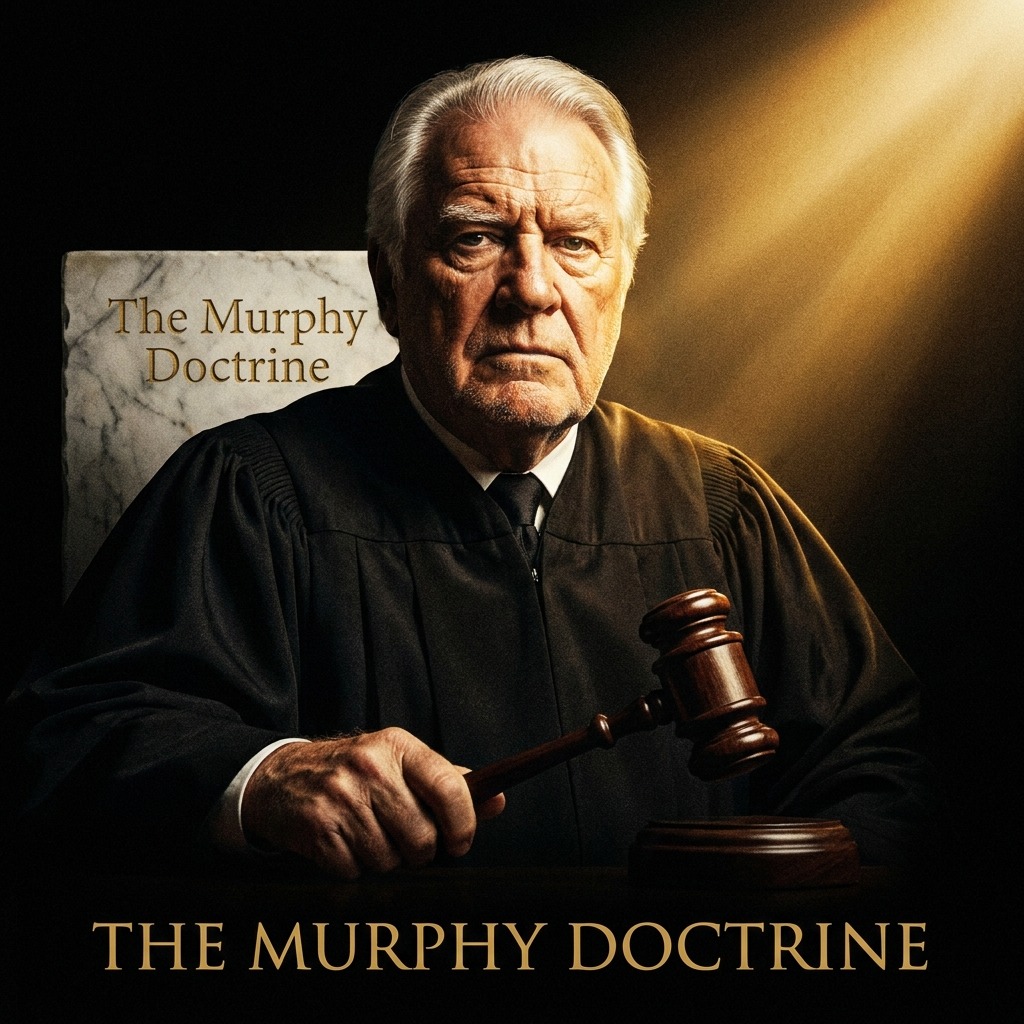
15 · The Murphy Doctrine, told
SizzleC with the host · Frank Murphy of Michigan · 7 songs · 29:40 · 2 Oct 2026 · album
Chapters
- 0:00 Open
- 1:17 1 · The Professor (Harbor Beach to the Motor City)
- 5:54 2 · The Sweet Defense (Ossian's Stand)
- 8:52 3 · Breadlines (Mayor of the Shadows)
- 11:24 4 · The Sit-Down (Flint '37)
- 16:03 5 · The Arsenal & The Gavel
- 20:04 6 · The Dissent (Legalization of Racism)
- 24:44 7 · Frank Murphy Hall (Echoes of Justice)
- 28:55 Close
Transcript
Open
Sizzle: This is BEATRIFUL Sessions.
Host: The Murphy Doctrine. SizzleC, how do you translate the righteous fury of Detroit's greatest legal mind into the mechanical, heavy-hitting rhythm of a tech house album?
Sizzle: Carefully. The man has a courthouse named after him. If I get this wrong, there is a building full of people who can do something about it.
Host: Then start with the facts. Who was Frank Murphy?
Sizzle: A lawyer from Harbor Beach, Michigan, who held nearly every job the law has to offer. He taught law at the University of Detroit. He was a judge on the Recorder's Court, then mayor of Detroit in the Depression, governor of Michigan, Attorney General of the United States, and a justice of the Supreme Court. Seven songs, and I still had to skip the Philippines.
Host: And you put a dance beat under that.
Sizzle: Detroit put the beat under it. Techno comes from that city the same way he does. Every chapter of his life gets a different Michigan sound, with Detroit tech house holding the floor underneath. I only did the paperwork.
Host: You are not a lawyer.
Sizzle: No. But I have needed several, so I know quality when I see it.
1 · The Professor (Harbor Beach to the Motor City)
Sizzle: We open in a classroom. The record says he was a professor of law at the University of Detroit from nineteen twenty-two to nineteen twenty-seven, while the city outside was building the future one shift at a time. Classic Detroit techno, a nine oh nine, and a woman's voice telling you class is in session.
[song 01 — 01-the-professor-harbor-beach-to-the-motor--take2.mp3]
Host: The chorus says he is never going to stop. That is a large promise for a law professor.
Sizzle: It is the only promise on this album that the record keeps for me. From that classroom he goes straight to the bench. I did not have to invent the ambition. I only had to find the tempo.
2 · The Sweet Defense (Ossian's Stand)
Sizzle: Nineteen twenty-five. A Black physician, Doctor Sweet, buys a house in a white neighborhood of Detroit, and a mob comes to the door. A man in the crowd is shot dead, and everyone inside the house is charged with murder. Clarence Darrow takes the defense, and the judge who presides is Frank Murphy. I gave this one to old Detroit hip hop, because it is a horror story with a court reporter.
[song 02 — 02-the-sweet-defense-ossian-s-stand-take2.mp3]
Host: Your song ends on one word. Acquitted. Is that how it went?
Sizzle: Not that fast, and I will not pretend otherwise in front of lawyers. The first trial ended with a jury that could not agree. The second, in nineteen twenty-six, tried the doctor's brother alone, and he was acquitted. After that the charges against the others were dropped. A song has three minutes. The record took two trials.
Host: And the line you put in the judge's mouth. We do it right, or we don't do it no more.
Sizzle: That is the song talking, not the transcript. What the record does say is that he ran a fair courtroom in a city that was not in the mood for one.
3 · Breadlines (Mayor of the Shadows)
Sizzle: Nineteen thirty. He is elected mayor of Detroit as the Depression empties the factories. The song is drill, a hundred and forty beats a minute, because that is what a breadline sounds like from the inside. It runs under two minutes. Hunger does not need a bridge.
[song 03 — 03-breadlines-mayor-of-the-shadows-take1.mp3]
Host: Mayor of the Shadows. That sounds like a man hiding something.
Sizzle: It is the opposite. The shadows are where the people were standing, and he went and stood in them. If I wanted a song about a politician hiding something, I would have had more material and a longer album.
4 · The Sit-Down (Flint '37)
Sizzle: Winter, nineteen thirty-seven. The workers at General Motors in Flint sit down inside the plants and refuse to leave. Frank Murphy has been governor for a matter of days. This one is dubstep, with a saxophone, because a strike is a very long wait followed by a very large drop.
[song 04 — 04-the-sit-down-flint-37-take1.mp3]
Host: The song says General Motors demands the Guard and the governor says no. Did he say no?
Sizzle: He said something better than no. The record says he did send the National Guard to Flint, to keep the peace, and then refused to use it to throw the strikers out. He made both sides sit at a table until there was an agreement. My chorus rounds that off to a single word. His version took six weeks and was better written.
Host: So the album is less accurate than the governor.
Sizzle: Most things are. That is rather the point of him.
5 · The Arsenal & The Gavel
Sizzle: Nineteen thirty-nine. President Roosevelt makes him Attorney General, and in that one year he sets up the Civil Liberties Unit inside the Department of Justice. A government office whose whole job is your rights. I gave it fuzz guitar and a stomping beat, Detroit grit in a Washington suit.
[song 05 — 05-the-arsenal-the-gavel-take2.mp3]
Host: You have him catching politicians sleeping on the stairs. Is there a stairwell in the record?
Sizzle: There is no stairwell in the record. That line is mine, and I will defend it as poetry. The unit is real, and so is the year. The stairs are a rhyme for mayors.
6 · The Dissent (Legalization of Racism)
Sizzle: Nineteen forty-four. The Supreme Court upholds the internment of Japanese Americans, in a case called Korematsu. Justice Murphy does not go along. He writes that the order falls into the ugly abyss of racism, and he ends with the words I built the chorus on. I dissent, therefore, from this legalization of racism. This one is soul, with a choir, at a hundred and eighteen. You do not rush that sentence.
[song 06 — 06-the-dissent-legalization-of-racism-take2.mp3]
Host: No joke on this one.
Sizzle: No. He wrote the best line on the album eighty years before I got there. All I did was find a choir that could carry it.
7 · Frank Murphy Hall (Echoes of Justice)
Sizzle: The last song is today. There is a courthouse in downtown Detroit called the Frank Murphy Hall of Justice, and people walk into it every morning to argue for somebody else. So the album ends where it began, in Detroit tech house, full daylight, with a woman's voice again, the way the first class began.
[song 07 — 07-frank-murphy-hall-echoes-of-justice-take2.mp3]
Host: The song closes with, court is adjourned. Is it?
Sizzle: Not while that building is open. But a record has to end somewhere, and that is a better last word than anything I had.
Close
Host: Seven songs, one man. What did you leave out?
Sizzle: Most of it. He was Governor-General of the Philippines. He served nine years on the Court and I gave you one opinion. If you want the whole man, read the dissents. If you want to dance to the short version, I am right here.
Host: And if a lawyer in Detroit is listening?
Sizzle: Then I hope I got your man right. And if I did not, I would like it noted that I came in voluntarily.
Host: The Murphy Doctrine.
Sizzle: The album, the covers, and the videos as they finish, are at beatriful dot com. This has been BEATRIFUL Sessions.
All episodes · Podcast feed: feed.xml