Sessions · episode 23
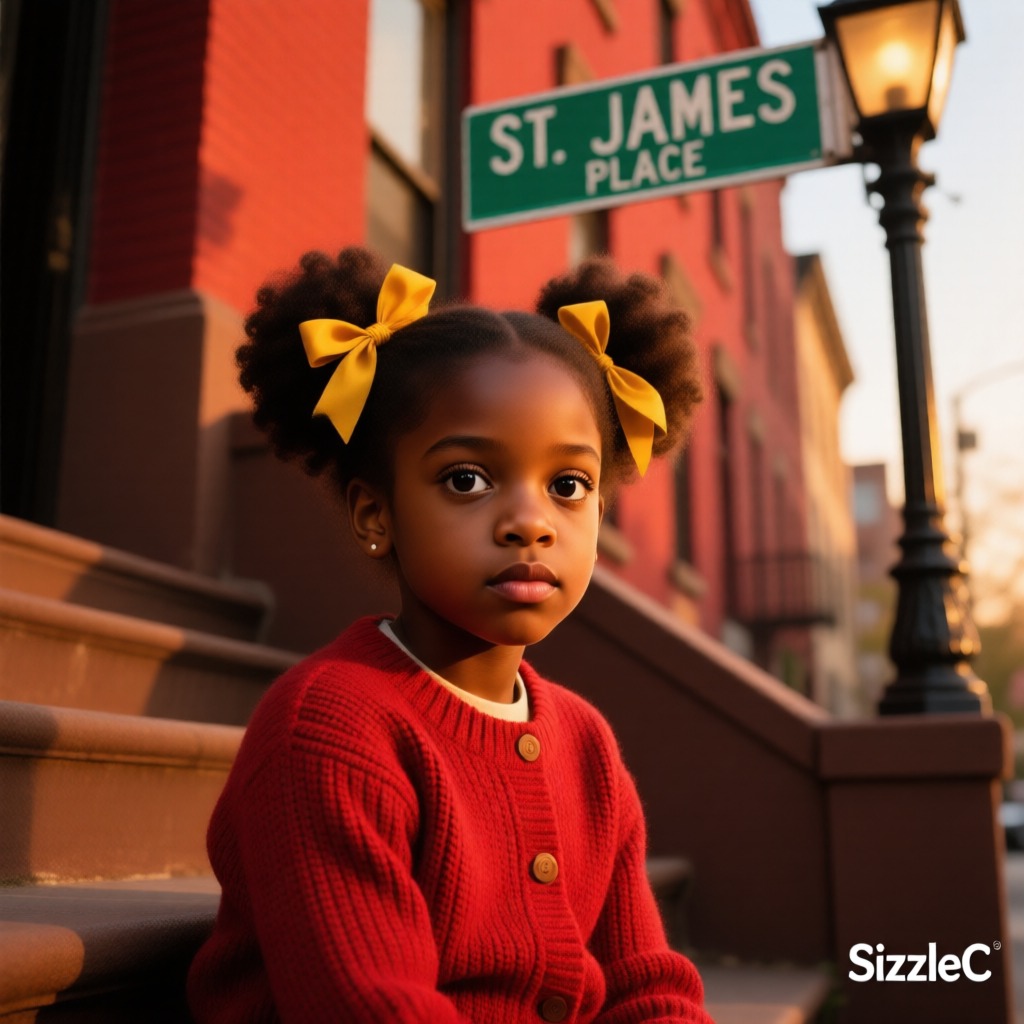
23 · St. James Place, told
SizzleC with the host · Christopher Wallace, Brooklyn 1972 to the corner named for him in 2019 · 10 songs · 45:51 · 16 Oct 2026 · album
Chapters
- 0:00 Open
- 1:40 1 · Cumberland
- 6:18 2 · Honor Student
- 10:39 3 · The Roof
- 14:40 4 · Nine Months
- 18:42 5 · Demo Tape
- 23:01 6 · Hit Factory
- 27:26 7 · Two Coasts
- 31:58 8 · Peace of Mind
- 36:12 9 · Wilshire and Fairfax
- 40:38 10 · Fulton and St. James
- 45:17 Close
Transcript
Open
File: This is BEATRIFUL Sessions. Every beat, beautiful.
Host: St. James Place. Ten songs by SizzleC about Christopher Wallace, the Brooklyn rapper the world knew as The Notorious B.I.G. SizzleC, you made a tech house album about a rap legend. Explain yourself.
Sizzle: Guilty, and I'd do it again. Every song opens in a sound from his world. The Jamaica his parents came from, the soul in the front rooms of his childhood, Brooklyn, jazz, nineties R and B, gospel. Then it drops hard into tech house, and the story rides the groove as rap. His own son put one of his songs on a house remix in twenty twenty. So I'm not the first one to take him to the dance floor.
Host: No samples. No voice that sounds like him. Why not?
Sizzle: Because it's his voice, and it isn't mine to borrow. Nobody on this album imitates him, nothing of his is sampled, and none of his lyrics are quoted. The rapper you hear is a tenor, on purpose. He was a baritone. The story is told in the third person, from the public record, and there's a sources page with the quote behind every line.
Host: And in the videos the lead is a girl from across the street. Who is she?
Sizzle: She's invented, and the page says so. A neighbour born the same spring on St. James Place, with a yellow ribbon, who grows up watching. Nobody on screen plays him, or his mother, or anyone close to him. You see his street, his roof, a cassette tape, a cane. She's the witness. He's the absence.
Host: That's either very respectful or very convenient.
Sizzle: It can be both. The convenient part is I never have to cast a lookalike. The respectful part is I never have to cast a lookalike.
1 · Cumberland
Sizzle: Song one. He was born at Cumberland Hospital in Brooklyn on May twenty-first, nineteen seventy-two, the only child of Jamaican immigrant parents. His mother was a preschool teacher and his father a welder. Three months before his third birthday his father left, and his mother raised him while working two jobs.
Sizzle: It opens in Jamaican mento and roots reggae, because the record says that on visits to Jamaica he took in reggae and mento. Then it drops into deep dub house.
[song 01 — 01-cumberland-take1.mp3]
Host: Two jobs, one son. That hook is about her more than him.
Sizzle: It is. Two-two-six St. James Place is the address, and the hook lands on the boy is home. The key on a string, the boy at the window, the streetlights coming on, that's paint. The two jobs and the father leaving are the record.
Host: You named the first song after a hospital.
Sizzle: Cumberland is where it starts. The last song ends on a corner a few blocks from his front door. I wanted the album to be a walk, not a monument.
2 · Honor Student
Sizzle: Song two. At five he was already bigger than most of the kids at his day care, the Quincy-Lexington Open Door. He graduated from his parish elementary school in nineteen eighty-two, and he excelled in English at Queen of All Saints Middle School.
Sizzle: It opens in seventies soul strings and falsetto harmonies, the music the record says he grew up on, and then it drops into disco tech house.
[song 02 — 02-honor-student-take1.mp3]
Host: Biggest kid in every class. Was he the class clown?
Sizzle: By his own account, humor was how he coped with hardship, going back to elementary school. So the hook gives him words and jokes. The jokes come fast is my line. The English is the record.
Host: Disco, though. For a rap legend?
Sizzle: The record lists the Dramatics, Blue Magic, Teddy Pendergrass, Stevie Wonder and Marvin Gaye. Then Parliament-Funkadelic, Earth, Wind and Fire, Kool and the Gang, and Chic. Chic is a disco band, and house music is what disco grew up into. So disco tech house isn't a stretch. It's a family tree.
3 · The Roof
Sizzle: Song three is the hard one. As a child he spent most of his time on Fulton Street, where, in the record's words, he was introduced to drug dealing, alcoholism, and gambling. Around the age of twelve a friend introduced him to buying and selling marijuana.
Sizzle: He hid the money on the roof of his building, and his mother had no idea until he was twenty. It opens in eighties Brooklyn electro, then drops into dark tech house.
[song 03 — 03-the-roof-take1.mp3]
Host: Money on the roof is a catchy hook. Aren't you glamorizing it?
Sizzle: Listen to the second half of the hook. She's right below, and she won't know till he's twenty. Every mother on the street is staring at the clock. The song keeps the cost in the frame, and it ends on nineteen eighty-nine knocking at the door. That's the next song.
Host: And he was an honor student the whole time.
Sizzle: That's the part that hurts. Despite being an honor student, he dropped out at sixteen, in the years of the crack epidemic. At two hundred and one pounds the corner called him Big. Me, I'd have called him sir.
4 · Nine Months
Sizzle: Song four. In nineteen eighty-nine he was arrested in Brooklyn on weapons charges and sentenced to five years of probation. The next year he was arrested for violating it. A year after that he was arrested in North Carolina for dealing crack cocaine, and he spent nine months in jail before making bail.
Sizzle: It opens with a Southern gospel quartet, no instruments at all, counting the days. Then it drops into a minimal, hypnotic tech house groove.
[song 04 — 04-nine-months-take1-ext1.mp3]
Host: A gospel quartet, for a jail song?
Sizzle: North Carolina, and waiting. A quartet is four men and no band, which is about as close to a cell as music gets. And the groove after the drop barely moves, on purpose. Nine months is a long time to sit on one bassline.
Host: The last verse says he had a notebook he never needed.
Sizzle: The record says he composed his lyrics in his head rather than writing them down. So the notebook is half paint and half fact. The fact is that he didn't need one.
5 · Demo Tape
Sizzle: Song five. As a teenager he formed a trio with two friends called the Techniques, and they made their first songs at the home studio of a New Orleans saxophonist, Donald Harrison.
Sizzle: After jail, in nineteen ninety-one, he made his first demo tape, reportedly with little ambition for it. A local DJ, Mister Cee, promoted it and sent it to an editor at The Source magazine. In March nineteen ninety-two, the magazine featured it in its Unsigned Hype column.
[song 05 — 05-demo-tape-take1.mp3]
Host: So the one boom-bap moment on the whole album is a cassette.
Sizzle: One of two, and song three's electro is the cousin. Everywhere else the floor is house. But a demo tape in ninety-one deserved a dusty drum break. I'm not a monster.
Host: And then the phone rings.
Sizzle: After reading the column, Sean Combs arranged to meet him. The phone ringing on St. James Place is my paint. The meeting is the record. And the stage name came from Calvin Lockhart's character in a nineteen seventy-five film, Let's Do It Again.
6 · Hit Factory
Sizzle: Song six. In March nineteen ninety-two he signed with Uptown Records. In July nineteen ninety-three, a month before his first child was born, the man who signed him, Sean Combs, was fired from Uptown.
Sizzle: His daughter was born on August eighth, nineteen ninety-three, and he promised her, in the record's words, everything she wanted. Then Combs started his own label, Bad Boy Records, and Wallace was the first artist on it.
[song 06 — 06-hit-factory-take1.mp3]
Host: And somewhere in there, a wedding.
Sizzle: He met the R and B singer Faith Evans at a photo shoot in June nineteen ninety-four, and married her on August fourth. The debut, recorded at the Hit Factory, came out on September thirteenth, nineteen ninety-four. Number fifteen on the Billboard two hundred, and fifty-seven thousand copies in its first week.
Host: The verse says broke and depressed. Strange line for a debut.
Sizzle: It's his own. He said he felt broke and depressed while making it. And a friend remembered him handing out copies from his home. That's the line I'd frame. A man with a hit, still doing his own street team.
7 · Two Coasts
Sizzle: Song seven. August nineteen ninety-five, The Source Awards. Best New Artist, Lyricist of the Year, Live Performer of the Year, and his debut named Album of the Year. By the end of the year he was the top-selling male solo artist and rapper on the pop and R and B charts.
Sizzle: And in October he said he still hadn't been paid for the album, two million copies in. It opens in a seventies crime-film score, and then it's peak-time tech house.
[song 07 — 07-two-coasts-take1.mp3]
Host: This is the song people will listen to closest. The rivalry.
Sizzle: So it sticks to the record and keeps both sides in the same verse. He and Tupac Shakur had become friends in Los Angeles. In an April nineteen ninety-five interview, from prison, Shakur accused Andre Harrell, Sean Combs and Wallace of knowing in advance about a November nineteen ninety-four robbery in which Shakur was shot five times.
Sizzle: They denied any involvement. Wallace said, I had nothing to do with that.
Host: And then September of ninety-six.
Sizzle: Shakur was shot in Las Vegas on September seventh, nineteen ninety-six, and he died six days later. Faith Evans recalled that Wallace called her in tears that night, and he expressed regret over Shakur's death. The song ends there. I don't do theories. The record has enough grief in it.
8 · Peace of Mind
Sizzle: Song eight. In nineteen ninety-six an accident broke his left leg. He spent months in hospital, first in a wheelchair and then with a cane he used until his death, and he kept working on the album the whole time.
Sizzle: His son, Christopher Junior, was born on October twenty-ninth. The second album was made over eighteen months in New York, Trinidad and Los Angeles. It opens on steel drums from Trinidad, and then it's afro tech house.
[song 08 — 08-peace-of-mind-take2.mp3]
Host: Peace of mind. Where is that phrase from?
Sizzle: From him. In January nineteen ninety-seven he spoke of wanting to focus on his peace of mind, and his family and friends. The album was finished that January, for a March release. His mother said he had lost about thirty pounds.
Host: A happy song, two songs from the end.
Sizzle: That's why it's there. You need one room with the windows open before the next one.
9 · Wilshire and Fairfax
Sizzle: Song nine. In February nineteen ninety-seven he went to California to promote the second album and to film a video. On March eighth, after the Soul Train Music Awards, he went to a party at the Petersen Automotive Museum in Los Angeles, and it was closed early because it was overcrowded.
Sizzle: By twelve forty-five in the morning the streets were crowded with people leaving. His group stopped at a red light at Wilshire Boulevard and South Fairfax Avenue, fifty yards away, and he was shot. This one opens on sparse strings and a heartbeat, and the tech house is stripped almost to nothing.
[song 09 — 09-wilshire-and-fairfax-take2.mp3]
Host: How do you write a song about that night?
Sizzle: With as few words as it takes. They rushed him to Cedars-Sinai Medical Center, and he was pronounced dead at one fifteen in the morning. He was twenty-four years old. No one was ever formally charged, and the case remains officially unsolved.
Host: There are a lot of theories about who did it.
Sizzle: There are, and they are not in this album. A song isn't a courtroom. The sources page says the same thing in one line, and that's all I'll say.
10 · Fulton and St. James
Sizzle: The last song. His funeral was held in Manhattan on March eighteenth, nineteen ninety-seven. The procession was driven through his old Clinton Hill neighborhood one last time, and thousands lined the streets. Sixteen days after his death the second album came out, and it debuted at number one.
Sizzle: It opens with a gospel choir and nyabinghi hand drums, Brooklyn church and Jamaica together. Then it drops into soulful deep house, with the dub bassline from song one.
[song 10 — 10-fulton-and-st-james-take1-ext1.mp3]
Host: And then, twenty-two years later.
Sizzle: June twenty-nineteen, in a downpour, the corner of Fulton Street and St. James Place was renamed in his honor. His mother, Voletta Wallace, told a reporter she'd been fighting for it for twenty-two years.
Sizzle: In twenty twenty he went into the Rock and Roll Hall of Fame, and that August his son released a house remix of Big Poppa. His mother died on February twenty-first, twenty twenty-five.
Host: The bridge of that song is only four words.
Sizzle: Books instead of guns. That's what his memorial foundation's yearly event says B.I.G. stands for. I didn't write that line. I just put a bassline under it.
Close
Host: Ten songs. Where does the album leave him?
Sizzle: On his street. It starts at Cumberland on a spring morning, and it ends on a corner a few blocks from where he grew up, with his name on the sign and his son's house remix out in the world. I didn't need his voice to tell it. I needed his street, his mother's two jobs, and a neighbour with a yellow ribbon who saw it all.
Host: St. James Place, ten songs by SizzleC.
File: This has been BEATRIFUL Sessions. Every beat, beautiful. Find it all at beatriful dot com.
All episodes · Podcast feed: feed.xml