Sessions · episode 3
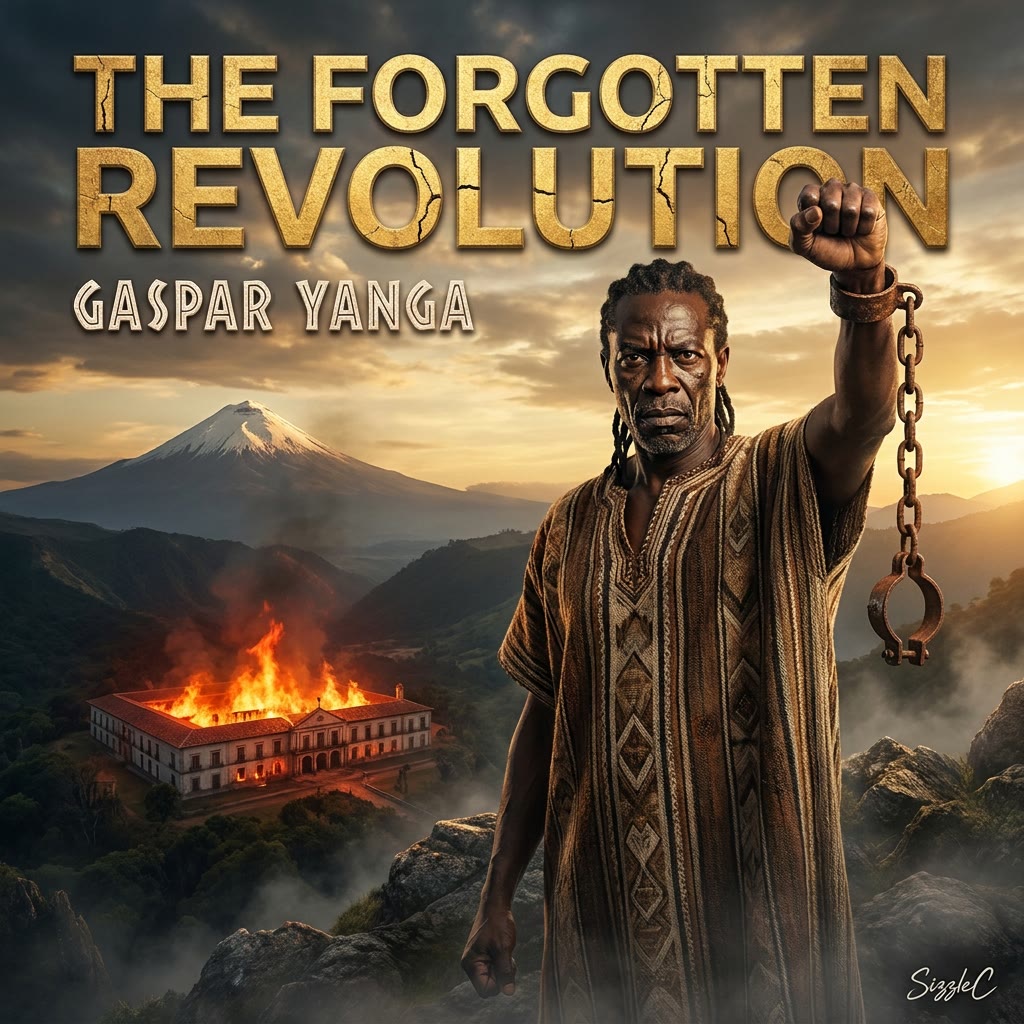
03 · The Forgotten Revolution: Gaspar Yanga, Vol. 1
SizzleC · Veracruz, 1570–1618 · 5 songs · 19:20 · 30 Sep 2026 · album
Chapters
- 0:00 Open
- 2:12 1 · The Root & The Chain
- 6:02 2 · The Sugar Crucible
- 9:12 3 · The 1570 Uprising
- 12:01 4 · The Maroon Mountain
- 15:06 5 · Yo No Soy Marinero
Transcript
Open
File: This is BEATRIFUL Sessions.
Host: Episode three: The Forgotten Revolution, Gaspar Yanga, volume one. Five songs about a man most people have never heard of, who did something nobody else in the Americas had done. SizzleC.
Sizzle: Thanks. This is the one I'd most like people to know. Gaspar Yanga was an African man, enslaved and shipped to Veracruz on the coast of Mexico in the fifteen hundreds. The tradition says he was royalty back home, from a people called the Bran; the album keeps that as tradition, not fact. What is fact: around 1570 he led an escape into the mountains, and for almost forty years he ran a free settlement up there, a palenque, that the Spanish crown could not take.
Host: Forty years.
Sizzle: Forty years of raids, and them raiding back. In 1609 the viceroy sent an army. It burned the settlement and still couldn't finish it. So the Spanish did the thing empires only do when they've lost: they negotiated. The maroons got their own town, with their own officials, on the condition they stopped taking in new runaways. San Lorenzo de los Negros. It's still there. It's called Yanga now. Some historians call it the first free Black town in the Americas.
Host: Why is it forgotten?
Sizzle: Because it doesn't fit anyone's story. Not the Spanish one, not the Mexican independence one, not even the American one about slavery, which starts and ends in the United States. A free African town in Mexico in 1618 is inconvenient. So we made it loud.
Host: The rule?
Sizzle: Every song opens on the old sound, West African drums, son jarocho guitar from Veracruz, Spanish classical, and drops into the floor at fifty seconds. Tech house, Latin trap, drill. Five chapters this volume: the arrival, the labor, the uprising, the mountain, the treaty. Volume two picks up in the free city.
1 · The Root & The Chain
Sizzle: Chapter one. West African drums and a group chant, from the soil of the mother, taken in the dark. The crossing, the coast, living as a shadow. It drops into a hundred and twenty eight tech house, because the first thing the record has to do is make you feel the body that survived the boat.
[song 01 — 01-the-root-the-chain-the-arrival-take1.mp3]
Host: You say the Mbamba line.
Sizzle: The lyrics use it as an origin, a people from the Congo region. The honest answer is that we don't know exactly where Yanga was from; the old sources say Bran, which points to West Africa, and the tradition of a royal line is just that. The song chooses a root so it can grow a tree. I'd rather say that out loud than pretend.
2 · The Sugar Crucible
Host: Chapter two, the labor.
Sizzle: Sun on the cane field, machete from morning to night. The music is the beautiful part of this: son jarocho, the traditional guitar music of Veracruz, requinto and foot stomping, and it drops into Latin trap. Sugar built the colony, and the people who cut it were the people who'd run.
[song 02 — 02-the-sugar-crucible-the-labor-take1.mp3]
Host: Son jarocho is African too, isn't it?
Sizzle: Partly. Spanish strings, indigenous and African rhythm, born in that exact place, Veracruz, out of that exact mix. Which is why it's on the record: the music of the region is already the alliance the album is about. You can hear it before anybody says it.
3 · The 1570 Uprising
Sizzle: Chapter three. Midnight, 1570. Torches in the grass, whispered vocals over a heartbeat, and then it goes to hardcore drill. This is the escape. Yanga and his people take the night and go up, into mountains so steep the Spanish cavalry can't follow.
[song 03 — 03-the-1570-uprising-the-strike-take1.mp3]
Host: Was it one night?
Sizzle: It was probably many nights, and many groups, over years, and the sources give one date because histories like a date. The song takes the date and makes it a single act of will, which is what it must have felt like to the people doing it. The mountain was real. The decision was real.
4 · The Maroon Mountain
Host: Chapter four.
Sizzle: Up in the clouds where the eagle makes a nest. Orchestral strings, a feeling of triumph, into dark midtempo bass. This is the settlement: fields, a church, a wooden throne if you like, and raids on the Spanish road between Veracruz and the capital to survive. Forty years of that. The Spanish called them bandits. They called it home.
[song 04 — 04-the-maroon-mountain-the-settlement-take2.mp3]
Host: And 1609?
Sizzle: In 1609 the viceroy sent a captain named Pedro González de Herrera with a few hundred soldiers. They found the settlement, burned it, and the people were already gone, higher up. Yanga was old by then, and a man named Francisco de la Matosa led the fighting. It ended where these things end when neither side can win: at a table.
5 · Yo No Soy Marinero
Sizzle: Last chapter of volume one. The treaty. Spanish classical guitar, elegant, and then minimal tech house with the foot stomping of a tarima under it. The title is a line every Mexican knows, yo no soy marinero, soy capitán, I'm not a sailor, I'm the captain, from La Bamba, which is a Veracruz song. Whether that line has African roots is argued about. On this record, the captain is Yanga.
[song 05 — 05-yo-no-soy-marinero-the-captain-take1.mp3]
Host: What did the treaty actually say?
Sizzle: Freedom for everyone who'd escaped before 1608, their own town with their own council, and in return: no more runaways taken in, and they'd return any who came. That last clause is the price, and the album doesn't hide it. Freedom bought with a fence around it. Volume two is about living inside that fence, and what they built anyway.
Host: SizzleC. The Forgotten Revolution, volume one.
Sizzle: Volume two is next. Same mountain, thirty years later.
File: The album, the covers, and the videos as they finish, are at beatriful dot com. This has been BEATRIFUL Sessions.
All episodes · Podcast feed: feed.xml