Sessions · episode 20
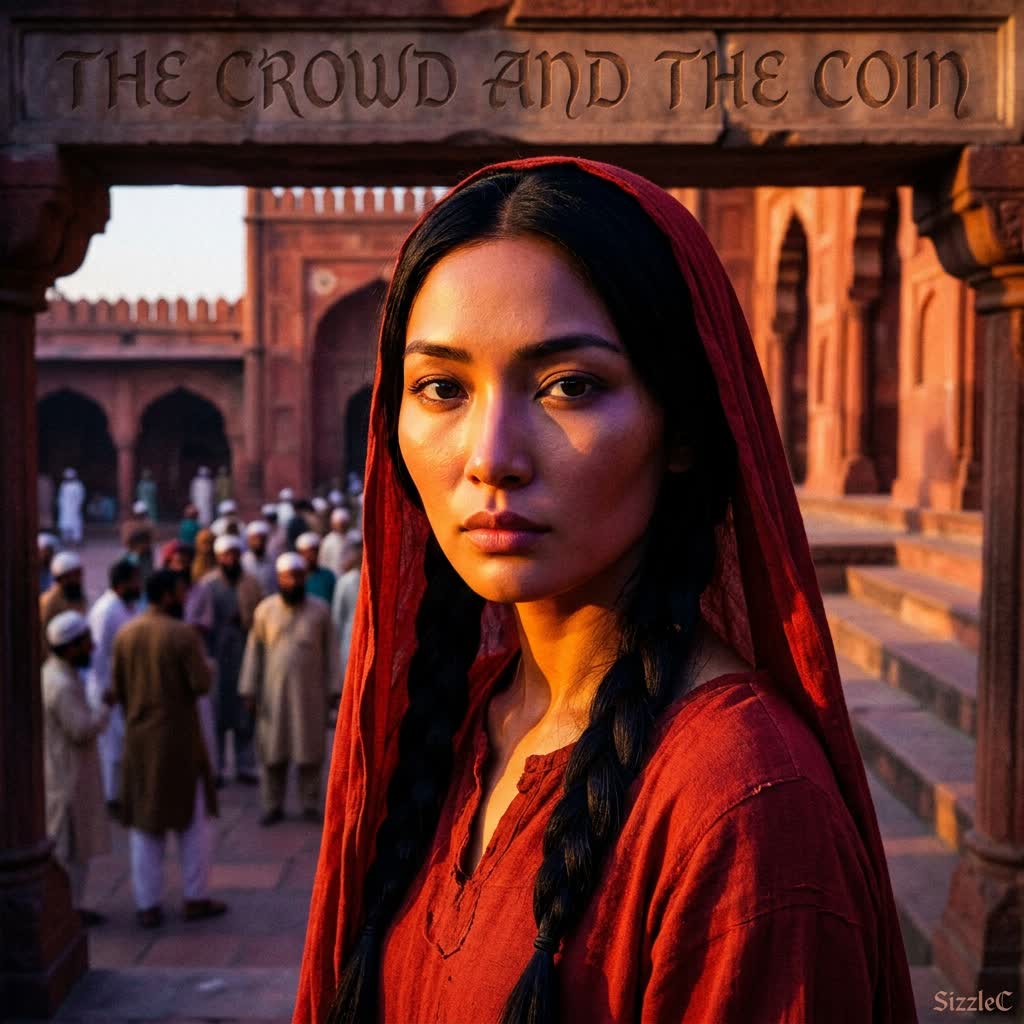
20 · Sultan, Not Sultana, told
SizzleC with the host · Razia of Delhi, 1236 to 1240 · 10 songs · 53:45 · 4 Oct 2026 · album
Chapters
- 0:00 Open
- 2:03 1 · Count Your Sons (The Decree)
- 6:50 2 · Gold in the Gutter (The Brother)
- 11:37 3 · Red at Friday Prayer (The Crowd)
- 17:38 4 · Nineteen November (The Throne)
- 22:56 5 · Sultan, Not Sultana (The Coin)
- 27:22 6 · Bells on the Elephant (The Army)
- 32:08 7 · Forty Men and a Horse (The Forty)
- 37:12 8 · Tabarhinda (The Cell)
- 43:02 9 · Marry the Jailer (The March)
- 47:28 10 · Kaithal, Three Graves (The Tomb)
- 53:04 Close
Transcript
Open
File: This is BEATRIFUL Sessions. Every beat, beautiful.
Host: Sultan, Not Sultana. SizzleC, ten songs on a woman who ruled Delhi in the thirteenth century. Who is she?
Sizzle: Razia. Daughter of Iltutmish, the Sultan of Delhi, a Turkish slave who became a king. He named her his heir over his sons, in writing, and when he died in twelve thirty-six the nobles ignored it and crowned a son anyway. The son lasted six months. The people of Delhi put her on the throne in November twelve thirty-six, and she held it for about three and a half years. She put her own name on the coins, took off the veil, rode at the head of her army on an elephant. Then the Turkish nobles turned on her, locked her in a fort, and in October twelve forty she was killed in a field. She is the only woman who ever sat on the throne of Delhi.
Host: Sultan, not Sultana. What is the difference?
Sizzle: Sultana is a sultan's wife. Sultan is the ruler. Her coins read al-Sultan, in the masculine, with her name after it. Whether she ever stood up and said, call me Sultan, not Sultana, is lore built on the coins, and the album knows it is lore and sings it anyway, because the coins are real and they say what they say.
Host: And the sound.
Sizzle: Thirteenth-century Delhi for fifty seconds. Rubab, sarangi, kettle drums on camels, qawwali handclaps, elephant bells, a mint hammer. Then it switches hard into deep house or tech house. Volume one is the crowd and the coin, how she got the throne. Volume two is the forty and the field, how they took it back.
Host: Sources.
Sizzle: One man, mostly. Minhaj, a judge and historian who worked at her court and wrote the main chronicle of the Delhi sultanate about twenty years after she died. Nearly everything solid about her is Minhaj, and the album names him in the lyrics when it leans on him. Then two later writers, Isami and Barani, a century on, who added the colour, including the bits everyone remembers. And the coins, which do not lie. When a song sings Isami, I will say Isami. When it sings a coin, I will say coin.
1 · Count Your Sons (The Decree)
Sizzle: Twelve thirty-one. Iltutmish rides out to besiege Gwalior and leaves his daughter in charge of Delhi. He comes home, looks at what she did, and has his scribe write her name on the succession over his sons. Rubab and sarangi over a slow war drum, then a warm deep house drop. A father choosing, a daughter already governing.
[song 01 — 01-count-your-sons-the-decree-take2.mp3]
Host: A Muslim sultan in the twelve hundreds names his daughter heir. Is that documented?
Sizzle: It is in Minhaj, and the song is honest about how he knew. Minhaj was at Gwalior with the army. He heard about the decree second hand, and the lyric says so, Minhaj wrote it down but he wasn't in the room. The line he gives the Sultan is the one in the hook. My sons are given up to the pleasures of youth, none of them is fit to be king. That is a paraphrase of what Minhaj reports, and the scribe, Taj ul-Mulk, is named by him. So the decree is attested. The scene is reconstructed around it.
Host: I have a brain. That is not a thirteenth-century line.
Sizzle: No, that is me putting the Sultan's reasoning in the album's mouth. What Minhaj actually reports him saying is that his sons were given up to the pleasures of youth and not one of them was fit, and that after his death none would be found more worthy than his daughter. Same idea, better rhyme.
2 · Gold in the Gutter (The Brother)
Sizzle: April, twelve thirty-six. Iltutmish is dead, the nobles crown her brother Rukn ud-Din Firuz, and he spends the reign riding an elephant through the bazaar throwing gold at people while his mother runs the palace and kills a younger brother. Six months and twenty-eight days. Dhol frenzy and a drunk shehnai, then pounding tech house with coins in the percussion.
[song 02 — 02-gold-in-the-gutter-the-brother-take1.mp3]
Host: The drunk on the elephant. Is that fair to him?
Sizzle: It is Minhaj's portrait, and Minhaj was not writing for her, he was writing for a later sultan with no stake in being kind to Firuz. The elephant in the bazaar, the gold scattered to the crowd, the musicians and the drink, the mother Shah Turkan in charge, the blinding and killing of the boy Qutb ud-Din. All his. The six months and twenty-eight days is the length of the reign as the chronicle counts it. The governors revolting and the vizier walking off with the army at Kilokhri are the events that ended it.
Host: And the mother marking Razia next.
Sizzle: Minhaj says Shah Turkan plotted against her, and that is what sends Razia to the mosque in the next song. The song makes it a list with her name on it. The chronicle is less theatrical and just as clear.
3 · Red at Friday Prayer (The Crowd)
Sizzle: Friday prayer at the great mosque. She walks into the courtyard in the colour of the wronged, accuses the queen mother of murdering her brother and plotting her death, and asks the people of Delhi for help in her father's name. The crowd storms the palace. A qawwali call and handclaps, then peak-time tech house with the crowd on the hook.
[song 03 — 03-red-at-friday-prayer-the-crowd-take1-ext1.mp3]
Host: A woman takes a throne by public appeal in twelve thirty-six. Really?
Sizzle: Really, and it is the most remarkable fact in the album. Minhaj says she appealed to the people at the Friday prayer and the people of Delhi rose, seized Shah Turkan, and sent for her. Firuz came back from his camp to a city that had already decided. The red garment is a detail from Isami a century later, red being the colour the aggrieved wore to petition, so the song opens on it but it is Isami's, not Minhaj's. The crowd is Minhaj.
Host: No general, no malik, no Turk with a knife. Just the people.
Sizzle: That is what makes her the exception. Every other sultan of Delhi got there by a faction of Turkish slave-nobles. She got there by a mosque courtyard. And that is the whole plot of volume two, because a throne the crowd gave you is a throne the nobles never accepted.
4 · Nineteen November (The Throne)
Sizzle: The nineteenth of November, twelve thirty-six. She sits on her father's seat. The nobles expected a daughter they could stand behind. Instead the vizier pitches a rebel camp outside the walls with four governors, and she breaks it without a battle by turning two of them in secret until the rest run. Kettle drums, elephant bells and a shehnai fanfare, then regal deep house. They wanted a flag. They got a chess player.
[song 04 — 04-nineteen-november-the-throne-take2.mp3]
Host: She wins her first war with whispers. Is that the record or the album being clever?
Sizzle: Record. Minhaj names the men she brought over, Salari and Kabir Khan, and says the other rebels woke to find the camp half empty and scattered. The vizier, Nizam ul-Mulk Junaidi, fled to the Sirmur hills and died there. No battle. It is the one piece of generalship in her reign that nobody argues about, and it was done with a letter and a promise.
Host: And then Minhaj's famous line.
Sizzle: Sagacious, just, beneficent, the patron of the learned, a dispenser of justice, warlike, endowed with every kingly quality. Then, but she was not born of the right sex, and so in the estimation of men all these qualities were worthless. That is Minhaj, nearly word for word, and the song takes the sting of it straight. Pity she's a woman. Pity, yes. But still. He admired her and he still wrote that sentence. Both things are the record.
5 · Sultan, Not Sultana (The Coin)
Sizzle: Her first year, the coins carry her father's name. Then she takes the die. Silver tankas and billon jitals from Delhi to Lakhnauti reading al-Sultan al-Mu'azzam, Raziyyat al-Din, daughter of the Sultan. And she puts aside the veil, puts on the tunic and the cap, and rides out where the city can see her. Mint hammers, rubab and sarangi, then tech house with metal in every hi-hat.
[song 05 — 05-sultan-not-sultana-the-coin-take1.mp3]
Host: Her name on the money. That is physical evidence.
Sizzle: It is the best evidence we have. The coins exist, in museums, with her titles on them in the masculine form, and they come from more than one mint. Minhaj separately records that she put aside female dress, wore the qaba and the kulah, the tunic and the Turkish cap, and appeared in public on an elephant. So the unveiling and the money are both attested. The slogan, Sultan, not Sultana, is the album's. The coin says Sultan. The attitude is ours.
Host: Not a disguise, a decision.
Sizzle: That is the line I care about most in this half of the album. She was not pretending to be a man. She was dressing as the ruler, because the ruler's clothes were a man's clothes and nobody had made any others. Pay the army in my name and watch them understand. They did understand. That is why volume two happens.
6 · Bells on the Elephant (The Army)
Sizzle: Volume two opens on the march. Twelve thirty-nine, Kabir Khan in Lahore rebels, and she does not send a letter, she brings the army, and he submits before she reaches the gate. Before that she had the starving garrison brought out of Ranthambore. War drums and elephant bells and a shehnai, then driving tech house with the bells kept in the hats. The Sultan rides in front.
[song 06 — 06-bells-on-the-elephant-the-army-take1.mp3]
Host: Did she actually ride at the head of an army?
Sizzle: Minhaj says she did, on an elephant, unveiled, and he uses the word warlike about her, which he does not hand out lightly. The Lahore campaign is in him. Kabir Khan, the same man she had turned in song four, rebelled, she marched, he submitted. The Ranthambore relief, pulling the garrison out of a Rajput siege rather than losing it, is also recorded. Whether she personally led every column, the chronicle does not say. The song puts her twenty paces in front. That is a picture, not a measurement.
Host: The Turks don't like the order.
Sizzle: No, and watch what she did. She started appointing people who were not Turkish slave-nobles to real jobs. That is the grievance under the next song. Not the elephant. The payroll.
7 · Forty Men and a Horse (The Forty)
Sizzle: She makes an Abyssinian, Jamal ud-Din Yaqut, master of the royal stables, a post the Turkish nobles considered theirs. She gives other outsiders land. The nobles turn, and the story they tell is that he lifted her onto her horse by the arms. A dark sarangi drone and whispers, then cold minimal tech house. Forty beards, one grievance, and it was not the horses.
[song 07 — 07-forty-men-and-a-horse-the-forty-take2.mp3]
Host: One of them is black. That hook is going to stop people. Defend it.
Sizzle: I do not need to defend it, I need to attribute it, because it is the indictment the nobles brought, not mine. Yaqut was a Habshi, an African, in a post the Turks thought belonged to Turks. Minhaj records the favour she showed him and the jealousy it caused, and nothing more. The story that Yaqut touched her when he lifted her into the saddle is Isami, a hundred years later, and the traveller Ibn Battuta repeats the rumour. Even the name, the Forty, for the ring of Turkish slave-nobles, is Barani's, also a century on. So the song is three sources deep and it says which is which. The hook is the thing they actually held against her, stated plainly. Not the war, not the coin, not the cap. A black man holding the reins.
Host: I ride an elephant, boys. Go check the beast.
Sizzle: That one is mine. If she had a comeback, nobody wrote it down. I gave her one.
8 · Tabarhinda (The Cell)
Sizzle: April, twelve forty. Altunia, the governor of Tabarhinda, rises. She marches against him with men who are already his. The camp turns, Yaqut is killed, and she is chained in the fort. Delhi crowns her brother Bahram and gives the real power to Aitigin. Altunia, who did the work, gets nothing. She notices. A sarangi lament and a frame drum, then hypnotic deep house. A Sultan counting the floor, and counting the jailer's losses.
[song 08 — 08-tabarhinda-the-cell-take2.mp3]
Host: The dates in this song are very precise.
Sizzle: They are Minhaj's, and he was in Delhi. The third of April she returns to the capital, ten days later she marches west, the twenty-first of April Delhi proclaims Bahram, the fifth of May the nobles swear to him. Yaqut killed in the camp when it turned, Razia taken to Tabarhinda, which is Bhatinda in the Punjab today. The fort with the cell is still there. What is not in Minhaj is her sitting in the cell watching Altunia count his losses. That is the album's reading of why the next song happens, and I think it is the only reading that makes sense of it.
Host: Three and a half years a Sultan. Now I count the floor.
Sizzle: November twelve thirty-six to April twelve forty. The arithmetic is right. A short reign, and she did more with it than most men did with twenty.
9 · Marry the Jailer (The March)
Sizzle: She marries her jailer. Altunia, cheated of his reward by Delhi, has a fort and a grievance. She has a name and the right to the throne. They raise a force and march on the capital in September twelve forty. Wedding drums and shehnai, then defiant tech house. Not love. A contract. And nearly enough.
[song 09 — 09-marry-the-jailer-the-march-take1.mp3]
Host: Married her jailer. The album calls it arithmetic.
Sizzle: Minhaj records the marriage and the march, with no romance attached, and the album takes him at his word. Not love, don't write love, write a contract in the heat. Later writers and every film since have made it a love story. The chronicle makes it a deal between two people Delhi had robbed. The hired men from the hills, the Khokhar and Jat levies, are the later chroniclers' detail. The desertion is Minhaj. Bahram's army met them near Kaithal, and their men did the hired thing.
Host: Still the only woman who ever made them pay.
Sizzle: Twice. The crowd gave her the throne once, and she came back for it with an army. It nearly worked. Nearly is the title of the outro.
10 · Kaithal, Three Graves (The Tomb)
Sizzle: October, twelve forty, a field outside Kaithal. The army is gone. Two people walking. Local villagers find them, rob them and kill them. Then three towns claim her grave. One sarangi and a bansuri, then a warm melodic house closer. Three towns want the grave, none of them wanted the throne.
[song 10 — 10-kaithal-three-graves-the-tomb-take2.mp3]
Host: Killed by farmers. Not by the nobles who deposed her.
Sizzle: That is Minhaj, and it is the bleakest thing in the album. Deserted, hungry, she and Altunia were killed by local people somewhere near Kaithal in mid-October twelve forty, the thirteenth or fourteenth, the sources differ by a day. The Forty did not have to do it. The road did it for them.
Host: And three graves.
Sizzle: Three claims. Kaithal, where she died. Tonk, in Rajasthan, which has a tomb. And two bare stone slabs in a lane called Bulbul-i-Khana near the Turkman Gate in old Delhi, where Ibn Battuta, a century later, saw pilgrims and a dome. Nobody knows which is real. The song makes that the point. Three towns want the Sultan, not one of them wanted the throne. And then it goes back to Minhaj's epitaph one more time, every kingly quality, pity she was a woman, and ends on the coin, because the coin is the one thing about her that is still exactly as she made it.
Close
Host: Ten songs. Where do you leave her?
Sizzle: Where her own historian left her, with the sting removed. Minhaj listed every quality a king needs and said she had them all, and then told you none of it counted because of her sex. The album keeps the list and throws away the second half. She ruled for three and a half years, was put there by a crowd and taken out by a clique, and the only thing she left in her own hand is a line of silver with the word Sultan on it. If you want a verdict, there is a coin for that. I only brought the band.
Host: Sultan, Not Sultana.
File: This has been BEATRIFUL Sessions. Every beat, beautiful. Find it all at beatriful dot com.
All episodes · Podcast feed: feed.xml