Sessions · episode 11
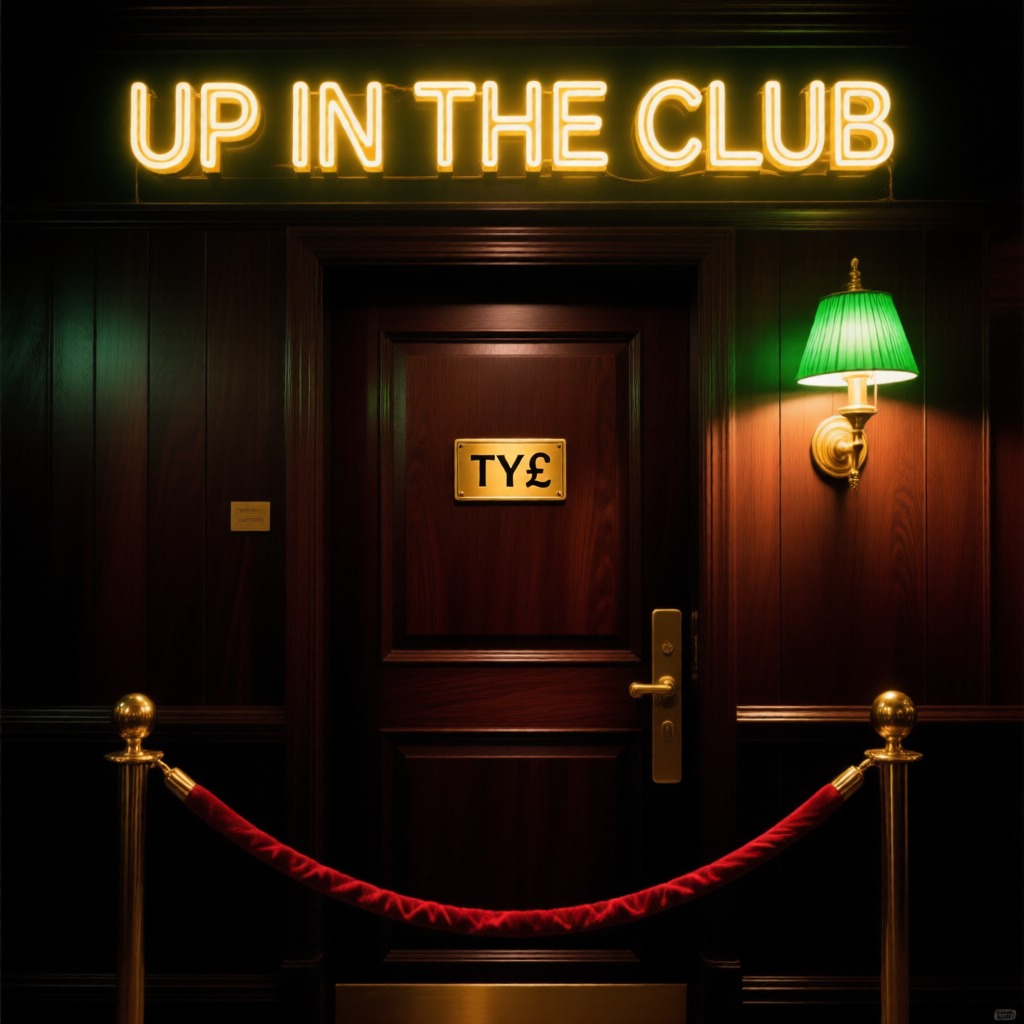
11 · Up in the Club, told by his producer
Ty Pound £ign · told by Chris Johns · 2 songs · 16:43 · 30 Sep 2026 · album
Chapters
Transcript
Open
File: This is BEATRIFUL Sessions.
Host: Episode eleven. Two songs, one private members' club, and more commercial real estate vocabulary than any drill song has a right to carry. The artist calls himself Ty Pound Sign. He is not in the room tonight; his producer is. Chris Johns, welcome.
Chris: Thanks for having me. Ty is my business partner in real life. We own a building together, a Sherwin-Williams paint store in Twin Falls, Idaho. Somewhere between the term sheets I started making songs about him, and I produce them.
Host: Pound Sign. Explain the name.
Chris: It's money. Ty Dolla Sign already exists, so Ty took the pound, the British one, the currency. The man runs a net-lease shop with something like forty million dollars of paper behind it, so a currency symbol on the brass plate is about right. There's a second joke in the song, press pound to confirm, the phone key, and he plays it both ways. But the plate reads pounds sterling.
Host: Let's do the honest version first. What is this album actually about?
Chris: It's about a room. A private members' club that is also a trading floor, except the things being traded are single-tenant buildings. A pharmacy, a dollar store, a drive-thru, a bank branch. Little lit-up models in glass cases, and people in evening wear leaning over them the way traders lean over a pit. That room does not exist. We made it up. But the numbers in the songs are real, and I'll tell you which ones as we go.
Host: Why drill?
Chris: Because drill is a brag with a straight face, and net-lease investing is the most boring brag on earth. Somebody else pays the taxes. Somebody else fixes the roof. The check shows up on the first. Say that over sliding eight-oh-eights and suddenly it sounds dangerous.
Host: He slipped a lot of lease language into the bars. Give me the two-sentence version of triple net for someone who has never bought a building.
Chris: Triple net, N N N. The tenant pays the rent, and on top of the rent the tenant pays the three nets: the property taxes, the insurance, and the maintenance. The landlord's job is to cash the check. Absolute net goes one step further: the tenant carries the roof and the structure too, so the landlord has zero obligations. That's the title of the second song.
Host: And there's a first song.
Chris: Up in the Club. It starts as a lounge song, piano and brushed drums, the velvet rope, the membership handshake. Then at about twenty seconds the eight-oh-eights come in and it's drill for the rest of the night. Verse two is a roll call of his alter egos, verse three is the deal sheet. Cap, no cap.
1 · Up in the Club
Host: Before we play it: cap, no cap. Explain the joke, because it's the hook.
Chris: No cap is slang for no lie. A cap rate is the number every buyer asks first: the net operating income divided by the purchase price. A building that clears seventy-five thousand a year and sells for nine hundred and eighty thousand is a seven point six seven cap. So every time he says cap, no cap, he means both. The rate is real, and he's not lying. Either way we go.
Host: Here it is. Up in the Club.
[song 01 — 01-up-in-the-club-take2.mp3]
Host: Verse two. Ty Rant, Ty Kwon Deal, Ty Phoon, Ty Breaker, Escrow Ty. Walk me through the roll call.
Chris: Ty Rant is the tyrant landlord, except the joke is he doesn't do anything, that's the absolute net. Ty Kwon Deal, black belt at the closing table. Ty Phoon touches down and the market clears. Ty Breaker decides the deadlock when two partners can't agree, and yes, I'm the other partner. Escrow Ty is where the money sits between the handshake and the closing: a neutral third party holds the funds until every condition of the deal is met. Cap Rate Ty, no cap. And Ground Lease Ty, I own the dirt, you own the walls. A ground lease is when the landlord owns the land and the tenant builds and owns the building on it, usually for decades, and when the lease ends the building comes back to the landowner. Fifty years from now it's mine, it all falls.
Host: They used to call me Tycoon, now it's Ty Pound Sign.
Chris: That's the name change in one bar. Tycoon was the working name for about an hour. Then the money version stuck.
Host: Verse three has real numbers in it. Which ones?
Chris: Two kinds. The origin story is our building, the Sherwin-Williams in Twin Falls, Idaho. Forty-four hundred square feet, built in nineteen seventy-one, and the broker who sold it, Horvath and Tremblay, reported the sale at five hundred thousand dollars in December of twenty twenty-four. Then the market bars: those come from a report of Sherwin-Williams stores listed for sale this month. Jackson, Mississippi at a seven point six seven cap, that's the one from the hook. Middletown, Ohio at six and a half with a ten-year lease. Peoria and Baltimore. Those are other people's listings, not ours, and the numbers are exactly as the listings state them.
Host: And the tenants. Seven-Elevens, Starbucks, Sonic, Raising Cane's, CVS, Tractor Supply.
Chris: Those are the brands on his firm's project wall. Seven-Elevens in Dearborn and Morrisville, so, oh thank heaven. A Starbucks built where a Jack in the Box used to be, so Jack jumped out the box. An H Tea O on a ground lease on the corner of a Lowe's parking lot, which is exactly what a ground lease pad looks like in real life. And the hundred and twenty-five closings across thirteen states, forty-five million under management: those are the firm's own numbers on its website. Their claim. We rap it, we don't audit it.
Host: Credit tenant. Corporate guarantee. Twenty-year paper. They call it credit, I call it sleep.
Chris: A credit tenant is a company with an investment-grade credit rating, triple B minus or better from the agencies. When a tenant like that signs a twenty-year lease and the parent corporation guarantees it, the lease is worth almost as much as the building, because the rent is backed by a balance sheet, not by whoever runs the store this year. A corporate guarantee means the parent company signed. A franchisee guarantee means one operator signed. The bars only brag about the first kind.
Host: Ten thirty-one, forty-five days to name it, one-eighty to close.
Chris: Section ten thirty-one of the tax code. When you sell an investment property and buy another like-kind property, you can defer the capital gains tax instead of paying it at the sale. The rules are strict: from the day you close the sale you have forty-five days to identify the replacement property in writing and one hundred and eighty days to close on it, and the money has to sit with a qualified intermediary in between, never in your own account. That's why Escrow Ty shows up in the same verse. Deferred like the gains.
2 · Absolute Net
Host: Song two is the slow one.
Chris: Absolute Net. Piano and strings for the first half minute, then a melodic drill drop. It's about the long game. No flipping. You buy at the cap rate, that's the only work you ever do, and then the lease runs for twenty years. Escalations every five, ten percent bumps, options to renew, four by five, that's forty more years if the tenant wants them. Grandkids collecting rent off a story.
Host: Absolute Net.
[song 02 — 02-absolute-net-take1.mp3]
Host: Nothing to fix and nothing to feel. Is that a boast or a confession?
Chris: Both. Absolute net means the tenant carries everything, roof and structure included. The landlord's only job is patience. Boring is beautiful when the check don't stop. But it's also a confession, because when the market dips you don't look at the phone, and that's a discipline, not a personality. I've watched Ty do exactly that.
Host: When the store goes dark the check still finds you.
Chris: That's the corporate guarantee again. If a location closes but the parent company signed the lease, the rent keeps coming for the rest of the term. That is the whole reason people pay a lower cap rate for a credit tenant: less yield, more sleep.
Host: Where does the album go from here?
Chris: The video for Up in the Club is done. The club is the portfolio: the coat-check is a bank vault, the VIP booth is a pharmacy drive-thru window, the back bar is a wall of paint chips, and the dance floor is a striped parking lot under a lit canopy. Nobody plays Ty in it; the buildings and the paper do the talking. Both songs and every draft take are on the page at beatriful dot com slash at sizzle c slash tycoon. Cap, no cap.
Host: Ty Pound Sign, by way of his producer Chris Johns. Up in the Club.
File: The album, the covers, and the videos as they finish, are at beatriful dot com. This has been BEATRIFUL Sessions.
All episodes · Podcast feed: feed.xml